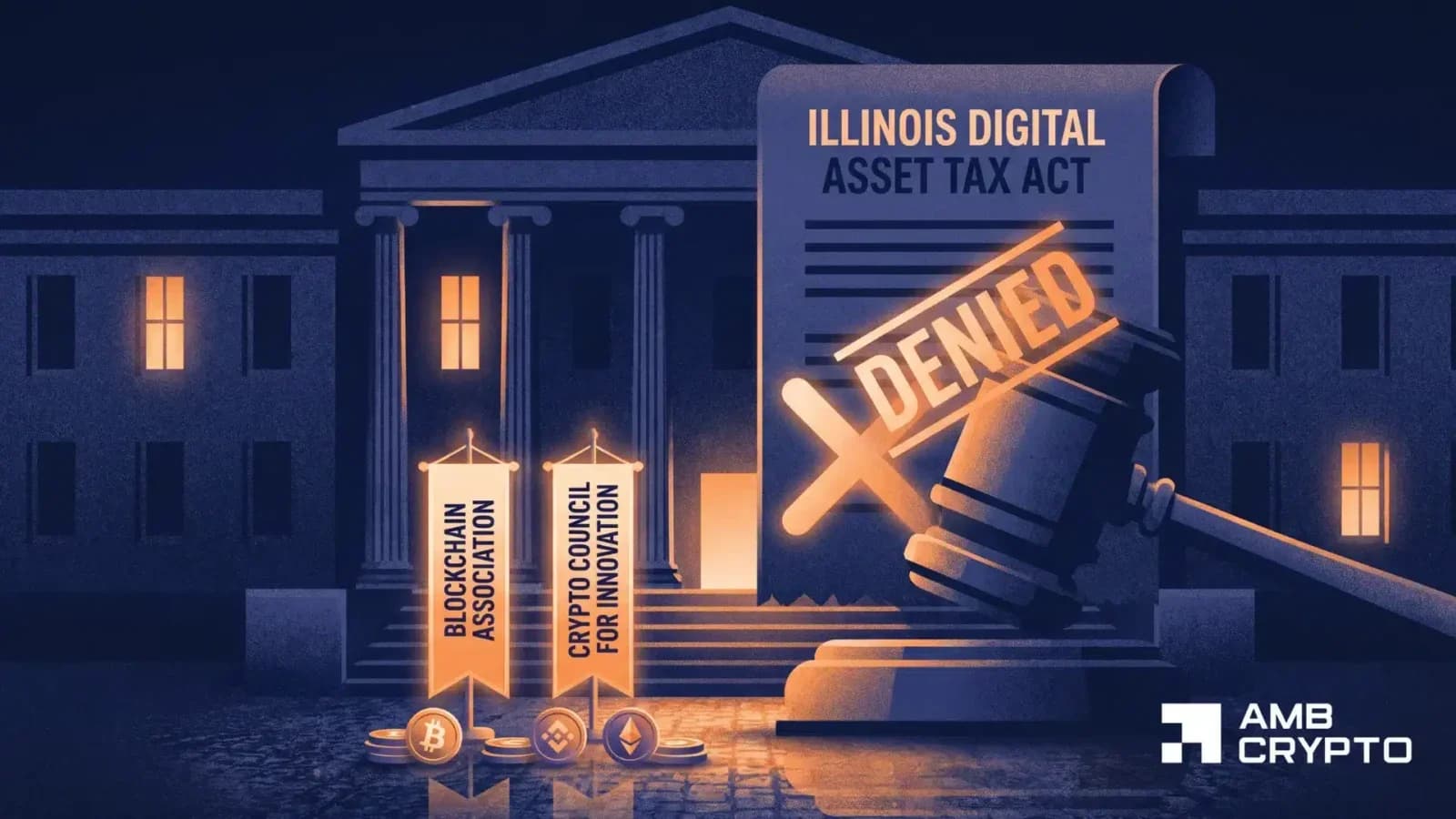
Illinois Governor J.B. Pritzker has signed the Digital Asset Tax Act, enacting a 0.2% charge on the value of digital asset transactions or services provided to Illinois customers, as part of the state's FY2027 budget planning. The tax is set to take effect on January 1, 2027, and will primarily target service providers like exchanges, custodians, and brokers that must now collect and remit the tax, not unlike sales taxes. As reported by The Block, the legislation creates new compliance obligations for digital asset brokers, requiring them to collect the tax as a separate line item, maintain records, and file monthly reports covering the previous month's activity. Registration requirements must be completed before the January 1, 2027 start date, with registrations renewing automatically unless canceled or revoked.

The crypto industry is pushing back against the new tax law, with the Crypto Council for Innovation (CCI) requesting a line-item veto in a letter dated June 16. The organization argues that the law would impose a 0.2% tax on everyday customers' use of digital asset services, noting there is effectively no comparable state financial transaction tax imposed on exchange, transfer, or custody of stocks, bonds, or derivatives anywhere in the country. The Digital Chamber of Commerce and the Illinois Blockchain Association sent a joint letter urging state officials to reject the proposal, arguing that it could harm the state's digital asset sector. The CCI stated the provision would "create an unprecedented tax regime that disproportionately burdens Illinois residents for simply using digital assets and will drive innovation and builders out of the state." One person following the process indicated that the most likely pathway to changing or mitigating the tax would be through a lawsuit, with several entities already discussing legal action, though nothing has been filed yet.
Strategy co-founder Michael Saylor has intensified industry opposition by calling Governor J.B. Pritzker's decision to sign the Digital Asset Tax Act into law a "Big Mistake" in a June 17 X post. The legislation creates new compliance obligations for digital asset brokers, requiring them to collect the tax as a separate line item, maintain records, and file monthly reports covering the previous month's activity. Registration requirements must be completed before the January 1, 2027 start date, with registrations renewing automatically unless canceled or revoked. According to tax advisory firm BDO, the rules can apply not only to Illinois-based businesses but also to out-of-state brokers that generate at least $100,000 in annual receipts from Illinois customers, with compliance questions remaining unresolved around wallet transfers and sales.

The Illinois Digital Chamber has raised significant concerns about the law's technical implementation, writing in a June 3 message opposing the DATA legislation that "it is also unclear how the Tax will work." As reported by The Block, the Illinois Digital Chamber noted that "a digital asset business or their customers, who merely transfer assets between wallets, convert one digital asset to another, or place assets in custodial storage, could be taxed at 0.2% of full asset value regardless of whether any economic gain has been realized, and even in instances where economic loss occurs." The law is designed to target service providers like exchanges, custodians, platforms, wallet services, and other businesses with either a physical presence in the state or over $100,000 in annual gross receipts from Illinois customers, but the lack of clarity around peer-to-peer transactions remains a concern for the industry.
The provision was added last-minute to Illinois' broader budget bill, according to two people following the matter, and the legislature is now out of session for the rest of the year. As reported by ABC 7, there is a veto session in the fall where the governor could enact a line-item veto, but it's not clear if Pritzker would do so. The tax bill comes after the crypto industry supported Rep. Raja Krishnamoorthi to the tune of $10 million in Illinois' Democratic Senate primary race, opposing Pritzker's preferred candidate Lieutenant Governor Juliana Stratton, who won the race and is likely to become the next Senator from Illinois. The legislation also includes a 1.75% tax on sports bets placed through prediction market platforms such as Polymarket, with the measure arriving as lawmakers in Washington continue discussing digital asset taxation at the federal level.
The new tax law contrasts with Illinois' recent enactment of the Digital Assets and Consumer Protection Act and Digital Asset Kiosk Act, which the Digital Chamber said "reflected industry input and numerous compromises that vastly improved the final product." However, the Digital Asset Tax Act represents a significant departure from this constructive approach, with Andreessen Horowitz Head of Policy & General Counsel Miles Jennings calling it 'one of the most anti-crypto laws in the U.S.' The legislation creates a roughly $56 billion budget for the 2027 fiscal year and also includes new taxes on fantasy sports, social media, and other areas, according to ABC 7. The Illinois measure has intensified existing tensions between the state and parts of the crypto industry, with Illinois already facing a lawsuit from the CFTC over prediction markets after state regulators attempted to restrict platforms including Polymarket and Kalshi.