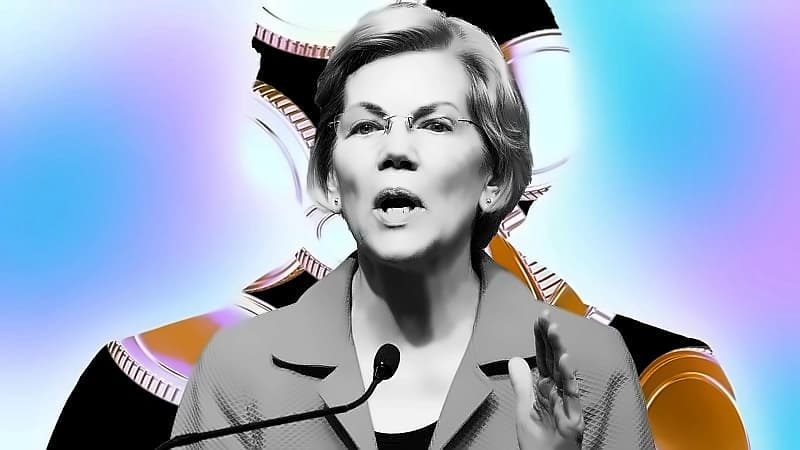
Maxine Waters, the ranking Democrat on House Financial Services Committee, has submitted an 11-page comment letter to the Department of Labor requesting withdrawal of a proposed rule that would allow 401(k) retirement plans to invest in cryptocurrency and other alternative assets. According to reports from The Economic Times, Waters argues that the proposal is incoherent given that the Securities and Exchange Commission is still building investor-protection frameworks for digital assets. The proposal, which hasn't yet been finalized, would expand 401(k) retirement accounts to include investments in private equity, private credit, real estate, commodities and digital assets. Opposition to the rule comes from consumer advocates, investment researchers and several congressional Democrats, including Sens. Elizabeth Warren of Massachusetts and Bernie Sanders of Vermont, and Rep. Bobby Scott of Virginia. Critics argue the proposal could expose workers' retirement savings to excessive risks and high fees while benefiting private equity firms, cryptocurrency companies and other financial interests by steering 401(k) funds into their investment vehicles.

In her letter addressed to Department of Labor's acting secretary Keith Sonderling, Waters highlighted significant concerns about the digital assets market structure. As reported by The Economic Times, she stated that the proposal would expose investors to a digital assets market that operates outside any federal framework and has produced staggering investor losses. Waters specifically criticized the timing, arguing that the department should not bless digital assets as suitable for everyday Americans' retirement savings while the SEC is still developing protective regulations for these same assets. Experts at Morningstar, the investment research firm, questioned whether the proposal is necessary and warned it could weaken fiduciary standards by allowing plan sponsors to rely too heavily on representations from investment providers with commercial interests in selling alternative products. Morningstar argued retirement policy should focus on expanding access to plans and reducing costs rather than increasing exposure to complex investments.
While the Labor Department reviews crypto 401(k) comments, Senators Elizabeth Warren and Bernie Moreno have co-written legislation to lift the Social Security payroll tax cap as part of comprehensive reform efforts. Currently, earnings up to $184,500 are subject to Social Security payroll taxes, with high earners not contributing for the rest of the year once they hit that cap. According to the Center for Economic and Policy Research, individuals with $1 million in annual wage and salary earnings stopped paying Social Security payroll taxes for 2026 on March 9. Sen. Bernie Sanders has proposed the Social Security Expansion Act, co-sponsored by Warren and nine other Senate Democrats, which would raise taxes on wages, salaries and self-employment earnings over $250,000 while providing benefit increases. Rep. John Larson's Social Security 2100 Act would make income over $400,000 subject to Social Security payroll taxes, though this proposal has not been reintroduced in the current session with 189 Democratic co-sponsors.
The Labor Department's proposal has generated significant public interest, with the agency receiving 40,000 comments by the close of the public comment period on June 1. According to recent reports, the Labor Department is currently reviewing comments from industry groups, employers, retirement-plan experts, consumer advocates, lawmakers and individual investors. The agency may revise parts of the proposal before issuing a final rule, with the final version also expected to undergo White House review. Industry observers expect the review and revision process to take several months, with the next major milestone being when the Labor Department releases its final rule to reveal whether public feedback has altered the agency's approach to opening the door wider to alternative investments in America's retirement savings system.
The proposed rule stems from President Donald Trump's August executive order calling for his administration to provide people with government-structured retirement accounts the opportunity to participate in alternative asset investments. As reported by The Economic Times, the order specifically requested that people be given the 'opportunity to participate, either directly or through their retirement plans, in the potential growth and diversification opportunities associated with alternative asset investments.' The proposal was published on March 30 after President Trump's 2025 executive order directing federal agencies to explore ways to expand access to alternative assets for retirement savers. The proposed rule would create a new safe-harbor framework under the Employee Retirement Income Security Act (ERISA), clarifying how plan fiduciaries can satisfy their duty of prudence when selecting investment options that include alternative assets.