Ethereum's price has declined from $2,300 to around $2,100, with whales selling over 35,000 ETH worth $72.3 million, signaling growing bearish sentiment among large holders. A trader known as "0x50b3" has taken a large leveraged short position of 47,604 ETH, worth about $100 million, betting on Ethereum's price to fall below $2,149. Large leveraged short positions and increased exchange inflows indicate traders expect further price drops, with weak capital inflows and negative momentum indicators suggesting Ethereum may break below the $2,000 support level unless buying demand strengthens soon.
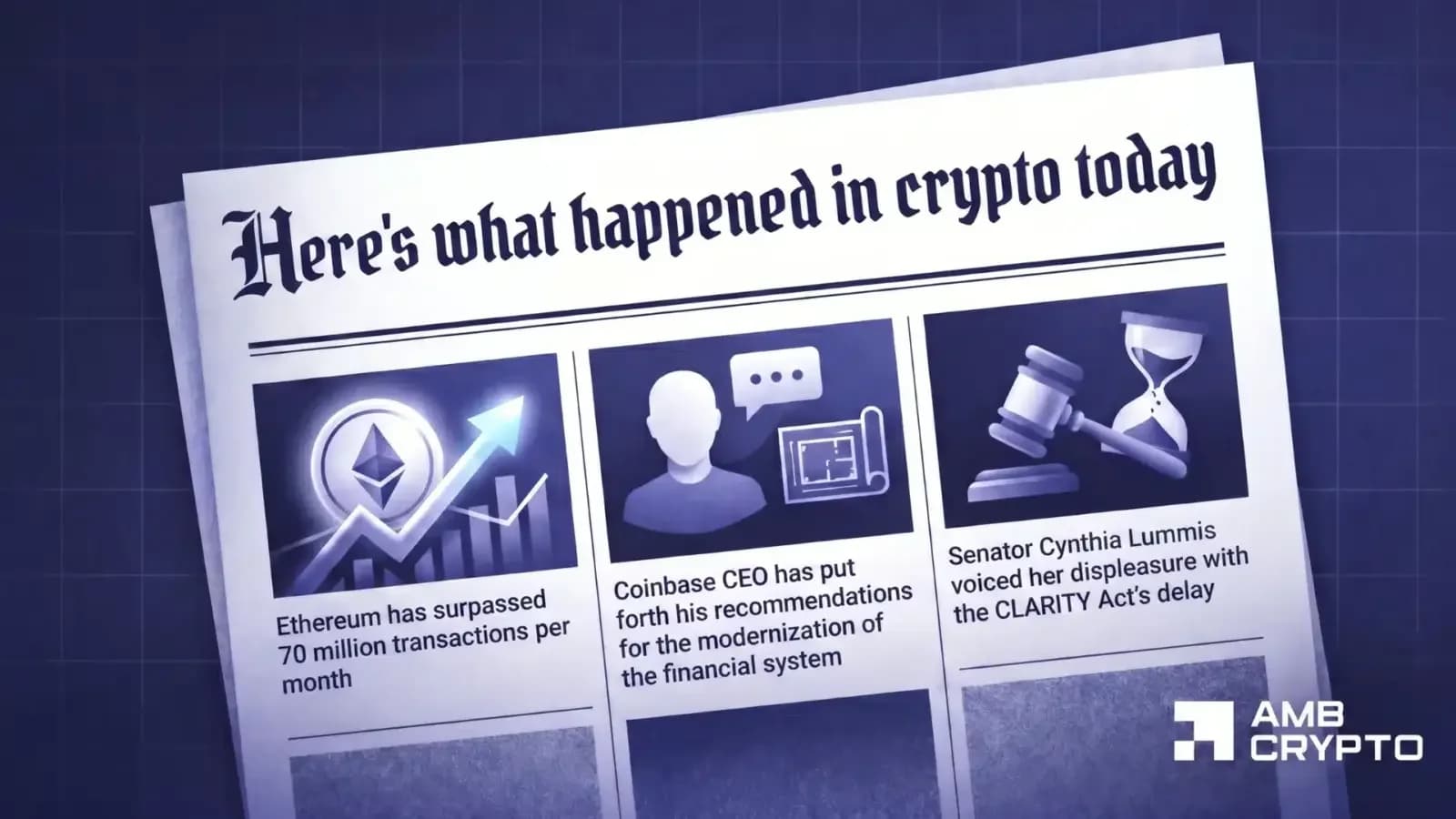
Ethereum has achieved a significant milestone by surpassing 70 million transactions per month, reaching an all-time-high according to Token Terminal data. The network's monthly transaction count topped 70 million for the first time, marking a pivotal moment for the blockchain's utility and scalability. Despite this record usage, Ethereum's price declined 9% over the previous month, trading at $2,110.10, as reported by AMBCrypto. The network's transaction data reveals a paradox where high retail utility exists alongside bearish price action, highlighting the disconnect between network activity and token value appreciation.
The network's efficiency improvements are evident in the median transaction fee falling to a record low of about $0.00554, as reported by AMBCrypto. OKX Ventures highlighted this divergence as evidence that Ethereum is evolving into a more efficient and lower-cost network. The combination of rising usage and falling fees suggests that scalability improvements are beginning to take effect, with the growth attributed to the growing adoption of Layer 2 scaling solutions and a modular blockchain architecture. These technologies are enabling Ethereum to handle more transactions without congesting the base layer, making it more practical for everyday use across industries including stablecoins, blockchain gaming, and real-world asset tokenization.
The surge in transaction volume is largely due to increased adoption of Layer 2 scaling solutions, which process transactions off the main Ethereum chain and then settle them in batches, reducing congestion and costs on the base layer. OKX Ventures noted that Layer 2 networks are assisting in reducing blockchain transaction costs, enabling industries such as social media, blockchain gaming, stablecoins, artificial intelligence, and real-world assets to attract new users. The firm emphasized that the truly important signal is the sustained growth of real on-chain usage, not just market price movements, with a new on-chain economy led by Ethereum beginning to form driven by actual utility rather than speculative activity.
Brian Armstrong, CEO of Coinbase, released an eight-point list outlining recommendations for modernizing the global financial system, as reported by AMBCrypto. Armstrong emphasized that real-world assets should be added to the chain for more rapid and smooth investment processes. He advocated for round-the-clock international trading with shared liquidity to improve financial market efficiency. Additionally, he called for better stablecoin payments, AI for risk analysis, and innovation-friendly regulations that support growth without restricting competition. Armstrong concluded by stating that "Jobs not done until we get these working for all. Will require lots of tech innovation and policy work to get there."