The U.S. Dollar Index (DXY) has gained approximately 2.6% since September 9 and reached a two-month high of 101.69 on Tuesday, according to reports from CoinDesk and Huoxing Finance. This dollar strength is typically viewed as negative for bitcoin, as the dollar serves as the world's reserve currency and sits at the center of global finance. When the dollar rallies, borrowers with dollar debt face higher repayment costs and tend to reduce exposure to risky assets like cryptocurrency. Bitcoin has responded by retreating to the $83,000-$84,000 range after peaking near $87,500 on September 21, as reported by Huoxing Finance.
Despite the dollar's strength, correlation data reveals a surprisingly modest relationship between the two assets. Over the past 90 trading days, BTC and DXY show a correlation of -0.41, as reported by CoinDesk and Huoxing Finance. This negative reading indicates the two tend to move in opposite directions, representing the most negative correlation since February 2023. However, the R-squared value of 0.17 means DXY accounts for only about 17% of the variation in BTC's daily returns. The 30-day correlation coefficient stands at -0.45, though this reading is significantly influenced by two unusual market events on August 19 and September 3, during which Bitcoin rose over 5% while the dollar index fell. Without these two days, the correlation drops to -0.19.
Bitcoin's rally has indeed stalled since September 21, with prices pulling back to $83,000-$84,000 from nearly $87,500, according to CoinDesk and Huoxing Finance reports. The shorter-term correlation shows a 30-day correlation of -0.45, though this reading is influenced by two significant days when BTC jumped more than 5% as DXY fell. Without these two days, the correlation drops to -0.19. Since January 2020, the 90-day correlation has averaged -0.14, with the link turning positive at times, peaking at +0.22 in November 2024. The current dollar strength may constrain bitcoin's upside potential, but the impact remains relatively limited as the cryptocurrency maintains key support levels.
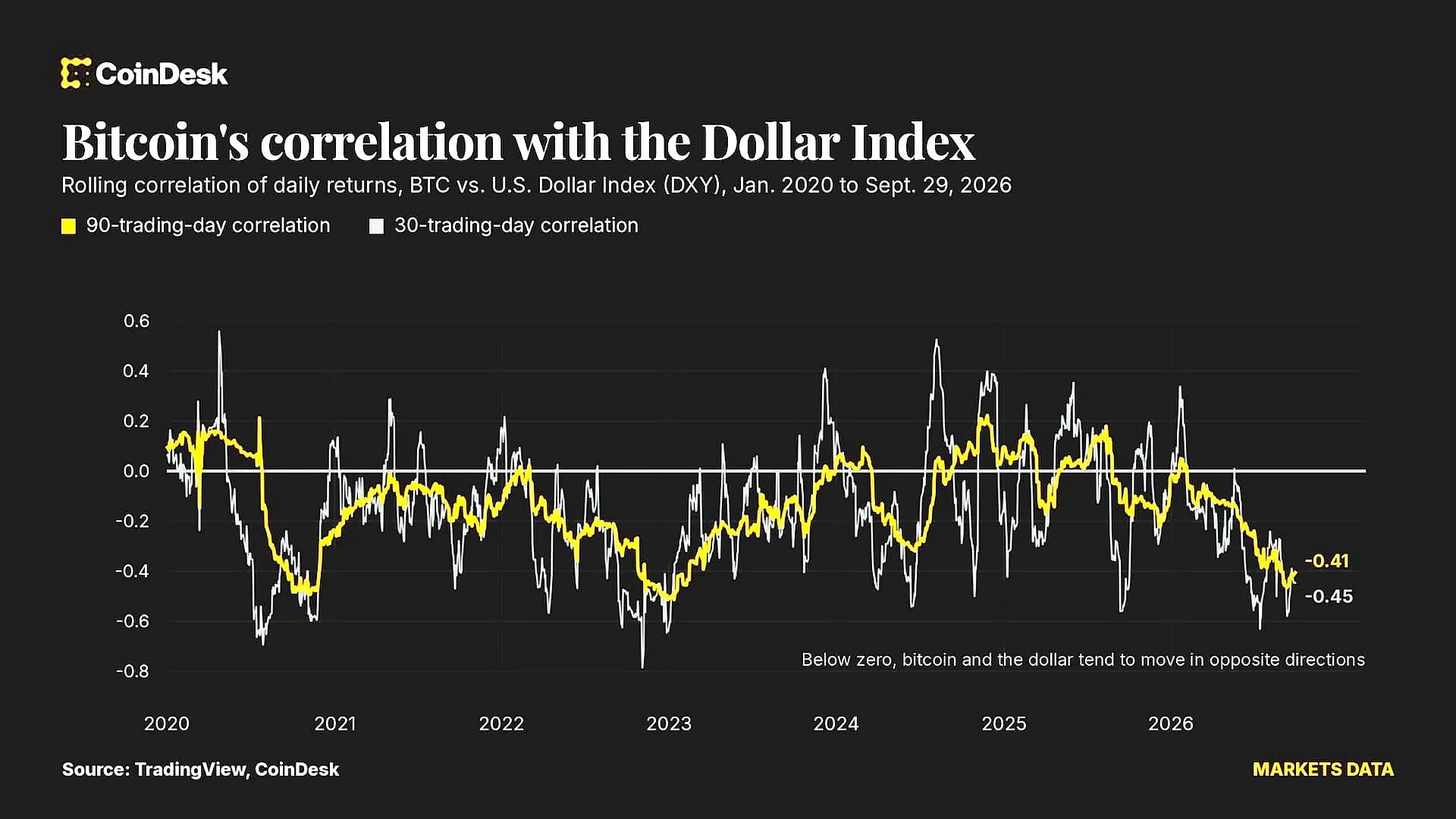
Bitcoin demonstrates little notable correlation with U.S. Treasury yields, as previously discussed by CoinDesk. This loose link to both the dollar and Treasury yields supports the case for bitcoin as a portfolio diversifier, moving largely on its own drivers rather than traditional asset correlations. The analysis suggests that while the link between dollar strength and bitcoin remains real, it is also modest, with the cryptocurrency maintaining its independence from traditional financial market movements. Huoxing Finance notes that Bitcoin also shows no significant correlation with U.S. Treasury yields, suggesting its price movements are primarily driven by internal factors rather than external market conditions.