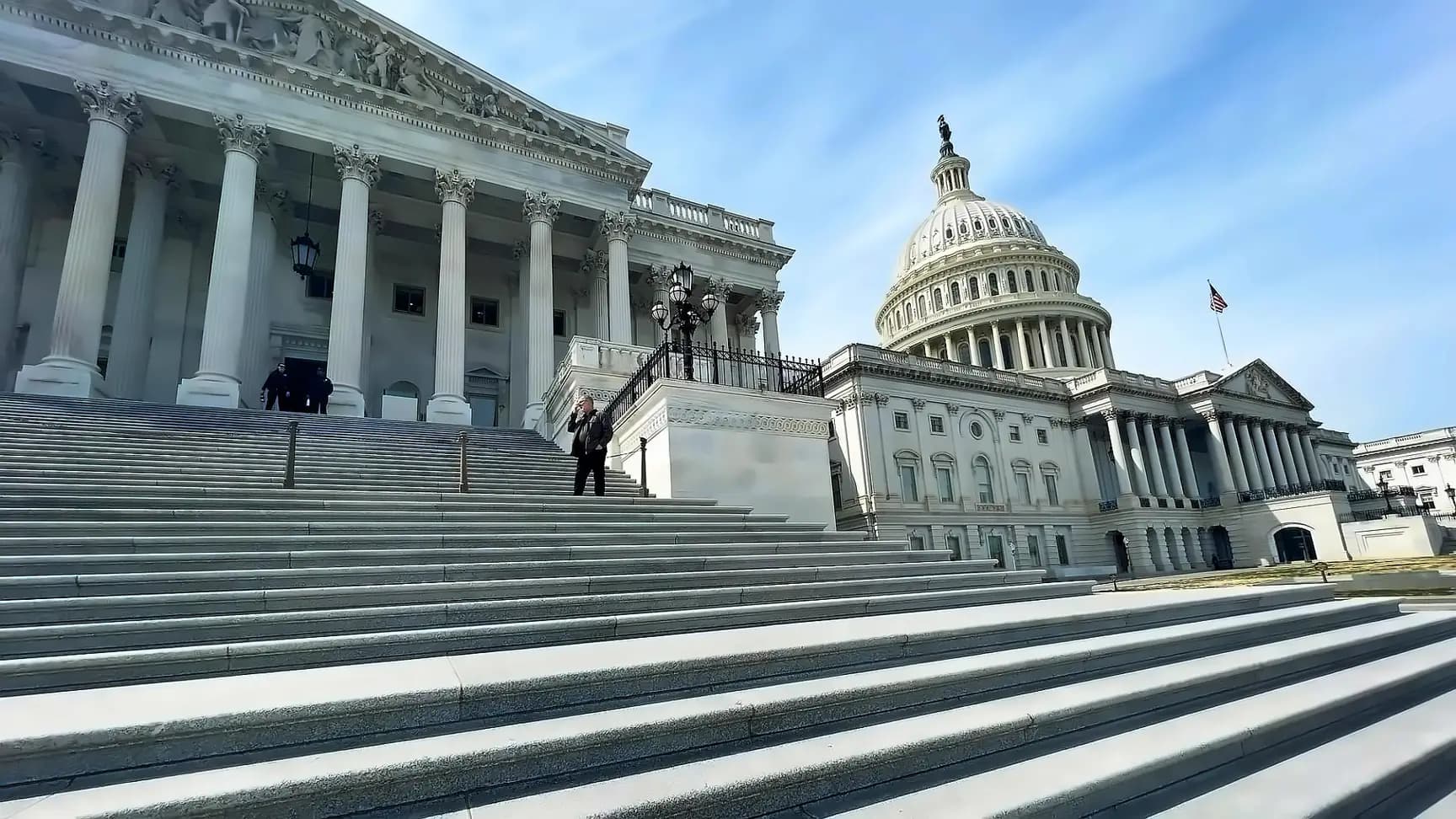
The Senate's decision to delay the CLARITY Act vote until after the August recess has significantly impacted the legislation's prospects. According to Polymarket prediction platform data, the odds of the CLARITY Act meeting the 60-vote threshold fell from 82% in February 2026 to just 16% following the delay announcement. The delay makes passage this year much more unlikely, as the chamber won't return until September 14 with approximately 14 working days remaining before the midterm elections. Senate Majority Leader John Thune announced the postponement after negotiations failed to produce an agreement, with Democrats declining to support an accelerated pre-recess process. The legislation requires 60 votes to overcome the Senate's cloture threshold, meaning Republicans need support from at least seven Democrats, assuming every Republican senator backs the measure. Polymarket odds have now collapsed to 16%, suggesting approval is not looking optimistic with the September 15 procedural vote expected. However, TD Cowen Washington Research Group analyst Jaret Seiberg has now assessed the bill carries a 75% chance of dying before it ever reaches a final vote, representing a more pessimistic outlook than previous predictions.
The single biggest obstacle to passage is not the token classification framework or DeFi provisions - it is the ethics rules governing government officials and cryptocurrency. President Trump disclosed more than $1 billion in crypto related income in 2025, and the Senate version of the bill includes a provision that would prohibit sitting presidents, federal officials, and certain public figures from issuing or sponsoring digital assets. The White House has called this an unprecedented concession and urged Democrats to accept the constraint as sufficient, while Democrats disagree sharply on enforcement mechanisms. Senator Chris Van Hollen called the bill "a corrupt piece of legislation that will do a lot of harm," with the core objection being that the provision would be overseen by a Department of Justice led by presidential appointees, creating what critics describe as a conflict of interest that renders the restriction meaningless. This structural disagreement touches the separation of powers and neither side has shown willingness to move, making it difficult to resolve through recess negotiations.
Majority Whip Tom Emmer is now urging the U.S. Senate to pass the CLARITY Act, arguing that the House has already done its part after more than five years of work. As reported by AMBCrypto, Emmer stated that "It was passed more than a year ago with almost 100 Democrats, and yet it still languishes over in the Senate. They can't seem to get it moved." The House has spent more than five years working on the bill, with Emmer emphasizing that the legislation is necessary to give the digital-asset industry a clear and consistent legal framework. However, the CLARITY Act faces growing resistance in the U.S. Senate from regional and community banks, creating additional obstacles to passage. The House passed the bill in July 2025 by a comfortable 294 to 134 vote, promising to draw the line between which tokens the SEC oversees and which fall to the CFTC, but only two Democrats crossed over in committee when the Senate Banking Committee advanced the bill in May. Senator Cynthia Lummis (R-WY) released updated text on July 22 and emphasized the urgency of passing the legislation, calling it "the last real chance…to get this right."
Failure to pass the CLARITY Act would have significant market implications, with Bernstein projecting a 10 to 25% near-term pullback for bitcoin, testing the $55,000 to $60,000 range. According to Polymarket data, altcoins would face steeper drawdowns of 15 to 30%, with tokens that benefit most from regulatory clarity facing the heaviest losses. A 2026 survey of institutional crypto allocators found that 65% cite regulatory clarity as a prerequisite for increasing exposure, meaning the next wave of institutional products including tokenized securities, on-chain derivatives, and crypto lending platforms would be delayed. Spot bitcoin ETFs continue to attract more than $400 million in daily inflows, but the industry has shown resilience in operating without comprehensive legislation, with offshore exchanges serving US customers through VPNs and DeFi protocols operating without registration. However, Coinbase has spent more than $200 million on legal costs since 2023, and Circle delayed its IPO multiple times over regulatory uncertainty, highlighting the real cost of operating without clear rules. XRP, which stands to benefit directly from a codified digital-commodity classification under CFTC oversight, has seen ETF inflows soften alongside the postponed timeline, with the pattern repeating after each procedural setback.

The Senate returns on September 14 with approximately 14 working days before midterm campaign season makes any controversial vote politically radioactive. Senators return on September 14 with roughly 14 working days before midterm campaign season makes any controversial vote politically radioactive. The procedural vote on the motion to proceed, which determines whether the bill reaches the floor, could happen as early as September 15. Senate Majority Leader John Thune filed for cloture on August 8, setting the stage for the initial cloture vote scheduled for 2:15 p.m. ET on September 15. However, TD Cowen's analysis reveals three potential failure scenarios: the motion clears the 60-vote threshold but Democrats block further cloture due to unresolved amendments, the scheduled vote doesn't happen because Republicans avoid contentious issues, or the vote passes but no amendments or subsequent motions occur, leaving the bill stalled. With Republicans holding 53 seats, at least seven Democrats or independents must support the motion for it to pass. If the September 15 cloture vote fails by more than five votes, the bill is not coming back in 2026 regardless of what leadership says. If six or more Democratic senators publicly commit to voting yes before September 14, the math changes entirely, with the current 16% Polymarket probability representing the market's real-time assessment of passage likelihood.