The U.S. Commodity Futures Trading Commission issued a Friday advisory warning that 24/7 trading may not suit every traditional derivatives market, marking a significant shift in regulatory approach. According to the CFTC advisory, exchanges and clearinghouses should carefully assess products before extending trading and clearing to a 24/7 model, as some markets can support constant access while others may face reduced liquidity during off-peak hours. The agency noted that some products could face thinner liquidity during off-peak hours, potentially resulting in greater price swings, wider bid-ask spreads, and greater exposure to manipulation. The warning comes as the CFTC also allowed CFTC-regulated crypto platforms to offer perpetual futures and global options, with Coinbase announcing that the approval lets one of its regulated affiliates add the largest and most liquid category of global crypto trading to its existing 24-hour platform.
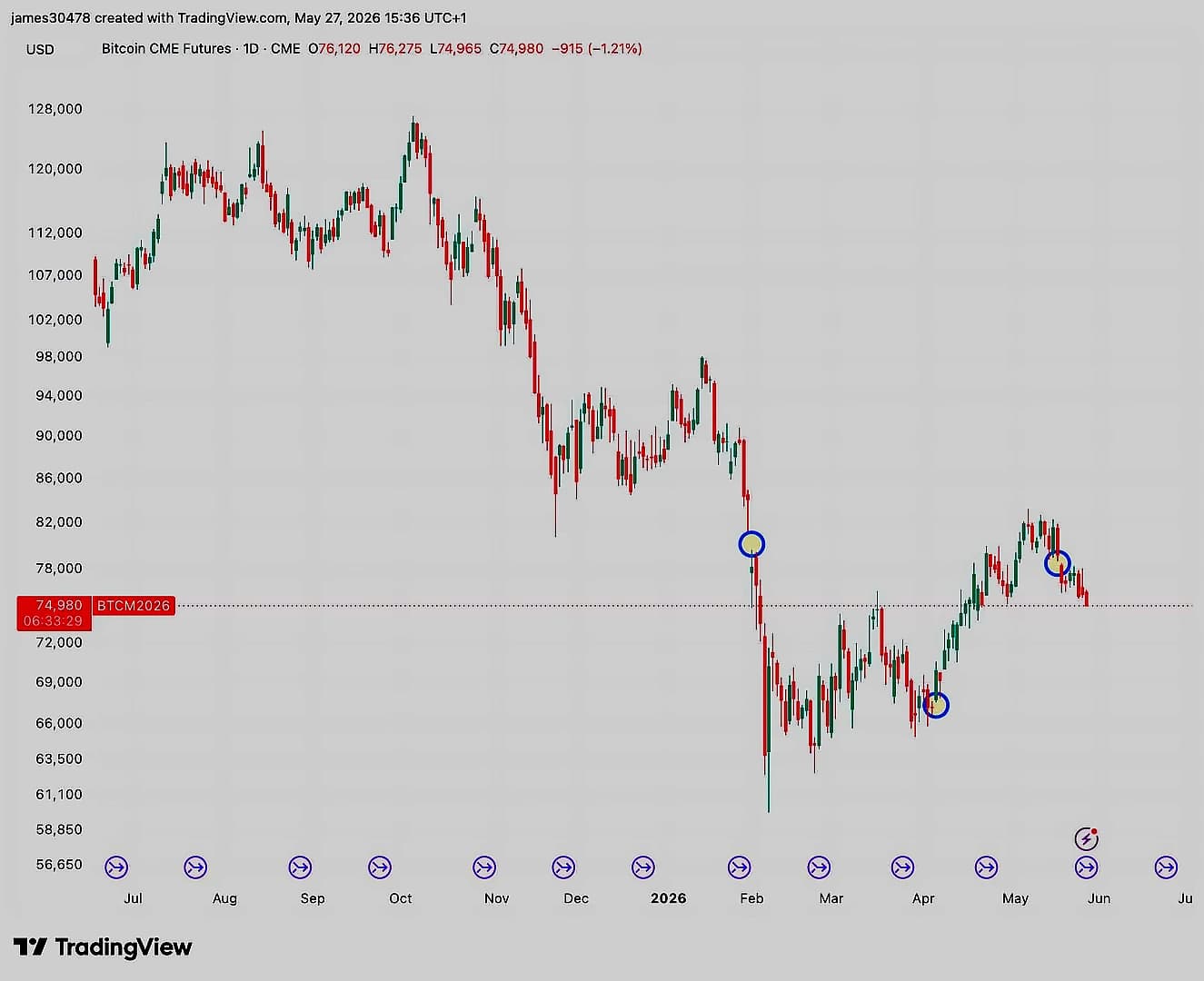
CME Group has officially launched 24/7 trading for Bitcoin futures and options on its Globex platform, ending one of Bitcoin's most watched weekend market patterns. According to reports from CoinDesk, the exchange implemented continuous trading starting Friday, May 29, bringing CME's regulated crypto derivatives closer to the nonstop structure of spot crypto markets. The change covers CME's regulated crypto products, including Bitcoin futures and options, with the exchange maintaining minimal maintenance windows including a 60-minute daily pause on Sundays from 18:00 to 19:00 UTC+8. This represents a significant shift from the previous structure that saw Bitcoin spot markets trading continuously while CME futures were closed on weekends.
The move comes as the U.S. Commodity Futures Trading Commission issued landmark approvals for crypto perpetual futures contracts, marking a significant regulatory milestone for digital asset trading. As reported by crypto.news, CME announced its plan for 24/7 crypto futures and options trading earlier this year, citing client demand for digital asset risk management that had reached a high level. The CFTC's advisory notes that "because of inherent differences between underlying markets, switching to 24/7 trading and clearing may not currently be suitable for all asset classes." The derivatives watchdog emphasized that "the ability to engage in, and maintain, markets on a 24/7 basis has been, in part, paralleled by evolutions in market technologies, such as blockchain networks and decentralized infrastructure." The agency specifically mentioned that agricultural derivatives may face different limits because of their customer base, regional structure, and specialized hedging practices.

Coinbase announced that the CFTC approval lets one of its regulated affiliates add crypto perpetuals and global options to its existing 24-hour platform, expanding beyond its current equities, futures, and prediction markets offerings. According to Coinbase's Friday blog post, the company's platform already supports 24/7 trading across these categories, and the new approval adds crypto perpetuals and global options through a CFTC-regulated affiliate. This expansion reflects the broader regulatory environment under CFTC Chairman Mike Selig, who has made crypto, prediction markets, and new trading technology central issues at the agency as the Trump administration pushes federal agencies to provide the digital asset industry with a clearer path.
The shift responds to strong crypto derivatives activity in 2025, with CME's crypto futures and options recording $3 trillion in notional volume. According to reports from crypto.news, CME announced its plan for 24/7 crypto futures and options trading earlier this year, citing client demand for digital asset risk management that had reached a high level. The CFTC's advisory emphasizes that under CFTC rules, trading platforms remain the first line of defense against market abuse, and firms that expand trading hours should add compliance controls tailored to the risks posed by constant access. The agency urged regulated exchanges and clearing organizations to speak with the agency before making major changes to trading schedules, framing these discussions as part of its oversight role as market structures around crypto products continue to evolve.