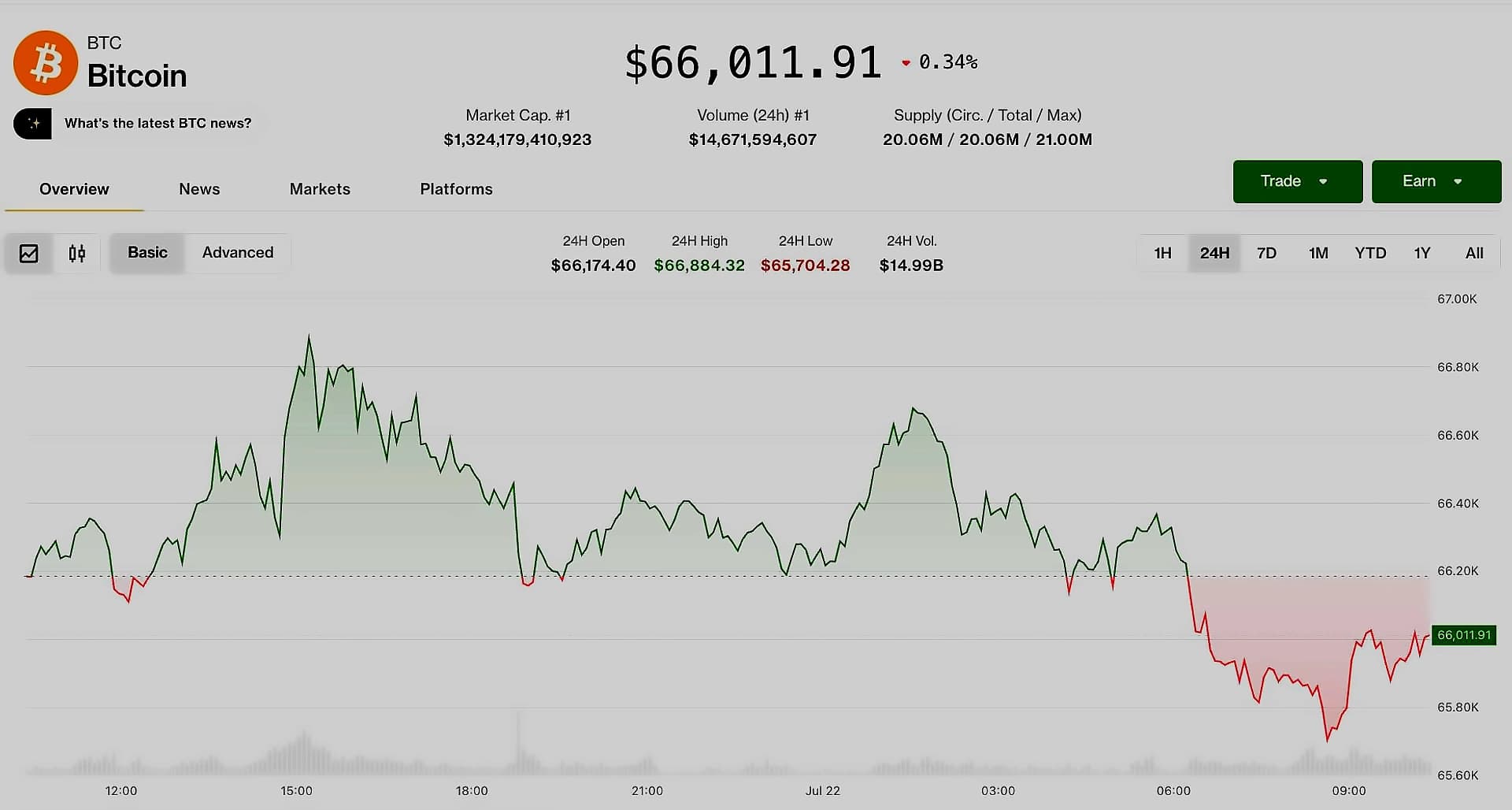
According to crypto.news data, Bitcoin traded around $60,200 at press time, barely holding onto the critical $60,000 support level as the cryptocurrency remained down 4.38% over seven days despite a 0.31% gain in 24 hours. The broader market showed daily trading volume exceeding $105 billion, an increase of more than $10 billion compared with yesterday, with market cap holding close to $1.25 trillion. Liquidations hit $1 billion over the past 24 hours, with more than $845 million from long positions, highlighting the intense selling pressure currently facing the market. Traders are still watching $60,000 as the main support area and $67,000 as the level bulls need to reclaim. As per AMBCrypto, Bitcoin's price dropped from about $76K in early May to $64K at the time of publication, with the decline directly triggering the ETF outflows that caused the price to move from a bullish to a bearish zone.
ETF flows have become extremely bearish, with yesterday seeing $691 million in Bitcoin outflows, coupled with Wednesday's $469 million flows, taking the two-day total to over $1 billion - a worrying amount of Bitcoin being sold. According to 99Bitcoins, this represents a main catalyst being recent price action across the market, with the Fear & Greed Index sitting at 13/100, down from 24/100 at the beginning of the week, reflecting this shaky price action. U.S. spot Bitcoin exchange-traded funds recorded an outflow of roughly $113.78 million on June 23, marking their first back-to-back daily outflows as the overall spot market netflow reached $30.56 million. Such surges in inflow translate into sell pressure, as Bitcoin sitting on exchanges signals that investors could easily offload the asset should they judge that a bearish outlook may intensify.
Long-term holders have joined the selling movement, with Bitcoin's Binary Coin Days Destroyed (CDD) posting a reading of 1, indicating coins have been moved and often pointing to a sell-off. According to AMBCrypto, deposit transactions have risen, climbing toward a reading of 9,220 on the chart, suggesting that investors are moving more Bitcoin onto exchanges. This represents a concerning shift from the previous trend where Bitcoin 'OG' investors had slashed their selling activity to the lowest levels in nearly two years, with the 90-day average of BTC spent by these OGs dropping below 1,000, sitting at 962 in November 2024. The priciest coins this group bought cost roughly $63,200, near current levels, but the recent data shows this group is now joining the broader market in positioning for potential declines toward the $59,000–$60,000 zone.
Bitcoin faces a key test at the $60,000 support level, with analyst Ali Martinez noting that "immediate support at $60,587 must hold to maintain the current trend." According to CryptoQuant data, more than 1.3 million BTC changed hands between $60,000 and $63,000, making this area the largest volume cluster on the chart. A break below $60,587 opens a path to $46,702, with lower high-volume zones near $46,702 and $37,867 becoming important if BTC loses the current support block. The current setup gives traders two different signals - OG selling has slowed, which can reduce supply, while technical structure still requires buyers to defend the lower edge of the range. Bitcoin is trapped between two key levels, with the asset potentially sliding toward the $60,000 to $59,000 range based on liquidation clusters, or turning to the upside and rallying to a high of $65,460 if bullish pressure picks up.

In significant crypto news, Atlas Capital Team plans to launch USAFi, a regulated digital security backed by a Nasdaq-listed ETF, in the third quarter of 2026. This marks a significant shift for economist Nouriel Roubini, who has been a vocal critic of cryptocurrencies for many years. According to 99Bitcoins, Atlas, along with its Dubai subsidiary, Atlas AI Labs, has developed a whitepaper that outlines USAFi and introduces a broader concept referred to as the "Technodollar." The token is expected to be issued under Dubai's Virtual Assets Regulatory Authority (VARA) framework, with the token designed as an ERC-20 asset backed by the Atlas America Fund, an SEC-registered actively managed ETF listed on Nasdaq. The token will comply with VARA's Asset-Referenced Virtual Asset Rulebook, placing it among the more advanced regulatory systems for virtual assets in the Middle East. This represents a notable development as Roubini, once known as a vocal crypto critic, is now backing a tokenized version of the Nasdaq-listed fund.