Bitcoin ETFs have extended their remarkable run with $606.29 million in net inflows on August 20, marking the largest single-day haul since May 1 and continuing a four-consecutive-day streak that began with $517.19 million on August 19. According to The Economic Times, the total cumulative net inflows for the category have now reached $53.40 billion over the four-day period, with BlackRock's IBIT leading the day's inflows at $502.99 million, representing more than 80% of the day's total. The simultaneous four-day streaks in both Bitcoin and Ethereum ETFs suggest institutions are building positions across both assets rather than rotating between them, with total value traded across Bitcoin ETFs reaching $5.41 billion and total net assets standing at $90.16 billion on August 20. Latest data from 99Bitcoins shows the 12 US spot Bitcoin ETFs recorded $600 million in net inflows on August 20, following inflows of $297.5 million on August 17, $186.4 million on August 18, and $517 million on August 19, putting the three-day inflow total through August 19 at more than a billion dollars.
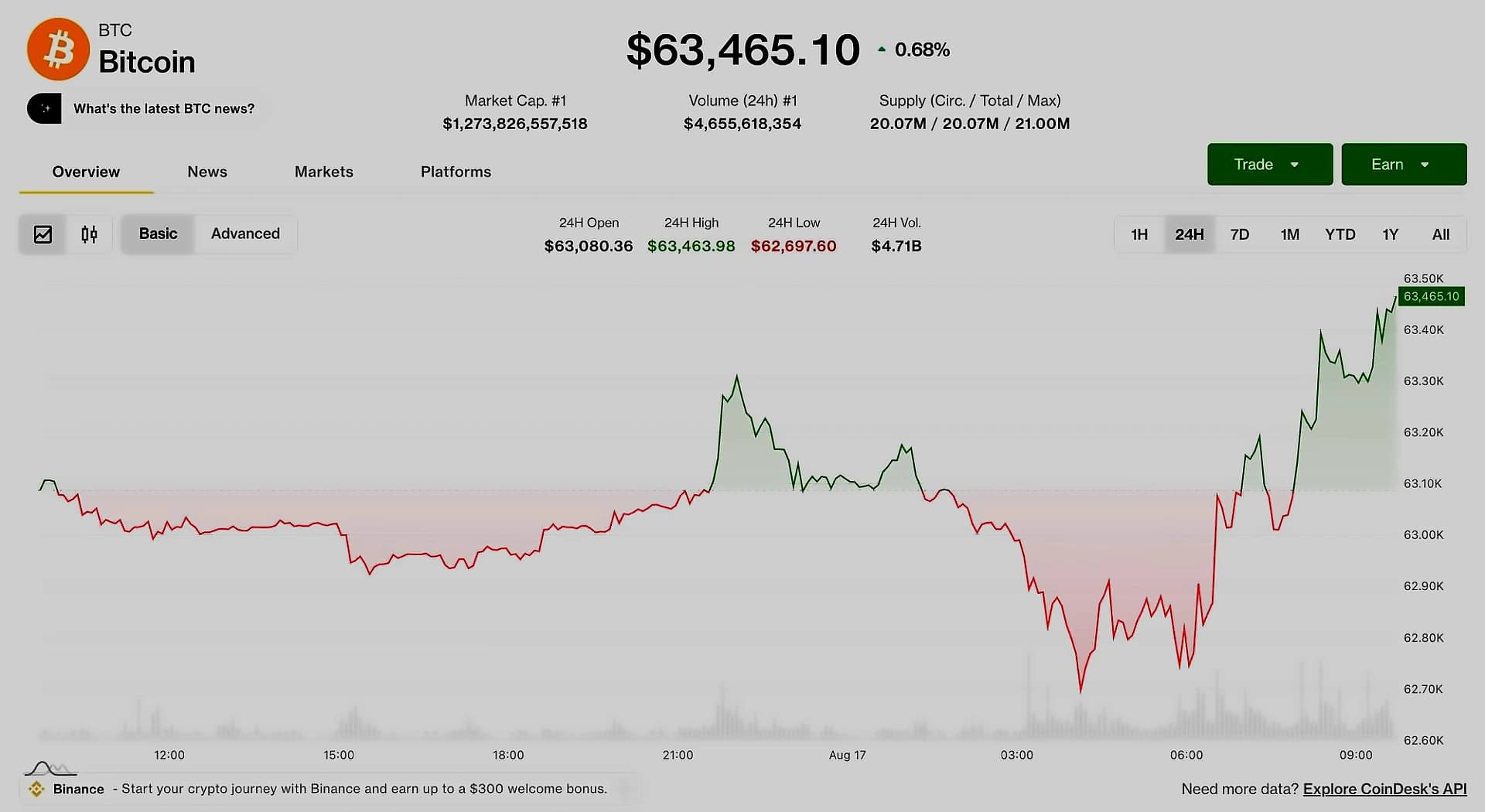
Bitcoin has risen about 23% over the past week to $77,535 as Bitfinex analysts say spot buying, ETF inflows and limited leverage could extend the latest rally. According to crypto.news, the cryptocurrency was up almost 7% over 24 hours and about 23% over seven days, extending a rally that began below $65,000 on Aug. 19. Bitfinex analysts told crypto.news that forced liquidations helped Bitcoin break out of its previous range, but spot purchases and returning institutional demand have continued supporting the price after much of the short pressure cleared. The shape of the move is the tell, as Bitfinex noted that Bitcoin gained between 10% and 11% during the initial breakout, while aggregate open interest rose by only about 4%, indicating that spot buying and short covering performed most of the work. This contrasts with typical squeeze-led advances where open interest jumps in step with price, suggesting the current move has a longer runway with smaller retracements still possible.
Bitcoin jumped roughly 25% to a two-month high above $77,000 within hours of the U.S. Treasury doubling its long-dated bonds buyback operations on August 19. According to Reuters, the move triggered a short squeeze estimated at $3.5 billion across crypto derivatives, with the rally accelerated by more than $1.1 billion in Bitcoin short liquidations within one hour and $1.92 billion in total crypto liquidations across 24 hours. Treasury Secretary Scott Bessent announced plans to double the size of 10-to-30-year buyback operations to at least $4 billion per operation, up from $2 billion previously, effective September 9 through November 4. This adds at least $14 billion of additional liquidity support this quarter, bringing maximum repurchases in the current window to $83 billion, measured against a $32.2 trillion Treasury market and $5.5 trillion in outstanding 20- and 30-year bonds. The announcement worked as designed initially, with the 30-year yield falling to 5.184% from Tuesday's high of 5.34%, and the 10-year yield dropping roughly six basis points to 4.66%. However, by August 20, the 30-year yield climbed back to 5.24%, retracing roughly half of the prior day's drop, while the dollar clawed back most of its post-announcement losses.

Bitcoin has surged past $77,700 as of latest trading, continuing the remarkable rally that began Wednesday following the US Treasury's bond buyback announcement. According to The Economic Times, the rally reflects a cross-asset movement that started in the bond market rather than crypto-native triggers, with the US Treasury effectively managing debt composition and pricing through long-term Treasury issuance funded increasingly through shorter-term debt. The latest buyback operation is less a conventional liquidity injection and more a move to reprice and manage the debt profile while trying to protect long-term borrowing costs. The rally has crossed Bitcoin's 200-day simple moving average at approximately $69,010 and its 200-day exponential moving average near the same level, after remaining below both trend indicators since its sharp June decline. The move comes after BTC broke through $75,000 during Friday's Asian session and later pushed toward $78,000 as buyers continued to chase the breakout, with the rally creating momentum that has flipped quickly from the struggling levels around $64,000 earlier this month. Japanese government bonds have also been under similar pressure this week, with 10-year and 30-year JGB yields hitting multi-decade highs alongside a broader sell-off running through US, European and Japanese sovereign debt.
U.S. spot Bitcoin ETFs received approximately $517 million in net inflows on Aug. 19, their strongest daily result since May, according to SoSoValue data. The funds added about $606 million on Aug. 20, bringing their two-session intake above $1.1 billion. Across Monday through Thursday, the products attracted approximately $1.6 billion, putting them on course for their strongest week of 2026. Bitfinex analysts noted that a complete week of inflows at a similar pace would strengthen support and provide firmer evidence of a lasting change in demand. The analysts identified $68,000–$69,000 as the main support zone because Bitcoin's short-term holder cost basis currently sits within that range, with the area containing Bitcoin's 200-day moving averages that BTC crossed during the rally. Bitfinex also pointed to the Coinbase Premium as a key indicator, with a positive reading suggesting relatively strong demand through the U.S.-focused platform. Standard Chartered's global head of digital asset research Geoff Kendrick said recovering ETF flows and low open interest could allow more investors to return as Bitcoin rises, with "For the first time this year there is now a risk my end year forecast (of USD100k) is too low."
The rally began as the U.S. Treasury announced it would at least double its long-end liquidity-support buybacks, with the maximum purchase size for nominal coupon securities in the 10-to-20-year and 20-to-30-year sectors rising from $2 billion to at least $4 billion per operation beginning September 9. Following the announcement, the 30-year Treasury yield fell from 5.34% to about 5.184%, reducing the return offered by low-risk government debt and making assets like Bitcoin more attractive to investors willing to accept additional volatility. Bitfinex analysts noted that macro conditions have also supported the rally, with the U.S. Treasury Department announcing that it would at least double the maximum size of liquidity-support buybacks on August 19. The latest Treasury move by Treasury Secretary Scott Bessent announcing plans to double long-term bond buybacks has added fuel to the Bitcoin rally, with Reuters reporting that Bitcoin climbed above $70,000 after the Treasury announcement, while crypto-related stocks also rallied. However, Bitfinex warned that renewed increases in Treasury yields and the exhaustion of short covering could pose obstacles to the rally, along with the risk that a large volume of profitable Bitcoin has moved onto exchanges during the rally, creating potential for the year's largest profit-taking wave.