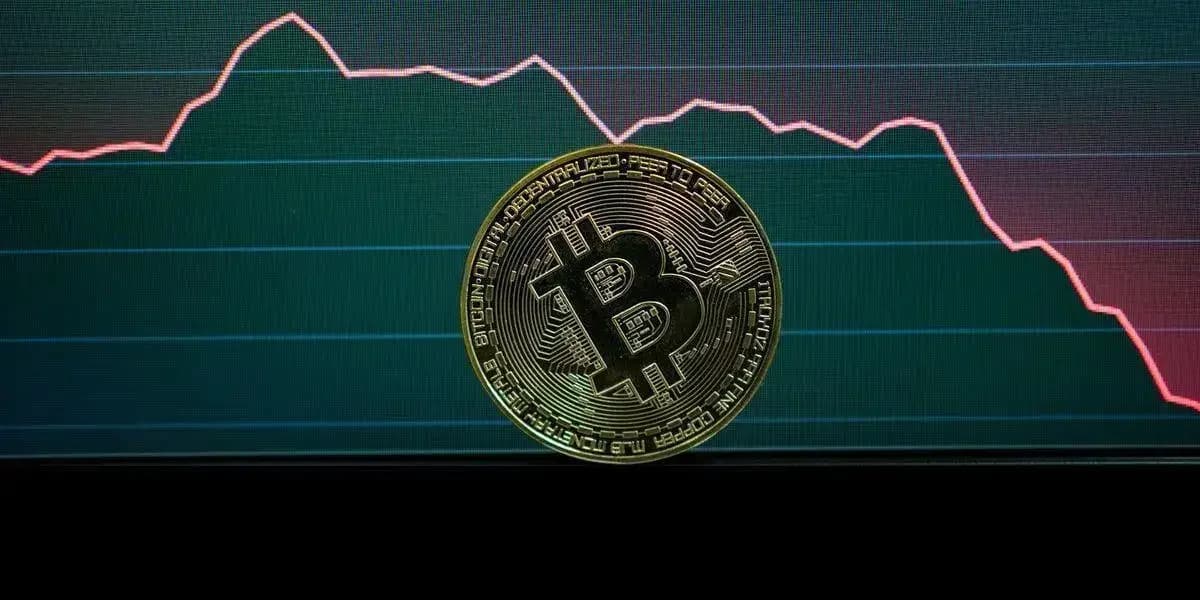
Bitcoin experienced its sharpest fall in over five weeks, dropping as much as 1.5% to $74,017 in Singapore on Thursday. According to reports from The Economic Times, this marked Bitcoin's weakest level since April 20, highlighting the significant impact of current market pressures on the largest cryptocurrency. The decline was accompanied by broader cryptocurrency weakness, with second-largest token Ether falling more than 2% during the same period. However, recent analysis suggests the real driver may be institutional liquidity reversal rather than geopolitical tensions, with Bitcoin dropping from highs near $82,000 in mid-May. The current price action reflects analysts expecting further downside risks as market sentiment remains cautious.
Fund manager Michael Kramer of Mott Capital Management warns that upcoming U.S. Treasury operations could drain about $150 billion in liquidity, potentially deepening Bitcoin's price selloff. As reported by CoinDesk, Kramer argues that Bitcoin tends to be a better liquidity indicator than most other instruments, noting that if Treasury settlements are a drain on liquidity, Bitcoin could be heading much lower. The upcoming operations from May 28 to June 5 include $15 billion in T-bills settling on Thursday, $47 billion in coupon settlements on Friday, $68 billion on Monday, $16 billion in T-bill settlements on Tuesday, and another T-bill settlement on June 4 estimated between $5 billion and $15 billion. These periodic settlements can create temporary but meaningful liquidity drains, especially during heavy issuance periods, with markets performing best when liquidity is abundant.
The cryptocurrency decline was driven by six consecutive days of ETF outflows, including the worst weekly bleed of 2026 at $1.47 billion across crypto funds, according to latest market data. As reported by The Economic Times, US spot-Bitcoin ETFs have seen net outflows of about $1.5 billion so far in May, with $1.26 billion exiting U.S. spot Bitcoin ETFs alone for the week ending May 24. These outflows have erased enough of early-year inflows to put 2026 year-to-date net flows at risk of turning negative, after $3.29 billion poured in during the first half of May. The institutionalization through ETFs has made Bitcoin's price discovery more vulnerable to risk-off sentiment, with flows now managed by institutional portfolios that react to the same signals affecting equities.
The cryptocurrency decline was driven by multiple factors affecting investor sentiment. As reported by The Economic Times, concerns about the global economic outlook and money leaving US Bitcoin exchange-traded funds were the primary catalysts for the price weakness. Investors are exhibiting caution due to geopolitical tensions and rising interest rate fears, creating a challenging environment for cryptocurrency markets despite broader market optimism about artificial intelligence developments. Concerns that the ongoing US-Iran war will fuel inflation and trigger interest-rate increases are unnerving investors even as stocks have soared to record highs on optimism about artificial intelligence. The institutionalization through ETFs has made Bitcoin's price discovery more vulnerable, with meaningful portions of price discovery now happening through ETF share creations and redemptions managed by institutional portfolios that react to risk-off signals affecting equities.
According to recent analysis, Bitcoin's ETF plumbing makes it more vulnerable to institutional flight rather than providing stability. For investors seeking genuine defensive exposure in uncertain geopolitical and macro environments, gold, U.S. mega-cap value, and cash remain the structural choice over Bitcoin. While Bitcoin can be part of a diversified portfolio, it belongs in the speculative sleeve, not the defensive one. The current five-week low represents a lesson investors should have learned long ago - that Bitcoin's price follows institutional liquidity, not chaos, and when flows reverse, the safe-haven label dissolves. Technical analysts identify $72,000 as the critical floor to hold, with $75,000 as immediate resistance overhead. The base case suggests a range-bound grind between $72,000 and $76,000 through early June, while the bear case could see a retest of sub-$70,000 levels if the $150 billion liquidity drain hits harder than anticipated.