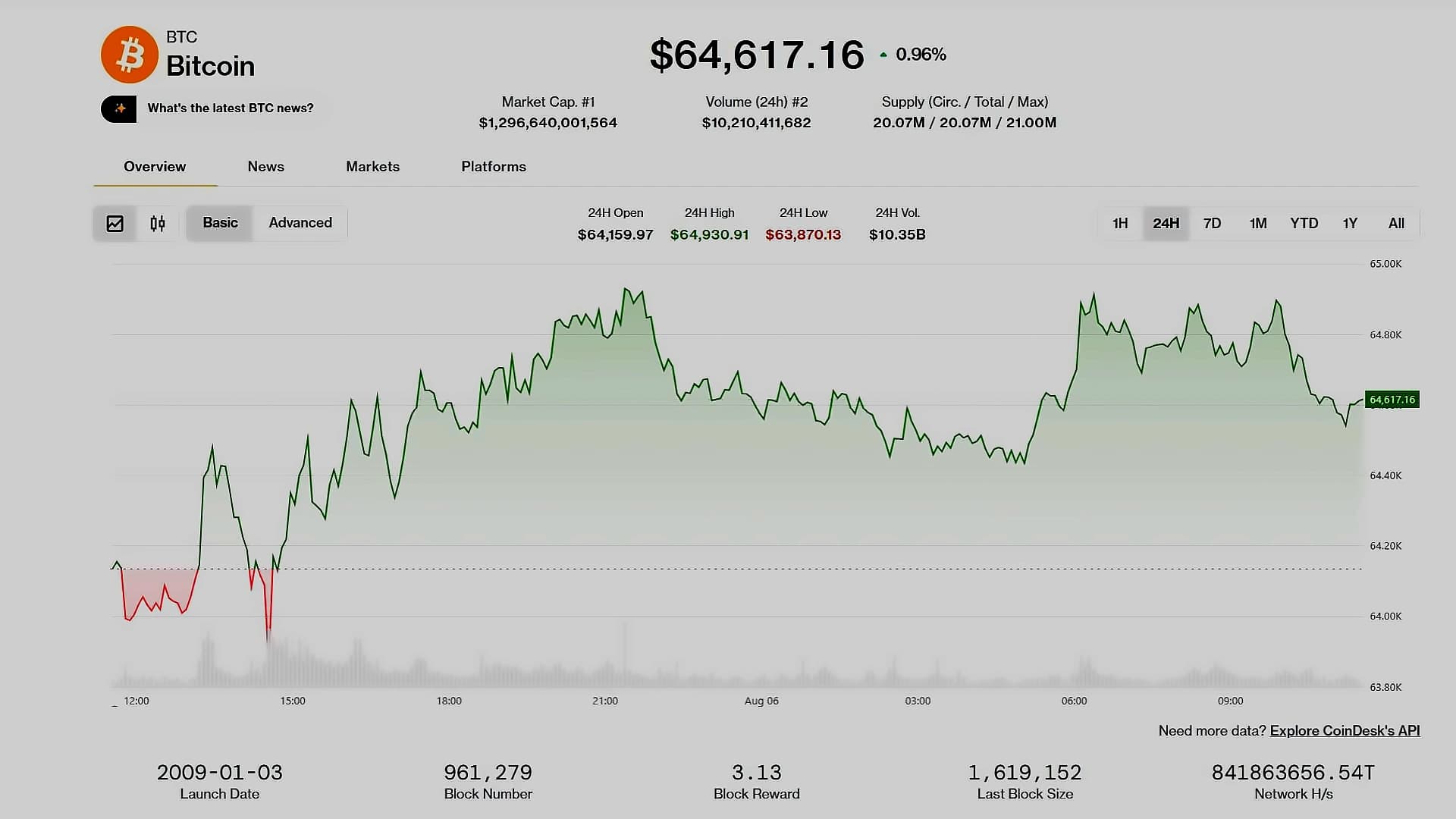
Bitcoin is approaching a major resistance level as the Kansas City Fed's Jackson Hole Economic Symposium begins, creating a critical decision point for the cryptocurrency's near-term direction. Traders view this resistance as a critical decision point: a daily close above it could lead to a bullish breakout, while rejection might push prices lower. The symposium's unusual agenda and key speakers add significant uncertainty, making Bitcoin's price reaction highly sensitive to policy signals. At press time, Bitcoin was trading at $79,031.27 after gaining 1.9% in the past 24 hours, maintaining its position as it approaches the $80,000 resistance level that has previously acted as a ceiling. Investors are closely watching for confirmation after the event to determine if the current move represents a genuine breakout or a false breakout.
Bitcoin's market structure may be shifting from a spot-driven phase toward a futures- and leverage-driven phase, according to CryptoQuant's latest analysis. This transition typically occurs around the early stages of strong bull markets, though it doesn't necessarily mean investors are selling Bitcoin. Rather, traders are preparing to use Bitcoin as collateral or establish leveraged futures positions. As AMBCrypto notes, if traders increasingly position themselves on the long side, leverage can amplify buying pressure and potentially accelerate a price rally. This structural shift comes as Bitcoin approaches the $83,000 resistance level, which analysts suggest could define a genuine new bullish phase if successfully reclaimed.
September 2026 presents an interesting pattern that could determine Bitcoin's near-term direction. Historical data shows mixed September performance, with 2021 recording a 7.03% decline after strong July (18.19%) and August (13.80%) gains. Similarly, 2020 saw a 7.51% September drop following July's 24.03% surge and August's modest 2.83% increase. However, the current setup shows July 2026 up 7.36% and August up 24.19%, creating a similar positive momentum pattern. Despite this concerning historical pattern, Bitcoin ETFs recorded monthly inflows of $172.43 million in July 2026 and $3.52 billion in August 2026, providing hope for a different outcome this year.
Bitcoin's Bull Score has jumped dramatically from 30 to 80, recording the fastest improvement in a year and suggesting the market's underlying momentum has changed unusually quickly. Additionally, the PnL Index moving above its 365-day moving average indicates that Bitcoin holders' profitability and market conditions are improving relative to the long-term trend. This technical setup is very similar to what occurred during the 2023 market recovery. The 30-day change in realized cap remains around 0.4%, though this improvement is still in nascent stages, while short-term holders are sitting at nearly 15% average unrealized profits with their average cost basis near $70,100.
Bitcoin dominance is once again testing the 60% level, creating conditions similar to the May rotation pattern. According to AMBCrypto analysis, technical weakness, macro FUD, and weak on-chain signals are weighing on Bitcoin performance. The market faces additional pressure from macro FUD with Brent crude jumping over $90 due to escalating U.S.-Iran tensions. Trading volumes remain near three-year lows, with Binance spot volumes dropping from $198 billion to roughly $44 billion, while Gate and Bybit also experienced approximately 70% declines. However, a positive development is the decline in futures open interest to a five-month low while Bitcoin was rising, confirming that part of the move came from short covering, though this fuel is finite and requires new buyers for sustained momentum.