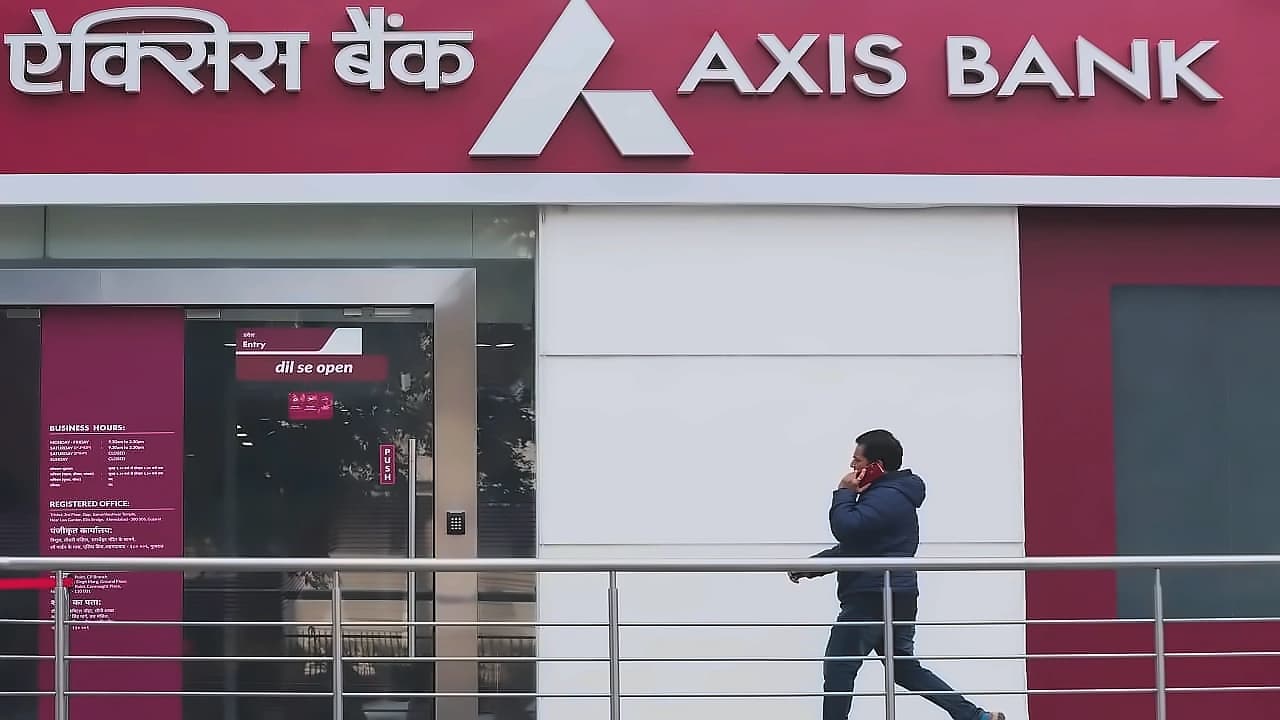
India's private banks are reporting solid profit growth, but the story underneath is getting messy. Net interest margins (NIMs)—the difference between what a bank earns on loans and pays on deposits—are slipping across the board. The pain isn't evenly distributed. Axis Bank saw its NIM fall 37 basis points year-on-year to 3.36% in Q2 FY27. That's a much steeper drop than the 14 bps decline at HDFC Bank (to 3.16%) and the 12 bps decline at ICICI Bank (to 4.18%). Investor Presentation +1
Why is Axis feeling more pressure? Part of the answer lies in how it's funding its growth. The bank raised about ₹1,018 billion through FCNR(B) deposits—foreign currency deposits from non-resident Indians. These aren't cheap. Excluding the impact of these deposits, Axis's NIM would have been 3.47%, still down but less dramatic. The bank is also leaning heavily on term deposits, which grew 27% year-on-year, while its low-cost CASA (current account savings account) deposits grew only 11%. The CASA share of total deposits slipped to 36% from 40% a year earlier. When a bank replaces cheap money with expensive money, margins take a hit. Investor Presentation +1
The Deposit Growth Paradox
HDFC Bank is facing a different kind of squeeze. Its deposits grew 18.8% year-on-year, outpacing loan growth of 16.3%. On the surface, that looks like a luxury problem—more money coming in than going out. But the composition matters. Time deposits jumped 22.8%, while CASA deposits crawled up just 10.8%. The CASA ratio fell to roughly 31.6% from 33.9% a year earlier.
Here's the rub: HDFC Bank is paying for these deposits, but the money isn't fully deployed yet. The bank is deliberately keeping credit growth slower than deposit growth to fix its balance sheet after the merger with HDFC Ltd. Before the merger, its loan-to-deposit ratio was around 86–87%. It shot up to about 110% as the bank funded growth through borrowings. Management now wants to bring it back to the 85–90% range. That means paying interest on deposits that are sitting idle or earning lower returns in the short term, which compresses margins. Transcript
Profit Growth: Quality vs. Quantity
Axis Bank's headline numbers look impressive. Net profit jumped 37.6% year-on-year to ₹7,003 crore. But dig a little deeper, and the picture changes. Net interest income—the core money a bank makes from lending—grew just 11.8%. The profit surge was largely powered by a 52% drop in provisions, which fell to ₹1,694 crore from ₹3,547 crore a year earlier. Investor Presentation
Last year's provisions were inflated by a one-time standard asset provision of about ₹1,231 crore. Strip that out, and the provision decline looks more like 27% than 52%. Still, it's a big swing. If provisions had stayed at last year's levels, Axis's profit growth would have been in the mid-teens, not near 40%. That's a crucial distinction for investors trying to figure out what's sustainable. Investor Presentation
HDFC Bank is moving in the opposite direction. Its provisions rose 2.1% year-on-year to ₹3,574 crore. The bank is building buffers as new regulatory norms on expected credit loss (ECL) provisioning kick in. Management has said the impact would be "nothing material," but the steady increase in provisions is a drag on earnings. The divergence is telling: Axis is riding a wave of lower provisions, while HDFC Bank is steadily adding to its reserves. Transcript
The Market's Verdict
Investors aren't buying the headline growth at face value. Axis Bank shares plunged about 5% to ₹1,225.30 on October 19, leading the Nifty Private Bank index down 2%. HDFC Bank fell more than 2%, while ICICI Bank slipped over 1%. Even banks that hadn't reported yet, like Kotak Mahindra Bank and Bandhan Bank, saw their shares drift lower.
The market is differentiating between quality of growth. Axis's profit surge was seen as provision-driven, not powered by core income expansion. HDFC Bank's modest profit growth, meanwhile, was weighed down by margin pressure and rising provisions. Neither result gave investors a clean reason to cheer. The sentiment shift was sharp enough to trigger a rotation: public sector bank stocks soared up to 8% on the same day, led by Punjab National Bank's strong earnings, while private lenders sold off.
The Trade-Off: Growth vs. Margins
Both Axis and HDFC Bank are making calculated trade-offs. Axis is prioritizing loan growth—advances surged 23% year-on-year, faster than deposit growth of 21%. To fund that expansion, it's tapping higher-cost sources like term deposits and FCNR(B) money. Corporate loans grew 34%, and mid-corporate loans jumped 29%. This mix shift toward wholesale lending can optimize net interest income in the short run, but it also carries thinner spreads and higher refinancing risks. Investor Presentation
HDFC Bank is prioritizing balance sheet repair. It's accepting margin pressure now to replace expensive borrowings inherited from the merger with cheaper deposits. Borrowings still account for about 11% of funding, costing a little over 7%, compared to around 6% for retail time deposits. As these borrowings mature—roughly ₹40,000–50,000 crore over the next couple of years—the bank expects to save 100–125 basis points in funding costs. But until then, it's stuck paying for deposits that aren't fully earning their keep. Transcript +1
Asset Quality: The Silver Lining?
There is some good news in the numbers. Axis Bank's asset quality improved significantly. Gross non-performing assets (GNPA) fell to 1.16% from 1.46% a year earlier, while net NPAs dropped to 0.35% from 0.44%. The gross slippage ratio declined to 1.48%, and net credit cost fell to 0.45%. This improvement provides some cushion against the margin erosion, but it's not a free lunch. Much of the NPA ratio improvement comes from loan growth expanding the denominator, and new wholesale loans take time to season. Investor Presentation
HDFC Bank's asset quality also improved, with GNPA easing to 1.11% from 1.24% a year earlier. But the bank isn't leaning on this to boost profits. Instead, it's continuing to build provisions, reflecting a more cautious approach to credit costs.
What Lies Ahead
The margin pressure isn't going away overnight. The Reserve Bank of India raised the repo rate by 25 basis points to 5.50% in early October, shifting its stance to "calibrated tightening". This hike will push up yields on floating-rate loans over the coming quarters, but deposit costs will follow with a lag. The net effect on margins depends on how quickly banks can pass on higher rates to borrowers versus how fast they have to raise deposit rates to keep customers.
For Axis Bank, the key question is whether it can stabilize NIM around its through-cycle target of 3.80%. The current 3.36% is a long way off, and management hasn't provided a clear roadmap in the available Q2 commentary. For HDFC Bank, the focus is on bringing down the loan-to-deposit ratio and running off high-cost borrowings. Until that process completes, margins are likely to remain under pressure. Transcript
The broader message for investors is that the easy growth phase for private banks may be over. The sector is moving into a period of trade-offs—between growth and margins, between provisioning and profits, and between short-term earnings quality and long-term balance sheet health. The stocks' reaction suggests the market is already pricing in some of this pain. The question now is how long it lasts.