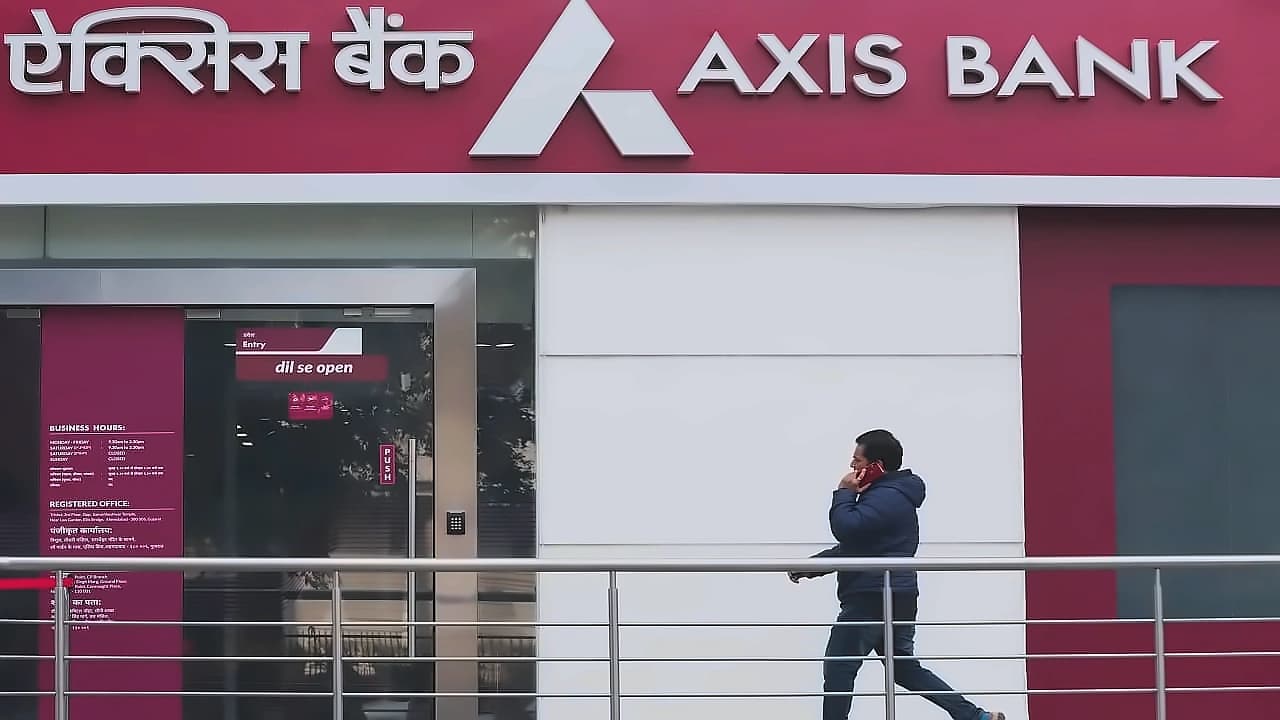
Private banking stocks experienced significant selling pressure on Monday following disappointing first-quarter earnings that highlighted margin compression as the primary concern affecting profitability. The Nifty Private Bank index tumbled 2.3%, with Axis Bank declining 5.4%, HDFC Bank falling 5.1%, Yes Bank dropping 2.8% and Kotak Mahindra Bank falling 2%. ICICI Bank bucked the trend, ending 1.1% higher despite also facing margin pressures. The Bank Nifty fell 1% to 57,945, with foreign portfolio investors (FPIs) raising shorts on the Nifty Bank after net selling Nifty Bank futures worth ₹1,201 crore on Monday. The selling in Nifty Bank futures was accompanied by an overall provisional sale of ₹1,121 crore in the cash market by FPIs, as reported by The Economic Times. Narendra Solanki, head of fundamental research at Anand Rathi Share and Stock Brokers, noted that "Among the private banks that reported results over the weekend, except for ICICI Bank, most others saw softer net interest margins (NIMs) and lower provisions, due to which profits looked higher." The market is now pricing in margin compression, which is reflected in the weakness seen across banking stocks.
Net interest margins continued facing significant pressure across India's private banking sector in Q1 FY27, with HDFC Bank's NIM falling to 3.26% - among the lowest in recent quarters - down from 3.4% in the preceding quarter. ICICI Bank's NIM grew by 4 basis points to 4.36%, demonstrating a stark contrast in performance. Kotak Mahindra Bank posted a 19-quarter low NIM of 4.53%, declining 12 basis points year-over-year and 14 basis points quarter-over-quarter. Axis Bank reported NIM at 3.46%, down 34 basis points year-over-year and 16 basis points quarter-over-quarter. As per Macquarie Capital's head of financial services research Suresh Ganapathy, "Either you get growth or you get margins. This quarter across the board was marked by margin disappointments, which the market won't like, in our view." The margin compression was primarily driven by sluggish retail loan demand pushing banks towards lower-yielding corporate loans, as reported by The Economic Times. Sunny Agrawal, head of research at SBI Securities, confirmed that barring ICICI Bank, leading private lenders such as HDFC Bank, Axis Bank and Kotak Mahindra Bank reported relatively lower growth in net interest income (NII) compared with balance-sheet growth, indicating pressure on NIMs. Sudhir Joshi, consultant at Khambatta Securities, noted that "There is some caution among FPIs as low-cost funds (Casa deposits) of some banks are falling, raising the overall cost of funds and pressuring their NIMs."
Private sector banks demonstrated robust credit expansion in Q1 FY27, with retail loan disbursements strengthening across banks after slowing over recent quarters. According to the latest Equirus Securities mid-quarter banking review, retail credit showed signs of recovery with stronger disbursements in mortgages, personal loans and vehicle finance across large private sector banks. ICICI Bank and Axis Bank led loan growth among large private lenders, while Bank of Maharashtra continued to outpace peers among public sector banks. Federal Bank maintained healthy momentum, aided by faster growth in gold loans, commercial banking and loan-against-property segments. As per ICICI Bank's executive director Sandeep Batra, "The loan growth is across all segments. During the quarter, we saw a lot of working capital requirements. We could also capitalise on the moderation in the equity and bond markets."
Corporate lending continued to drive credit growth, supported by working capital requirements, refinancing activity and borrowers preferring bank credit amid uncertain market conditions rather than fresh capacity expansion. Axis Bank's corporate advances surged 37.5% year-on-year, while YES Bank reported a sharp 41.4% increase as it continued rebuilding its wholesale book. HDFC Bank and ICICI Bank recorded corporate loan growth of around 18.6% and 18.5% respectively. The Equirus Securities review noted that corporate loan demand remained healthy, supported by working capital requirements, refinancing activity and borrowers preferring bank credit amid uncertain market conditions rather than broad-based private capital expenditure cycles. Rising bond yields in the June quarter, with 10-year government debt yields rising to a high of 7.13% and averaging 6.99%, nudged corporates toward banks to help meet their working capital needs.
Banks are implementing multi-year strategies to address margin compression, with HDFC Bank targeting to shift its loan mix back toward retail from the current 52% to a targeted 60%. The bank's plan focuses on lowering funding costs over time by scaling up its customer base through branch expansion, rather than chasing deposit balances directly. For Axis Bank, the margin pressure reflects the challenging operating environment, with the bank continuing to focus on maintaining its competitive position while managing the impact of rising funding costs. The bank's NIM for Q1FY27 came in at 3.46%, down 34 basis points year-over-year and 16 basis points quarter-over-quarter. HDFC Bank said margins aren't going to snap back to pre-merger levels overnight, with both structural levers being multi-year initiatives rather than quarterly fixes. Sunny Agrawal noted that going forward, as deposits are repriced, banks mobilise FCNR deposits and contribution from high-yielding retail portfolio increases, margins should expand. The sector's resilience in maintaining credit growth despite margin pressures reflects banks' ability to capitalize on working capital requirements and market opportunities, while maintaining disciplined risk management approaches across their loan portfolios.
Despite the recent earnings pressure, banking stocks have shown signs of revival in recent weeks in the wake of renewed foreign fund flows after record withdrawals from the sector in 2026. In July so far till Friday, the Private Bank Index had risen 2.1% as against the 2% gains in Nifty. Foreign investors returned to financials in the second half of June, buying shares worth ₹14,634 crore after pulling out ₹11,263 crore in the first part of the month. From January to May, they had withdrawn ₹114,826 crore from the sector. Macquarie maintained an 'Outperform' rating on ICICI Bank, HDFC Bank and Axis Bank after the first quarter results, with the brokerage noting that ICICI Bank's profit growth of 16% year-on-year exceeded expectations and that valuations of HDFC Bank and Axis Bank remain reasonable. ICICI Bank remains a top pick among leading private sector lenders, with SBI Securities' Sunny Agrawal naming it his top pick, followed by Axis Bank. For Solanki, ICICI Bank remains a preferred pick, while HDFC Bank can be considered a contra bet at current levels for investors with a horizon of more than a year. Sudhir Joshi expects the Nifty Bank to trade in a range of 56,000-61,000, with any downward pressure attracting buying interest from domestic investors. Dr V.K. Vijayakumar from Geojit Financial Services noted that "Valuations of the likes of HDFC Bank are compelling, and any further correction of say 1-2% will be a good buying opportunity." HDFC Bank was trading at 2.57 times its book value on Tuesday, while historically its price-to-book has been above 4, according to Vijayakumar, who argued for a compelling valuation.