The Hormuz Effect: When Geography Becomes Economics
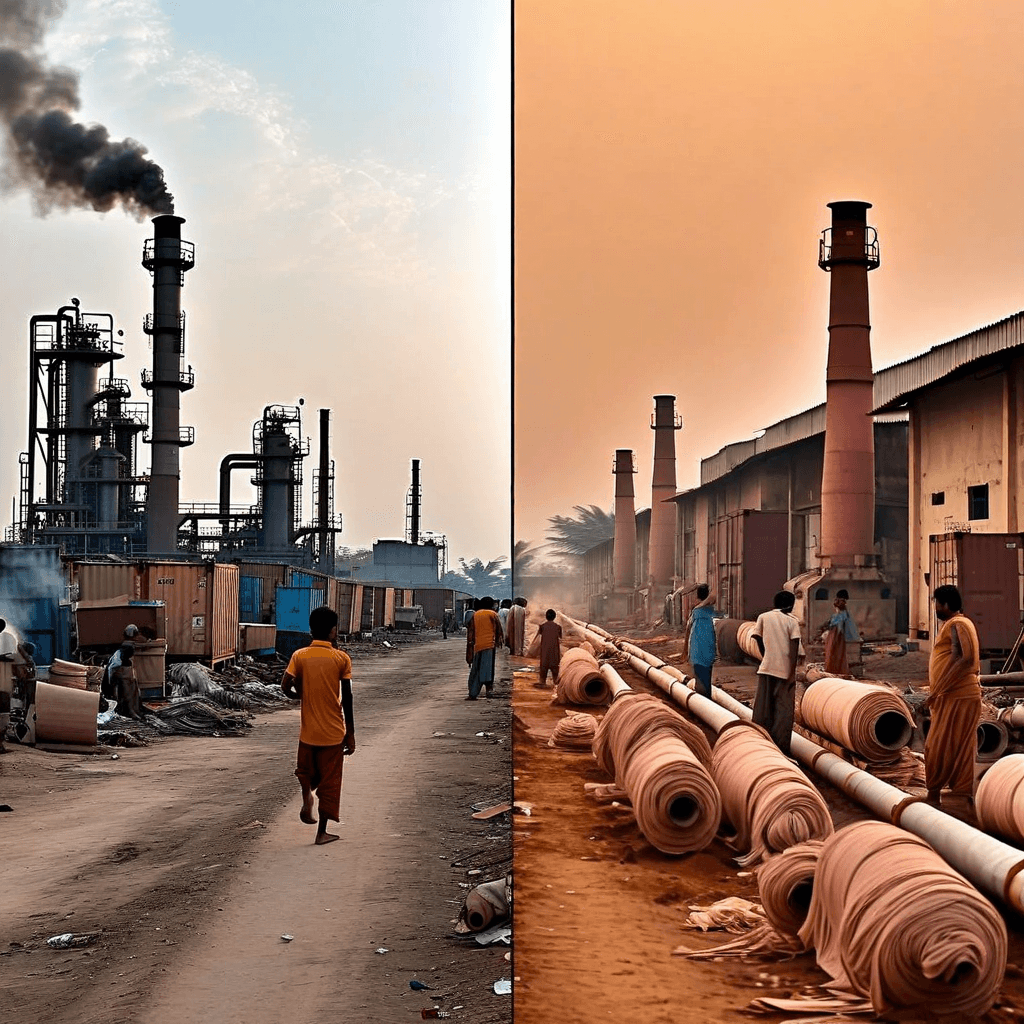
When Iran effectively closed this critical maritime chokepoint in early 2026, it didn't just disrupt shipping routes—it sent shockwaves through India's manufacturing ecosystem. The ripple effects have been far-reaching, from ceramic kilns in Morbi to activewear factories in Tiruppur, creating margin pressure across sectors that will likely persist well beyond the immediate crisis.
Techno Sportswear: When 40% Cost Increases Meet Limited Pricing Power
Yet, despite these cost pressures, the company has been unable to fully pass through these increases to customers.
The structural constraints are clear. India's activewear market is highly competitive, with global giants like Nike, Adidas, and Puma dominating the premium segment while Decathlon captures the mass market. TechnoSport's positioning as an affordable activewear brand leaves it with limited pricing power. When costs rise 40%, raising prices risks losing price-sensitive customers to cheaper alternatives. The company's 60% capacity utilization—down from pre-crisis levels—reflects the demand destruction from higher prices. With margins already in low single digits, TechnoSport faces a classic margin squeeze: absorb the hit and bleed margins, or pass through costs and lose volumes.
Morbi Ceramics: The ₹10,000 Crore Revenue Loss
The shutdown resulted in a staggering ₹10,000 crore revenue loss for the cluster's 700-odd units.
The shutdown was directly caused by India's complete dependence on West Asian natural gas. When the Strait of Hormuz closed, propane and LNG supplies from Qatar, Oman, and Saudi Arabia dried up. Morbi's ceramic units, which rely on these imports for their energy-intensive kilns, had no alternative but to halt operations. The shutdown was particularly severe because ceramic kilns require continuous operation to avoid equipment damage and product defects.
Gas Price Shock: From ₹40 to ₹73 Per Cubic Foot
The cost impact on Morbi ceramics has been severe. Natural gas prices surged from ₹40 to ₹73 per cubic foot—an 82.5% increase. Since gas accounts for 30% of production costs, this translates to a 40% overall cost increase for manufacturers.
Manoj Arvadhya, president of the Morbi Ceramic Manufacturers Association, explained that the industry has managed to pass through only about 20% of this cost increase. The remaining 20% margin compression is hitting manufacturers hard. The gap between cost increases and price pass-through represents pure margin erosion that cannot be sustained indefinitely.
Paint Sector: The 10% Pass-Through Dilemma
India's paint sector illustrates the patchy nature of cost pass-through.
Yet, companies like Kansai Nerolac Paints have only managed to pass through approximately 10% of this increase to customers.
The reasons are structural. Paint demand is relatively elastic—higher prices can delay home renovation projects. Competition is intense, with Asian Paints commanding strong brand equity and scale advantages. Smaller players like Kansai Nerolac face competitive pressure that limits pricing flexibility. Kansai Nerolac's 8% sequential profit decline in Q4 FY26 to ₹112.27 crore reflects this margin compression.
The Patchy Pass-Through Puzzle
Elara Capital's assessment that India Inc's ability to pass through higher costs is "patchy" captures the diverse responses across sectors.
They can implement calibrated price hikes (2-5% for HUL, 4% for Dabur) while protecting volumes.
In contrast, sectors facing demand elasticity or intense competition—like ceramics and smaller paint players—can only absorb a portion of cost increases. They're balancing revenue preservation against volume risk, often choosing to protect market share over margins. This strategic trade-off explains why margin impact varies so dramatically across sectors despite facing similar cost pressures.
The Double-Whammy: Fuel Hikes and Demand Destruction
The ₹3 per litre fuel price hike has created a double-whammy for Indian industry. Crisil Intelligence's Miren Lodha identified that this increase will simultaneously increase freight costs and accelerate demand slowdown. Diesel drives nearly 70% of India's freight movement, pushing transportation costs up by 5-10%.
The causal pathway is straightforward. Higher fuel prices increase household transportation costs, eating into disposable income. Consumer sentiment declines as inflation expectations rise. This creates demand destruction across consumption-driven sectors like FMCG, automobiles, and cement. Companies face higher costs on one side and weakening demand on the other—a perfect storm for margins.
The Feedback Loop: Margin Pressure Meets Demand Destruction
The combination of margin pressure (100 bps across 600+ listed companies) and potential demand destruction from fuel hikes creates a dangerous feedback loop. Lower volumes spread fixed costs over fewer units, further compressing margins. Companies with weaker balance sheets may face solvency concerns.
This feedback loop could significantly deteriorate corporate profitability in Q1 FY27. Companies are caught in a trap: raise prices and lose volumes, or absorb costs and bleed margins. Neither option is ideal. The outcome depends on sector-specific demand elasticity and competitive positioning.
The Monsoon Factor: A Third-Order Risk
Adding to these challenges is the monsoon forecast. The India Meteorological Department projects below-normal rainfall at 92-94% of LPA for 2026, with risks concentrated in the latter half of the season. A weak monsoon could reduce rural incomes and agricultural output, further dampening demand in rural markets.
For companies already grappling with geopolitical shocks and fuel inflation, a poor monsoon would be the last straw. Rural demand, already under pressure from higher fuel and food prices, could collapse. This third-order risk factor compounds the challenges for FMCG, two-wheeler, and tractor manufacturers who depend heavily on rural consumption.
The Bottom Line: Resilience Amidst Fragility
The West Asian crisis has exposed structural vulnerabilities in India's manufacturing ecosystem. Companies with strong balance sheets, pricing power, and diversified sourcing are navigating the storm better. Others—particularly MSMEs in clusters like Morbi and Tiruppur—face existential challenges. The path forward requires building resilience through supply chain diversification, working capital optimization, and strategic pricing. The crisis may be temporary, but its lessons will shape India's manufacturing strategy for years to come.