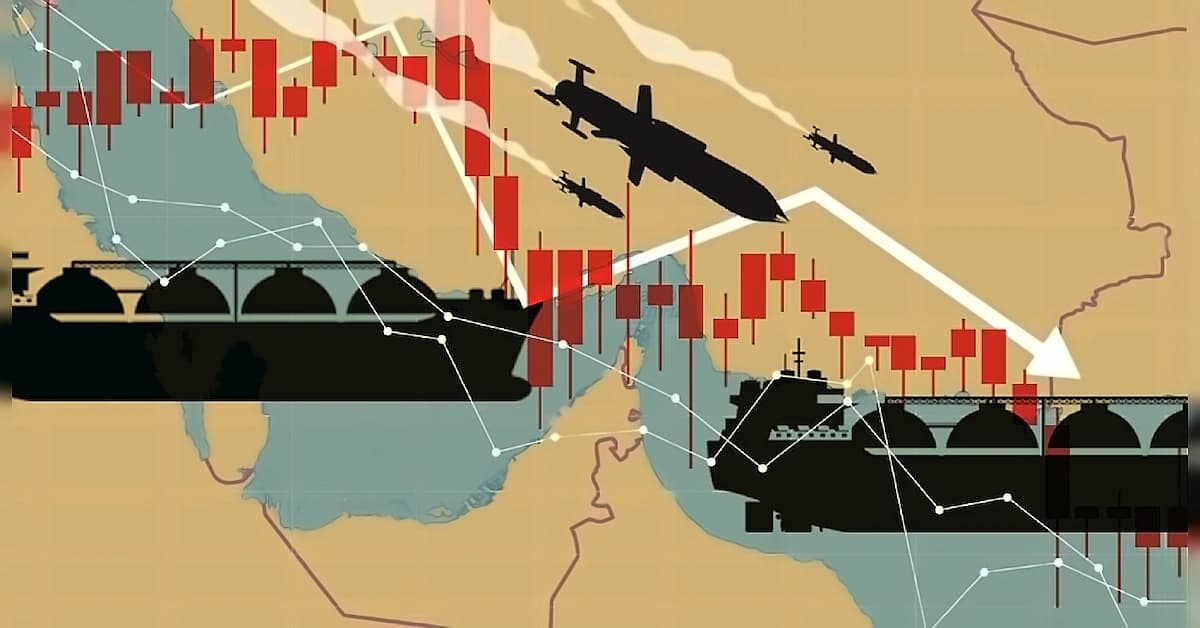
When the Strait of Hormuz effectively closed in February 2026, Indian companies with West Asia exposure faced an immediate stress test. The results were revealing—not in who suffered most, but in how differently they responded to the same geopolitical shock.
The Exposure Paradox
Yet the infrastructure giant maintained revenue stability better than peers with lower exposure. The key lies in project flexibility. Infrastructure work can be rescheduled; shipments cannot. InvestorPresentations
KEC International, with 20% West Asia exposure, faced sharper margin pressures. Its execution disruptions came from two fronts: supply chain bottlenecks in the Middle East and labor shortages in India. The LPG crisis triggered by the war created a domestic shock—migrant workers left cities as cooking fuel shortages hit, dropping KEC's workforce from 30,000 to 15,000 at one point. This dual vulnerability—international and domestic—explains why KEC's stock declined 31.8% year-to-date despite lower West Asia exposure than L&T. InvestorPresentations
Kalpataru Projects presents the most interesting case. With only 11% West Asia exposure, supply chain delays affected ₹200-300 crore of revenue in the March quarter. Yet management stated disruptions "have not affected execution or margins". The company delivered 22% revenue growth and 82% profit growth for FY26. How? Geographic diversification across 75+ countries provided natural hedging. When one region slowed, others accelerated. The ₹200-300 crore impact represented just 4-6% of quarterly revenue—a manageable hit given the company's scale. InvestorPresentations
The Export Vulnerability
KRBL's situation illustrates why export models face higher risk during shipping route disruptions. With 61% of basmati export revenue from West Asia, the company was immediately exposed when the Strait of Hormuz closed. Around 200,000 tonnes of rice got stuck at ports, and prices fell $50 per tonne as shipments paused. The stock declined 7% year-to-date. AnnualReports
The difference is fundamental. Infrastructure companies work on milestone-based payments with project timelines that can adjust. Export companies deal with time-sensitive inventory and fixed-price contracts that limit their ability to pass through cost increases. When shipping routes choke, infrastructure projects slow down; export shipments stop entirely.
The Resilience Premium
VA Tech Wabag maintained "zero execution disruption" across its West Asia sites. Water treatment is an essential service that cannot be deferred. The company's projects are situated away from sensitive zones like US bases, and it operates through a combination of onshore presence and offshore support from Chennai. InvestorPresentations
The company's financial strength matters too. Six consecutive years of net cash positive status and a debt-equity ratio of 0.16 provide flexibility that KEC, with its 0.84 debt-equity ratio, lacks . When disruptions hit, cash-rich companies can absorb shocks; leveraged ones face amplified pressure.
The Peace Deal Catalyst
L&T's 3.35% single-day gain following the peace announcement reflects rapid market reassessment. With 52% international order book composition, the company stands to benefit significantly from post-conflict infrastructure recovery. The causal chain is clear: peace deal → geopolitical risk reduction → input cost expectations (lower crude, logistics, insurance) → project restart confidence → margin recovery expectations → international order book revaluation. InvestorPresentations
KEC International's ₹25,000-30,000 crore active tender pipeline in West Asia and 10-15% FY27 revenue growth expectations show how geopolitical resolution translates into infrastructure investment demand. Post-conflict rehabilitation, grid redundancy creation, and energy security investments create opportunities that were deferred during the conflict.
For KRBL, the Strait of Hormuz reopening offers immediate relief. Stranded vessels can clear, freight and insurance costs should normalize, and the $50 per tonne price decline is expected to reverse.
The Secondary Players
Companies with indirect West Asia exposure showed lower volatility. Siemens Energy gained 42.07% year-to-date, ABB India rose 30.79%, and Adani Ports delivered 26.23% one-year returns . Their resilience comes from technology leadership, essential service characteristics, and domestic focus that provides geographic balance.
JSW Infrastructure, despite an Oman port project, maintained moderate volatility through strategic partnerships that control exposure. The company's 27 MTPA Oman port development represents calculated expansion rather than broad exposure.
What the Volatility Reveals
KRBL's 61% exposure resulted in only -7% year-to-date performance, while L&T's 37% exposure showed +1.08% year-to-date . The difference lies in project flexibility versus shipping dependencies, financial strength versus leverage, and market cap effects on liquidity.
The peace deal will benefit all exposed companies, but the recovery will be uneven. Infrastructure companies with strong order books and execution capabilities will capture disproportionate opportunities. Export companies will see immediate logistics normalization but face longer demand recovery timelines. Technology leaders will benefit from structural trends that transcend geopolitical cycles.
The key takeaway for investors: focus on operational resilience metrics—essential service positioning, financial strength, geographic diversification, and execution quality—rather than simply avoiding companies with West Asia exposure. The companies that maintained execution continuity during the conflict are best positioned to capture the post-deal opportunities while maintaining the valuation premiums they earned during the crisis.