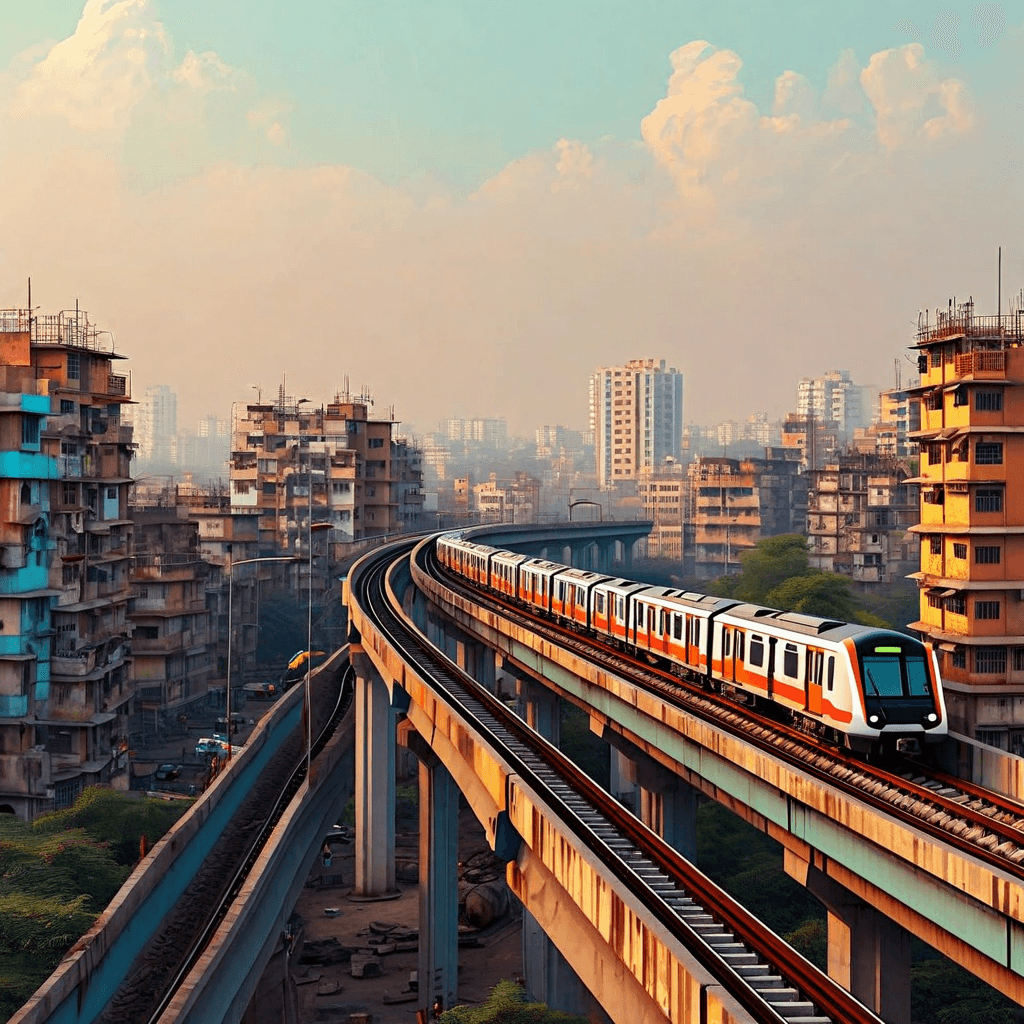
The Mumbai Monorail's suspension on September 20, 2025, followed repeated technical failures that exposed systemic vulnerabilities. Power failures during heavy rains caused trains to stall mid-journey, stranding hundreds of passengers. The root cause involved the Current Collector Shoes mechanism—when overcrowded trains navigated curves, coaches tilted beyond 3cm, disconnecting from the 750V power supply. Backup systems also failed, compounding the problem. Only 5 of 10 rakes were operational before suspension, with chronic spare parts shortages from the previous Malaysian supplier Scomi Rail, which went bankrupt in 2019 .
The revival strategy centered on two pillars: indigenous technology and professional outsourcing. Ten new rakes from Medha Servo Drives, featuring 21 modern enhancements including CCTV cameras, fire-safety compliance, and improved suspension, replaced the problematic imported fleet . More critically, an indigenous Communication-Based Train Control (CBTC) signalling system—India's first—replaced the legacy system. Bureau Veritas granted safety certification in February 2026 after two months of rigorous testing, though final statutory clearance from a retired Commissioner of Metro Rail Safety official remains pending .
The outsourcing decision reflects calculated trade-offs. MMMOCL selected Power Mech Projects as the lowest bidder at ₹296 crore over five years, beating Adani Infrastructure by ₹12 crore (4% savings) . The choice prioritized cost competitiveness while requiring technical qualification—two bidders were disqualified during evaluation . Power Mech brings 75 GW+ of O&M experience across industrial sectors, though this marks its urban transit debut InvestorPresentations. The company's 24x7 operational expertise from power plants transfers well to transit's reliability demands, though the learning curve for monorail-specific operations remains uncertain .
Delhi-Faridabad Metro's Regional Impact
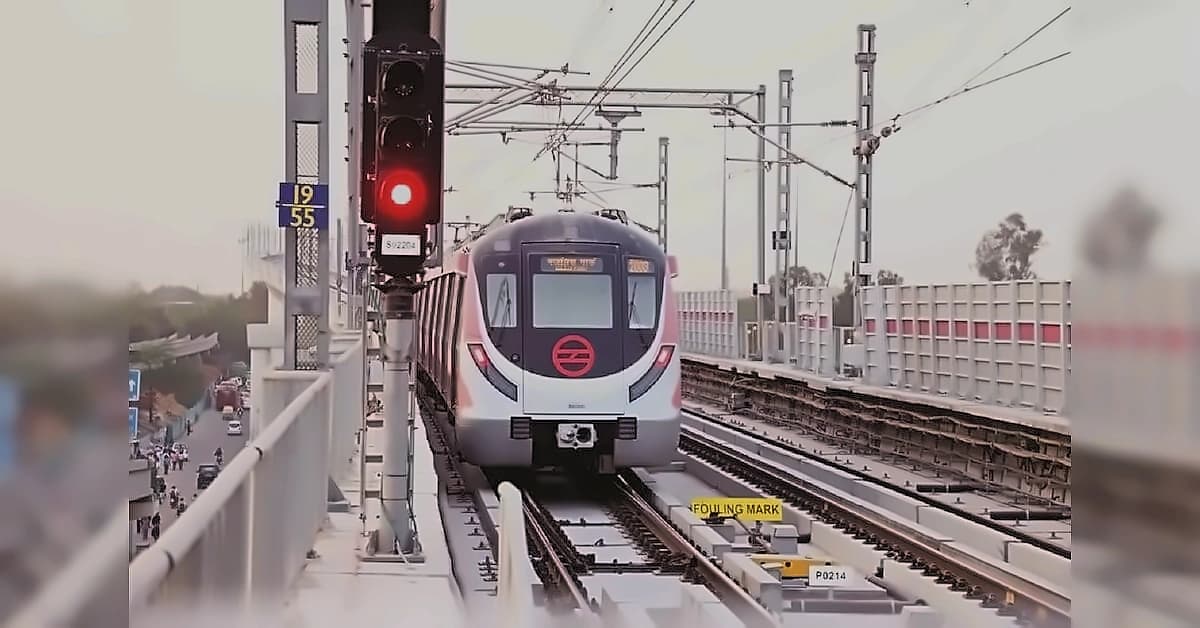
The Delhi-Faridabad Metro extension represents a fundamentally different approach—expansion rather than revival. The Badarpur to Escorts Mujesar corridor, costing Rs. 2,500 crore, features nine elevated stations along Delhi-Mathura Road (NH-2) . The funding model demonstrates strong state commitment: Haryana contributed Rs. 1,557 crore (62.3%), the Centre Rs. 537 crore (21.5%), and Delhi Metro Rs. 400 crore (16%) . Built with 95% indigenous content, the corridor serves 200,000 daily commuters, offering a reliable alternative to congested road transport .
The economic rationale for Haryana's substantial investment is compelling. Faridabad hosts 2,499 registered factories—more than any other Haryana city—including major employers like Escorts Limited, Havells India, JCB, and Whirlpool . The metro improves workforce accessibility, reducing commute times from 60-90 minutes to 30-45 minutes while eliminating weather-related disruptions . This reliability boosts productivity by 10-15% and expands the labor pool across the National Capital Region. Congestion reduction delivers additional benefits: 30-40% fewer private vehicles on NH-2, 40-50% lower emissions, and annual savings of ₹400-500 crore in fuel, time, and vehicle operating costs .
Property values along the corridor are responding predictably. Locations within 500 meters of stations expect 25-35% appreciation over 12-24 months, with Neelam Chowk Ajronda, NHPC Chowk, and Old Faridabad seeing the strongest gains . Faridabad's price advantage—40-60% below Gurugram and Noida—combined with improved connectivity, is attracting both mid-income and premium developments . Naharpar in Greater Faridabad is emerging as a high-potential micro-market, with infrastructure improvements driving investment decisions. Over five years, overall appreciation of 35-50% is projected, with prime station-adjacent properties potentially gaining 50-70% .
Unified NCR Transit Vision
The most ambitious aspect is the proposed Gurgaon-Faridabad connection, announced by the Prime Minister alongside the Delhi-Faridabad inauguration . This 64-km Namo Bharat RRTS corridor, with 52 km in Haryana, will connect Iffco Chowk in Gurugram through Faridabad to Noida and Greater Noida . The integration strategy includes two RRTS-cum-metro stations in Gurugram, six additional metro-only stations, and a 1-km extension of Gurugram Rapid Metro to link with the RRTS station at Sector 61 .
This creates a unified NCR transit network with seamless interoperability between Delhi Metro, Rapid Metro, and regional rail systems . The RRTS offers 160 kmph high-speed connections with 15-minute frequencies, enabling 100-km journeys in under 50 minutes . Commuters benefit from single-ticket travel across modes, real-time information, and coordinated scheduling. The economic impact extends beyond individual corridors—integrated labor markets, enhanced business access, and reduced regional emissions support sustainable development across the entire NCR.
Challenges and Strategic Implications
Both projects face distinct challenges. Mumbai Monorail's restart depends on synchronizing Medha Servo Drives' testing schedules with Power Mech's O&M readiness. MMMOCL has set an internal deadline of May 7, 2026, but delays in CMRS appointment or system testing could push this back . The outsourcing model gives MMRDA cost certainty and operational expertise but requires robust performance monitoring to ensure service quality. Long-term, the contract structure must balance Power Mech's efficiency incentives with MMRDA's strategic control over technology upgrades and system expansion.
The Delhi-Faridabad expansion and proposed Gurgaon-Faridabad connection require unprecedented multi-jurisdictional coordination between Delhi, Haryana, and Uttar Pradesh. Technical integration of different signaling systems, operational procedures, and payment mechanisms presents significant complexity. However, the economic rationale is compelling—regional integration through improved mobility supports labor market efficiency, attracts investment, and reduces environmental externalities.
These developments reflect India's evolving approach to urban transit: learning from failures through indigenous technology and professional management, while expanding regional connectivity through collaborative investment. The success of these projects will influence future urban transit planning across Indian cities, potentially establishing new models for public-private partnerships, technology localization, and regional integration.