The Delhi Metro has evolved into a global public transit model since opening in 2002, overcoming early challenges to build one of the world's longest metro networks. According to reports from Business Standard, the system's completion of a new line in March made Delhi's subway system longer than New York City's, achieving this milestone for a total cost of roughly $10 billion - less than New York spent to build a 3.5-mile tunnel. As noted by Gerald Ollivier, the World Bank's lead transport specialist for India, the Delhi Metro proved that complex urban rail projects in low- and middle-income countries can be delivered and operated to very high standards.
The Delhi Metro faced significant obstacles during its initial construction phase, with two major bridge collapses occurring in October 2008 and July 2009. According to Business Standard, the October 2008 incident involved a malfunctioning crane contributing to a bridge collapse in East Delhi, killing two people and wounding 17 others, while the July 2009 collapse in south Delhi resulted in five deaths and 15 injuries. Managing Director E. Sreedharan, known as the 'Metro Man of India', took responsibility for these accidents and sent his resignation letter to then-Chief Minister Sheila Dikshit, though she refused to accept it. The system also required extensive relocation of thousands of residents, particularly lower-income and historically marginalized communities, with legal compensation and alternative housing provisions mandated under law.
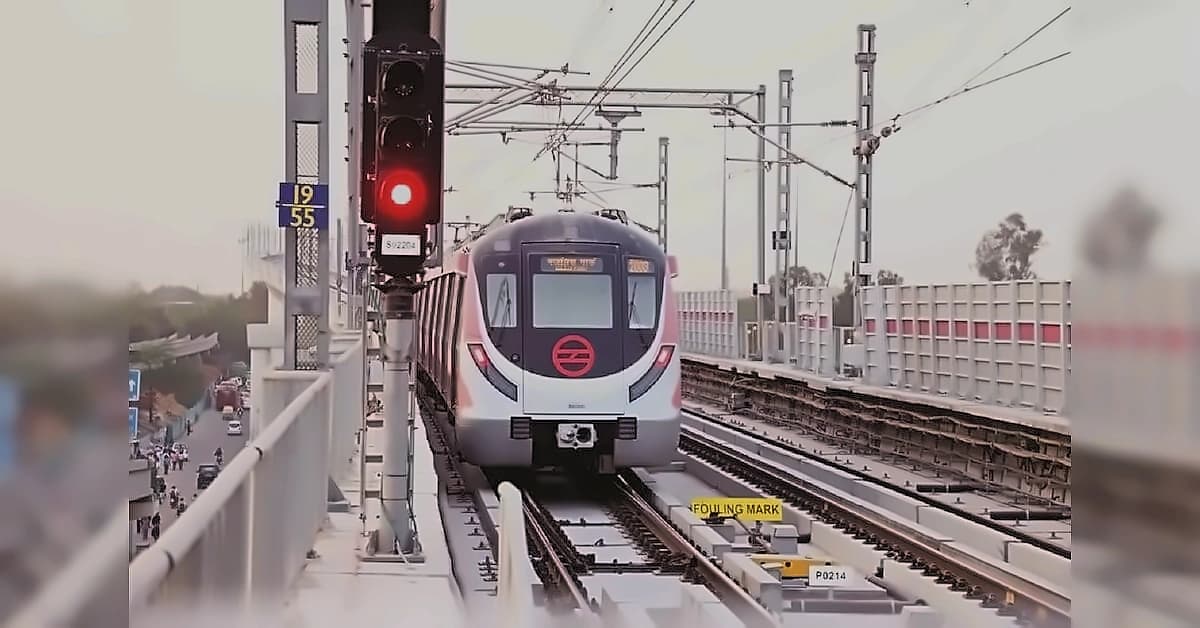
The Delhi Metro has achieved remarkable operational standards, with trains running 99.9 percent on time in the previous year and becoming the world's first railway project to be awarded carbon credits by the United Nations. As reported by Business Standard, the system is 33 percent solar-powered and features train cars that capture brake energy in batteries. The metro has also implemented comprehensive passenger amenities, evolving from basic operations to stations now hosting restaurants, police booths, and retail kiosks, with glow signs and color-coded floor markings guiding commuters to different lines and landmarks.
The metro has significantly transformed daily life for Delhi residents, particularly working women who rely on its safety and predictability for commuting. According to Business Standard, the system has kept 600,000 vehicles off Delhi's streets according to estimates by the International Union of Railways. The metro has also introduced innovative features including women-only coaches with security cameras and marshals to prevent unauthorized entry, while addressing early adoption challenges through street plays, educational programs, and the introduction of digital fare systems over time.
The Delhi Metro Rail Corporation (D.M.R.C.) has expanded beyond Delhi's borders, now consulting for metro projects in Dhaka, Bangladesh, and Jakarta, Indonesia, while bidding on projects in Bahrain and Vietnam. As reported by Business Standard, the company is also involved in a 303-kilometer railway link between the United Arab Emirates and Oman. The metro's technological advancement is evident in its Operation Control Center, where staff remotely control driverless trains, with operation control manager Siddharth Yadav noting that they can charge or shut down power lines similar to switching on household appliances.