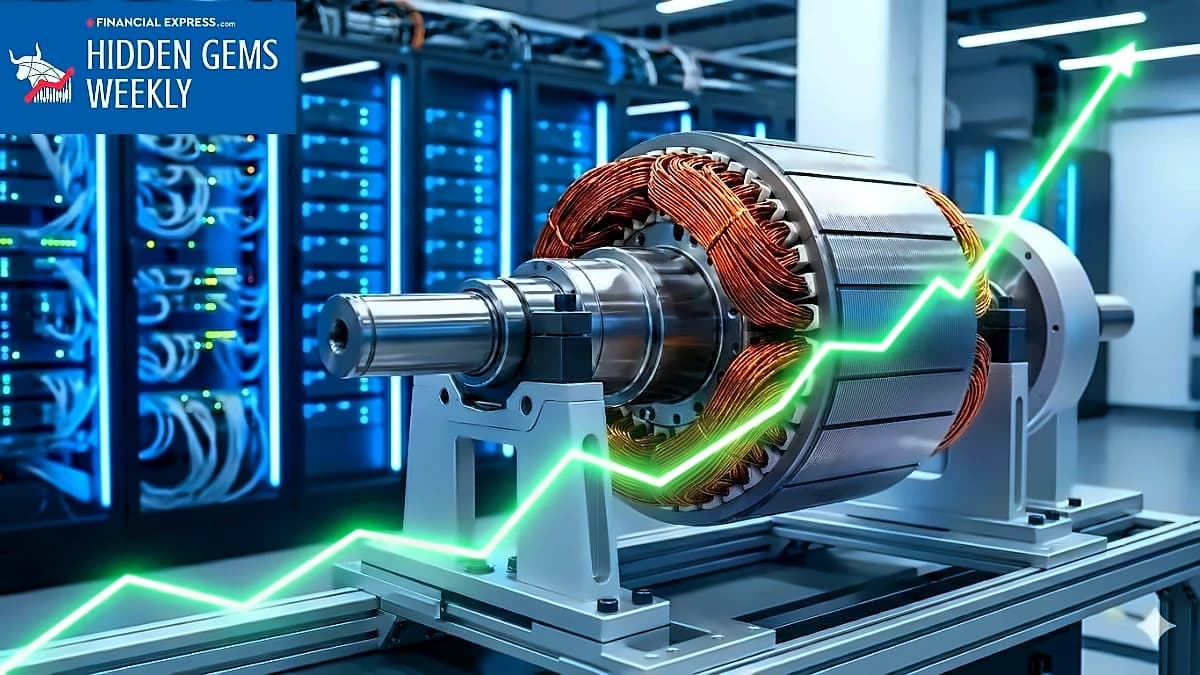
TD Power Systems has emerged as a surprising beneficiary of the artificial intelligence revolution. The company's standalone net sales surged 41.96% year-over-year to Rs 534.27 crore in March 2026, while consolidated profit jumped 41% to Rs 238.77 crore for the full fiscal year . This performance has propelled the stock to a market capitalization of approximately Rs 20,000 crore, with shares delivering 169% returns over the past year . The company now finds itself at the intersection of two powerful trends: the global energy transition and the explosive growth of AI infrastructure.
The AI Infrastructure Opportunity
The surge isn't coming from traditional power plants alone.
JLL estimates that cumulative investment in data centers could reach $3 trillion by 2030, with nearly 100 gigawatts of new capacity expected to be added—effectively doubling global data center capacity. This represents a structural, multi-year demand cycle rather than a one-off spending spike.
TD Power Systems is positioning itself to capture this opportunity through specialized generator solutions. The company secured a landmark order for a 25MW aeroderivative gas turbine specifically designed for data centers and AI applications. More importantly, it's evolving its technology to meet higher power requirements, moving into the 40-45 MW generator space with deliveries beginning FY26 and massive scale-up expected from FY27. The company is even establishing a design and engineering centre in the United Kingdom to develop generators in the 50-150 MW range for next-generation AI infrastructure. InvestorPresentations
Product Lines Driving Growth
The company's product portfolio spans multiple generator categories. Steam turbine generators go up to 250 MVA, gas turbine generators up to 250 MVA, hydro generators up to 45 MVA, and diesel generators up to 25 MVA. But it's the gas engine and gas turbine segments that are seeing exceptional demand, with management forecasting exceptionally high growth for the next 18 to 24 months. The company also launched a new business vertical in 2022 for induction and synchronous motors, diversifying its revenue streams. InvestorPresentations +4
Exports have become the primary growth engine, accounting for 80% of FY26 order inflow and 79% of Q4 FY26 order inflow. The order book stands at Rs 1,972.9 crore as of March 31, 2026, with Q4 order inflow surging 64% YoY to Rs 666.5 crore. The company serves approximately 45 global OEMs across all business segments, with strong presence in the US, Middle East, Europe, and Asia. This export-led model has provided diversification and higher-margin opportunities compared to domestic markets. InvestorPresentations +1
Operational Excellence and Margins
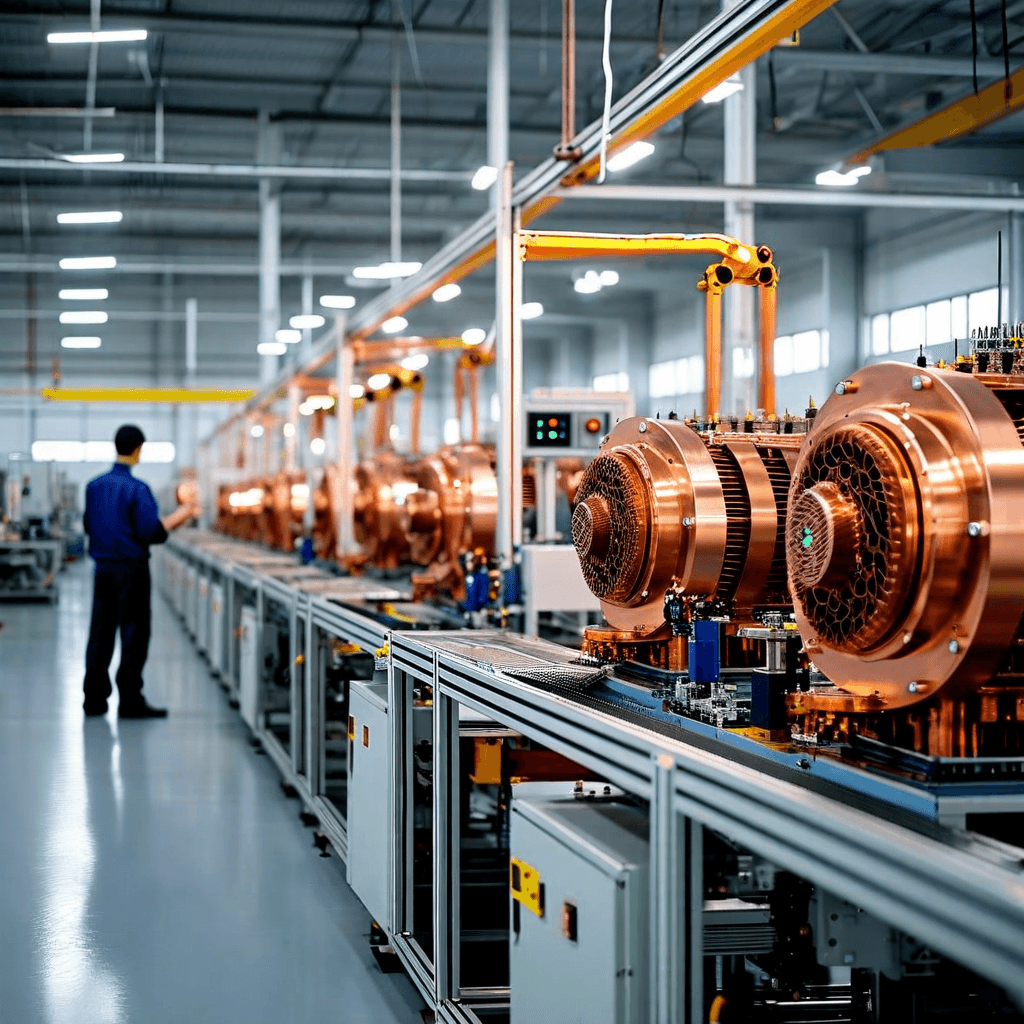
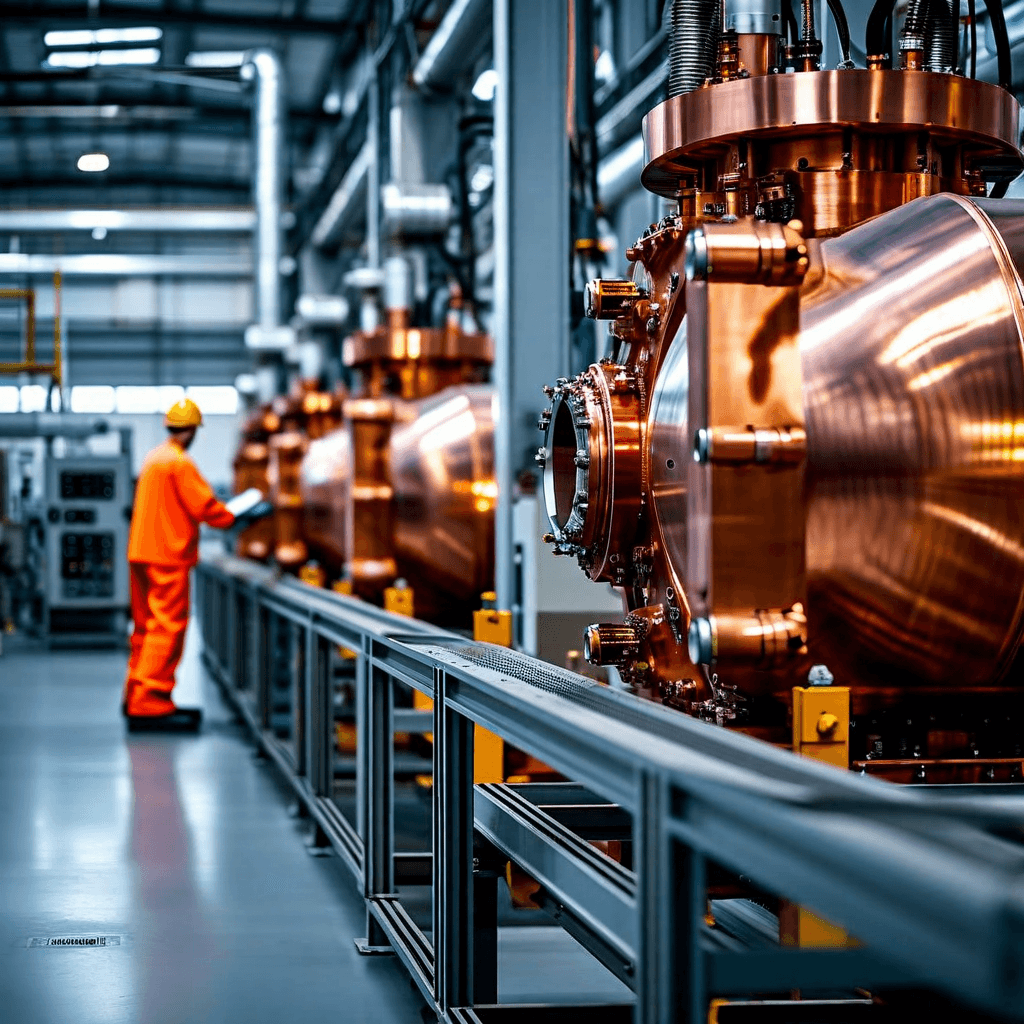
The 41% profit growth wasn't accidental—it was built on substantial operational efficiency improvements. Since 2017, the company has transformed its manufacturing facility by replacing conventional machinery with precision robotics and need-based automation. This has enabled management of complex tasks with greater precision and adaptability. The company also commissioned a third manufacturing plant in December 2025, with 33% operational by October 2025 and full commissioning by December 2025. InvestorPresentations +3
Energy conservation measures have delivered significant cost savings. The company achieved a 75% reduction in energy consumption through optimization of rotor coil looping procedures, 50% power consumption reduction by replacing DC motor test setup with AC motor, and 50% reduction through LED lighting implementation. Total energy savings of approximately 203,408 units per year across both manufacturing units have directly impacted the bottom line. AnnualReports +2
However, margins present a nuanced picture. Operating margins contracted to 16.61% in Q4 FY26 from 18.80% in the year-ago period, reflecting rising input costs and operational pressures accompanying rapid revenue expansion. The 163 basis point margin compression is attributed to higher raw material costs (particularly copper) and a change in revenue mix toward lower-margin, high-volume products. Yet PAT margins have expanded from 7.6% in FY21 to 13.4% in FY25, representing a 580 basis point improvement over the long term. InvestorPresentations
Strategic Stock Split
Following this strong performance, the board approved a 1:2 stock split—each equity share of face value Rs 2 will be sub-divided into two equity shares of face value Rs 1 each. The stated objectives are to encourage participation of small investors by making shares more affordable and to enhance liquidity. With the current share price around Rs 1,290, the post-split price will be approximately Rs 645, positioning it in the optimal trading range that typically attracts maximum retail participation.
This is the company's second stock split—the previous one was a 1:5 split in August 2022 (Rs 10 to Rs 2). That previous split was followed by exceptional performance, with the stock delivering 565% returns over the past three years. The current split comes from a position of strength, with the company achieving its highest revenue and PAT for the third consecutive year in FY26. InvestorPresentations
Competitive Moats and Barriers
TD Power Systems possesses several competitive advantages protecting its market position. The company has technology license agreements with global leaders including Siemens (2-pole generators up to 250MVA) and VOITH, Germany (vertical hydro generators). Long-term supply agreements with INNIO for gas engine generators and Alstom for traction motors provide additional technological access and market positioning. InvestorPresentations
The manufacturing infrastructure represents a significant barrier to entry. Property, Plant & Equipment stood at Rs 2,642.99 crore in March 2026, with intangible assets of Rs 193.49 crore and another Rs 100.54 crore in intangible assets under development. This capital-intensive manufacturing facility, combined with three decades of technical expertise and long-term OEM relationships, creates substantial moats against new entrants. InvestorPresentations +2
The company's global presence across 113 countries, with 64.3% of its order book from exports, provides diversification and access to high-growth markets. Quality systems with advanced testing infrastructure and dual computer monitoring ensure reliability—critical for mission-critical AI infrastructure applications where uninterrupted power supply is non-negotiable. InvestorPresentations +3
Future Outlook and Risks
Management has provided initial revenue guidance of Rs 1,500 crore for FY26 with potential for upward revision based on strong order inflows. The company forecasts revenue CAGR of 17-18% over the next 2-3 years, with margins anticipated to stabilize around 17%. The export pipeline remains strong, particularly in gas engines and turbines for data centers and grid stabilization, with firm demand visibility up to 2030.
However, risks remain.
The company faces intense competition from established global players like GE, Siemens, Caterpillar, and Cummins. Raw material price fluctuations, supply chain disruptions, and geopolitical factors including tariffs pose ongoing challenges. The heavy concentration in data centers also presents sector concentration risk if AI investments slow.
Yet the fundamental thesis remains compelling. As the world builds out AI infrastructure at unprecedented scale, the demand for reliable, efficient power generation equipment will only grow. TD Power Systems, with its technology partnerships, global footprint, and operational excellence, is well-positioned to capture this opportunity. The 1:2 stock split may help broaden its investor base just as the AI power surge accelerates, potentially setting the stage for the next leg of its multi-year growth story.