The artificial intelligence revolution is creating unprecedented demand for power infrastructure, and TD Power Systems Limited is emerging as a key beneficiary. The company delivered 42% revenue growth in H1 FY26, reaching ₹824 crore, driven primarily by surging demand from data centres and AI server farms. Management projects revenue will climb from ₹1,279 crore in FY25 to ₹1,800 crore in FY26 and ₹2,000 crore in FY27, underpinned by an order book growing at approximately ₹550 crore per quarter.
The correlation between TD Power Systems' order book growth and hyperscaler expansion is striking. The company generates 64-66% of its revenue from the US and Europe—precisely where Meta, Alphabet, Microsoft, and Amazon are aggressively building AI infrastructure. Major technology companies have indicated continued increases in AI infrastructure spending through 2026, with the US alone expecting data centre demand to add 100 GW to electricity demand by 2030. This visibility is reflected in TD Power Systems' order book, which has expanded to ₹1,845 crore as of December 2025, with 84% of recent orders coming from exports. InvestorPresentations
Premium Pricing Power in a Mission-Critical Market
TD Power Systems' operating margins are benefiting significantly from premium pricing power in data centre power equipment. The company has achieved 750 basis points of EBITDA margin expansion from 11.3% in FY21 to 18.8% in FY25, with management targeting 20%+ EBITDA margins in FY27 as the third plant reaches full capacity. This pricing power stems from the mission-critical nature of AI infrastructure—uninterrupted power supply is non-negotiable for data centres, and generators represent only 5-6% of total project costs, making demand relatively price-insensitive. InvestorPresentations +2
However, input cost fluctuations have created temporary margin pressure. Copper prices soared 60% in 2025, and aluminium prices increased 35%, contributing to a 250 basis point dip in gross margins during H1 FY26. Management responded with strategic inventory purchases when copper and electrical steel prices dropped, anticipating significant operating cash flow improvement as these inventories are consumed rather than replaced at elevated prices. Transcripts
The product mix shift toward higher-margin data centre solutions is playing a crucial role in profitability improvement. The data centre segment now accounts for approximately 20-25% of the company's business, with management describing the market as "completely on fire" and customers "fighting for capacity". This segment benefits from export pricing dynamics rather than the "brutally competitive" domestic market, where the company has strategically reduced participation. Transcripts +2
Technology Differentiation and Strategic R&D
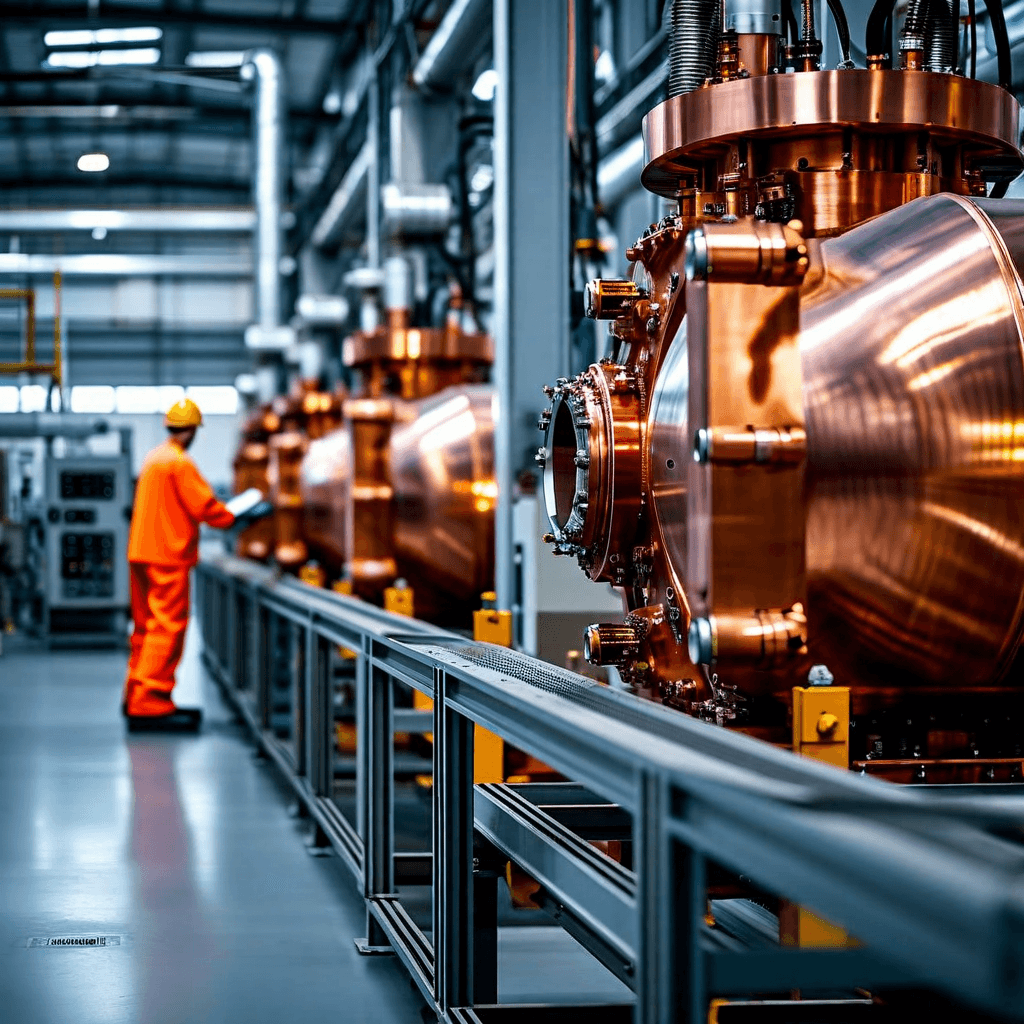
TD Power Systems has established significant technology differentiation through strategic partnerships with global leaders including Siemens, Voith, and Alstom. These partnerships provide access to proven technologies while allowing the company to focus on manufacturing excellence. The company manufactures generators ranging from 1 to 250 MVA, with a specific focus on evolving technology to meet the higher power requirements of modern AI server farms. InvestorPresentations
The company is making strategic R&D investments of ₹8.26 crore (0.65% of turnover) to address AI data centre requirements. Key initiatives include developing 40-45 MW generators with deliveries beginning FY26 and massive scale-up expected from FY27, targeting the 60-70 MW space for larger gas turbine applications, and establishing a design and engineering centre in the UK to develop generators in the 50-150 MW range. The company has completed the design phase for a 2-pole 42MW 50/60Hz generator with high efficiency, low noise, and optimized temperature rise characteristics. AnnualReports +2
TD Power Systems holds a stronger competitive position in the data centre power segment compared to traditional industrial power markets. Management emphasized that "US competitor manufacturing above 10-12 MW capacity completely booked out" and "all larger data centers and AI business machines imported from Europe and India," positioning the company as a critical supplier in capacity-constrained markets. The company has secured significant orders including a 25MW generator for a US OEM converting an aircraft engine into an aeroderivative gas turbine for data centre applications. Transcripts +1
Capital Deployment for Capacity Scaling
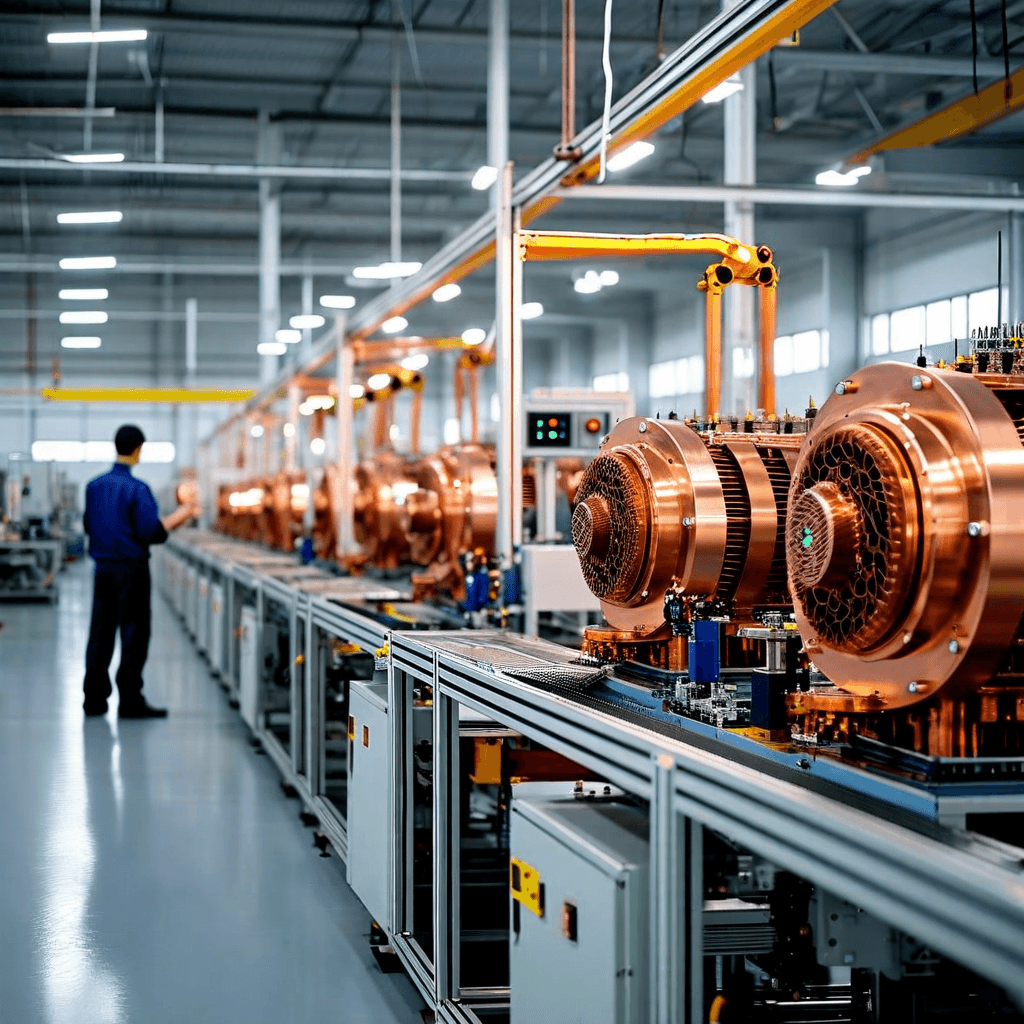
TD Power Systems is executing a disciplined capital deployment strategy to scale production capacity for AI data centre power demand. The company is investing approximately ₹140 crore in a third manufacturing plant that will expand revenue capacity from ₹1,250 crore to ₹1,800 crore. The plant is being commissioned in phases—partial commissioning in Q1 FY26, full facility ready by Q2 FY26, with full impact expected in H2 FY26. Management has indicated no fourth plant will be needed until at least FY28, as existing facilities can be optimized to reach ₹2,300 crore through operational excellence initiatives. Transcripts +4
The impact on return metrics has been positive. The company achieved a 21% ROCE and 20% ROE in FY25, with free cash flow of ₹84 crore representing a remarkable turnaround from negative ₹145.41 crore in FY23. Working capital pressures from strategic inventory purchases are expected to normalize in H1 FY26, driving further FCF improvement. AnnualReports +2
TD Power Systems' balance sheet leverage provides substantial financial flexibility. The company maintains a near-zero debt position with a debt-equity ratio of 0.01, strong liquidity (current ratio of 3.01), and substantial equity base of ₹860 crore . This conservative leverage position allows the company to fund growth initiatives through internal accruals, positioning it strongly to capitalize on the ₹6 lakh crore AI data centre power infrastructure opportunity. AnnualReports
Q4 FY26 Conference Call: What to Expect
TD Power Systems is scheduled to announce its Q4 FY26 results on May 15, 2026, with analysts expecting revenue of ₹265-288 crore and PAT of ₹46-54 crore. The conference call will likely focus on data centre power demand KPIs, including order inflow run rates (currently ₹550 crore per quarter), capacity utilization targets (third plant fully operational Q4 FY26), and margin recovery expectations (18-20% EBITDA margins). Transcripts
Analyst expectations for earnings growth are closely tied to the AI infrastructure spending cycle. Hyperscaler capex is forecast to exceed $600 billion in 2026 (36% increase over 2025), with approximately $450 billion directly tied to AI infrastructure. Major technology companies have indicated continued increases in AI infrastructure spending through 2026, providing strong demand visibility. Transcripts
However, management may highlight significant risks regarding demand sustainability. Grid capacity constraints represent a critical challenge—Gartner predicts that power shortages will restrict 40% of AI data centres by 2027, and there are currently seven-year wait times for grid connections in some regions. Other risks include geographic concentration (64-66% of revenue from US and Europe), potential AI spending moderation if ROI expectations disappoint, and competitive dynamics as capacity constraints ease. AnnualReports
The key takeaway for investors will be management's assessment of demand sustainability beyond 2027, their strategy to navigate grid constraints, and their confidence in maintaining pricing power as competitive capacity expands. With strong order book visibility (24 months vs. 9 months historically), diversified global presence, and technology differentiation, TD Power Systems is well-positioned to capture the AI data centre opportunity—but the sustainability of this demand boom remains the critical question for long-term valuation. Transcripts