The Quick Commerce Battle: When Giants Enter the Arena
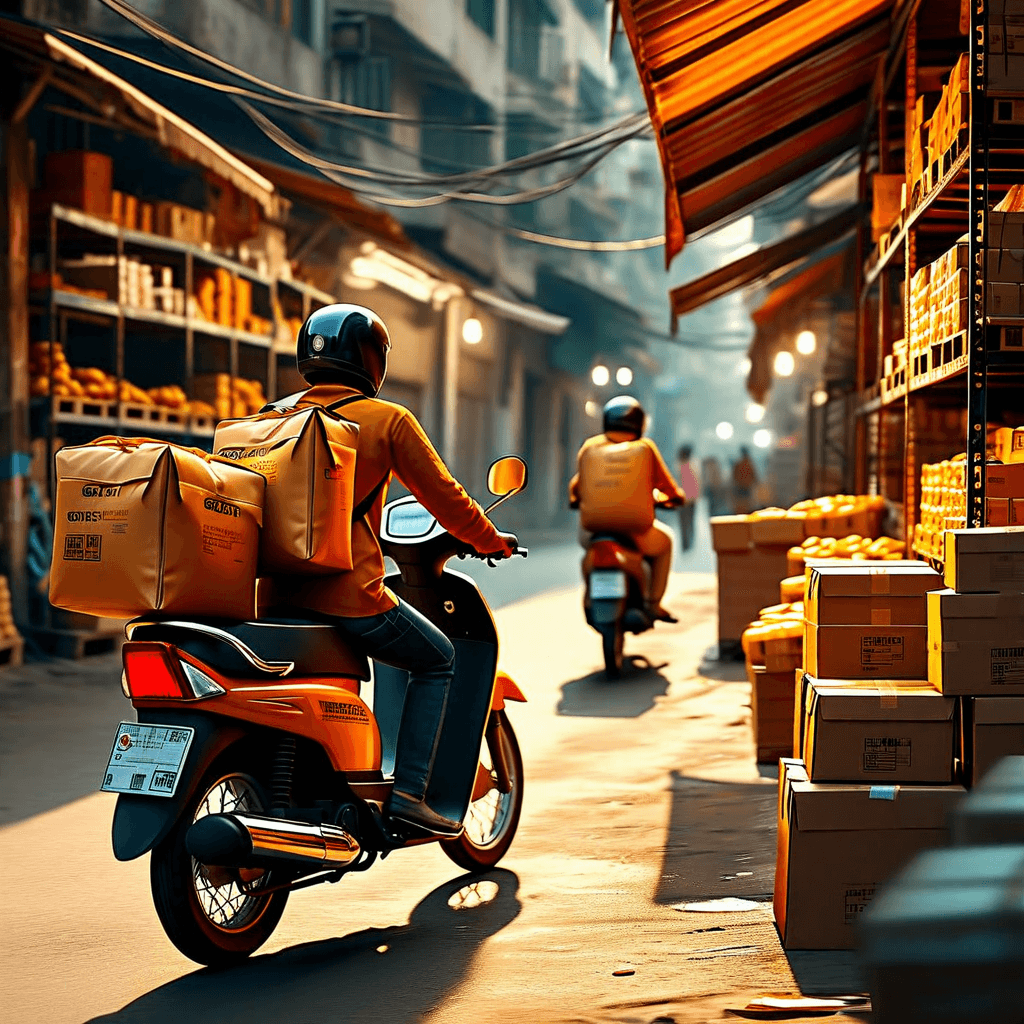
Remember when getting groceries delivered in 10 minutes felt like magic? Well, that magic has turned into a full-blown battlefield, and the rules of engagement have fundamentally changed. What started as a startup race is now a capital-intensive showdown between some of the world's biggest companies.
The New Competitive Landscape
The quick commerce market in India has undergone a dramatic transformation. We're no longer watching nimble startups compete on innovation. Instead, we're witnessing what analysts call a transition to a "big players' game" . The entry of Walmart-owned Flipkart and Amazon has fundamentally altered the competitive dynamics, creating a severe capital asymmetry that disadvantages startups like Swiggy, Blinkit, and Zepto .
The numbers tell the story of this shift. Blinkit operates approximately 2,200 dark stores and plans to reach 3,000 by March 2027 . Flipkart, which entered the market in August 2024, currently runs 750-850 dark stores and plans to double this to about 1,600 by the end of 2026 . That's adding roughly 100 stores per month—significantly faster than Blinkit's projected rate of 67 stores monthly . Amazon, the late entrant that launched in late 2024, has a more modest footprint of 450-500 dark stores but is adding about two stores per day .
Two Different Philosophies
What's fascinating is how these players are pursuing radically different strategies. Flipkart is channeling what analysts describe as "Walmart's DNA"—expanding into Tier-2 and Tier-3 cities like Rohtak, Muzaffarpur, Hajipur, and Asansol . This approach accepts near-term profitability sacrifices for long-term market positioning. Already, 25-30% of Flipkart's quick commerce orders come from small towns, with order volume per dark store rising approximately 25% month-on-month .
In contrast, Blinkit maintains tight focus on the top 10 cities . This isn't just preference—it's economics. The top eight cities in India account for over 3,800 dark stores operated by the five largest players, with about 3,600 of them having profitability potential . Metropolitan markets yield better margins because they offer higher population density, shorter delivery distances, and superior throughput. Mature metro stores clock 1,200-1,500 daily orders, while non-metro stores hover around 850 orders per day—significantly below the 1,400-1,500 order breakeven threshold .
The Discount War Nobody Can Win
Here's where things get messy. Flipkart Minutes has implemented aggressive discounting of approximately 23-24% across various categories . This triggered what industry executives describe as a renewed price war, with overall discounts across quick commerce platforms increasing to 55% in January 2026, up from 53% in November 2025 . Amazon surged its discount levels from 26% to 57% over the same period .
The problem? The underlying unit economics are brutal. Average basket sizes range between Rs 500-600, while FMCG margins are typically only 2-3% . High delivery costs remain the biggest barrier to profitability, and none of the current players have achieved overall business profitability despite some individual dark stores demonstrating profitability .
Swiggy has characterized this environment as "irrational," arguing that aggressive discounting inflates short-term order volumes without building customer loyalty or durable unit economics . The company's CFO stated Swiggy will prioritize breaking even on contribution margin rather than chasing discount-led volume growth . Blinkit CEO Albinder Dhindsa has been equally clear: "a strong quick commerce business cannot be built on the back of heavy discounting" .
The Capital Asymmetry Problem
This is where the startup disadvantage becomes painfully clear. The sector loses Rs 5,000 crore every quarter according to Zomato CEO Deepinder Goyal . Well-capitalized giants can sustain this burn far longer than startups. Flipkart benefits from Walmart's global balance sheet and can cross-subsidize quick commerce losses with its profitable core e-commerce business . Amazon has committed $35 billion to India through 2030 .
Startups face a prisoner's dilemma: match discounts and burn cash faster, or maintain pricing discipline and lose market share. As one analysis noted, "The startups have speed and local market knowledge. The giants have capital and existing customer relationships with hundreds of millions of Indian shoppers" . This capital advantage allows giants to "keep prices artificially low," potentially making profitability impossible for competitors .
The Survival Phase Begins
The stock market is already pricing in this reality. Swiggy shares are down over 27% year-to-date and trading close to its IPO issue price of Rs 390 . Eternal (Blinkit's owner) has seen shares hit a six-month low and are down over 23% from their 52-week high of Rs 368.45, despite Blinkit becoming Eternal's biggest revenue engine with revenue growing 155% year-on-year to Rs 2,400 crore in Q1FY26 .
Industry observers predict that "the quick commerce market can probably only sustain two or three major players long-term, and those slots are looking increasingly like they'll go to whoever can afford to lose money the longest. That's not usually a game startups win against Walmart and Amazon" . Analysts expect 2026 will see mergers, shutdowns, or acquisitions as the market rationalizes toward 2-3 major players .
What Comes Next
The companies most likely to survive consolidation will demonstrate clear paths to profitability, differentiated value propositions beyond just speed and price, sufficient capital access, and critical mass in key markets. Blinkit leads with 48% market share and has achieved EBITDA breakeven at the store level . Flipkart is leveraging its electronics and fashion strengths to differentiate, particularly in non-metro markets where traditional retail competition is limited .
For investors and industry watchers, the signal is clear: the land grab phase is over, and the survival phase has begun . The question isn't who can grow the fastest anymore—it's who can achieve sustainable unit economics before the capital runs out. In this new phase, having deep pockets isn't just an advantage—it's becoming a prerequisite for survival.