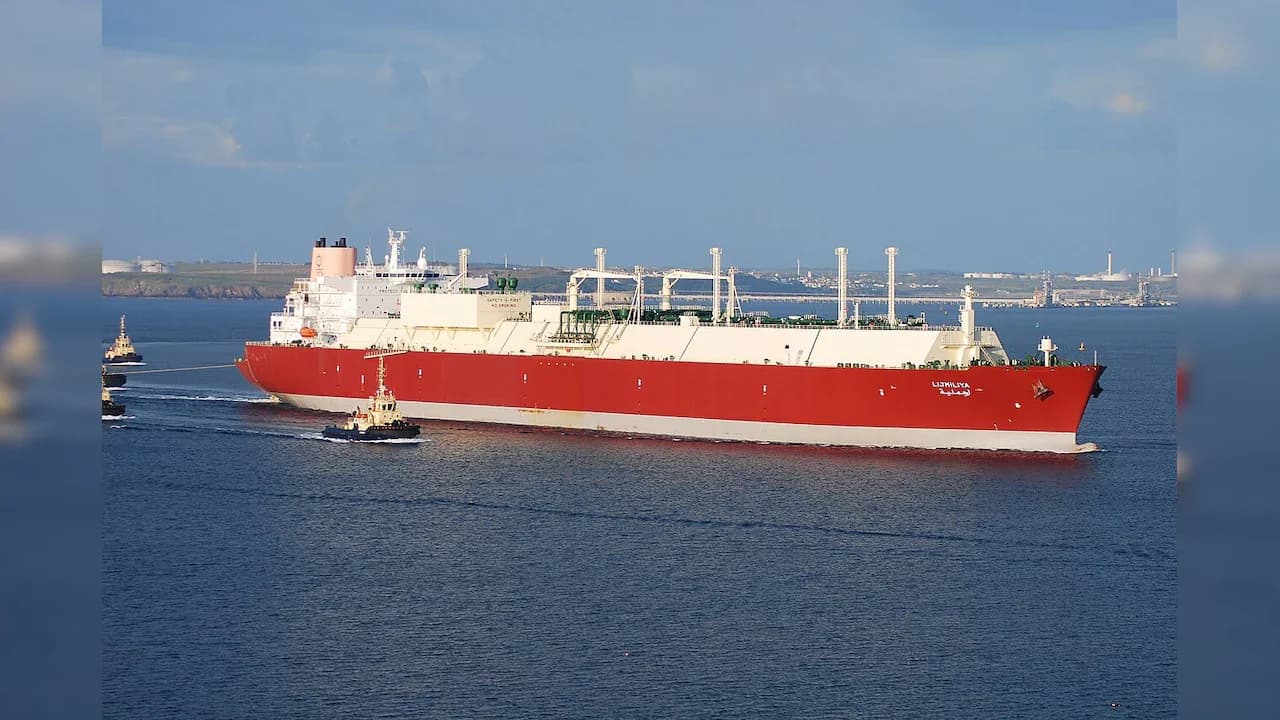
This extension follows previous cancellations of 21 LNG cargoes for Italy's Edison alone between April and early September, equivalent to approximately 2.7 billion cubic meters of natural gas. The declaration allows QatarEnergy to suspend contractual obligations without penalties due to unforeseen circumstances beyond its control, specifically the ongoing regional conflict that has crippled production capacity.
The Scale of Disruption
The damage to Ras Laffan has been severe. Two LNG-producing trains remain offline, curtailing production by 12.8 million tonnes annually—about 17% of Qatar's total LNG export capacity. Repairs are expected to take up to five years, with an estimated $20 billion in annual lost revenue. For buyers like Edison, which holds a 25-year contract for 6.4 billion cubic meters annually (roughly 10% of Italy's demand), this has meant scrambling to secure alternative supplies. Edison has managed to replace 14 of the 21 cancelled cargoes but faces continued uncertainty as the disruption extends.
Shifting Bargaining Power
The Hormuz Strait disruption has fundamentally shifted bargaining power in LNG markets. Historically, Gulf producers commanded significant negotiating advantages due to their reputation as reliable suppliers and low production costs. That reputation has been severely damaged. Asian and European buyers are now leveraging the crisis to press for better terms, with six Asia-based traders indicating that future negotiations will focus on reducing prices while enhancing supply security and diversification.
The pricing impact is already visible. Long-term contracts from Qatar and the UAE were typically priced at 12.6%-12.7% of Brent crude before the Iran war, but recent deals have been concluded closer to 12.3%—a discount reflecting the higher regional risk that buyers are now factoring in.
Insurance and Freight Cost Explosion
Insurance costs have indeed exploded. War-risk insurance premiums for shipping via the Strait of Hormuz have spiked into the 7.5%-10% range of vessel hull value, sharply elevating LNG delivery costs.
A round trip from the US Gulf Coast to Asia now generates $3.3 million versus $1.1 million pre-crisis, with freight costs alone adding $2-3/MMBtu to delivered LNG prices.
Spot Market Volatility
Spot markets have reacted even more dramatically. Asian spot LNG prices nearly doubled from around $10/MMBtu to $24-25/MMBtu at the peak of the crisis, while European gas benchmarks climbed 25-50%. Current levels remain elevated—the JKM benchmark for Northeast Asia stood at $15.52/MMBtu in late June 2026, still 45% above pre-war levels. This volatility has created significant challenges for buyers locked into long-term oil-indexed contracts who are missing out on spot market dips while facing supply shortfalls.
Alternative Suppliers Gain Ground
The disruption has created substantial opportunities for alternative suppliers. The United States, operating near full capacity at approximately 18 billion cubic feet per day, has emerged as a major beneficiary. US suppliers offer more competitive pricing, greater destination flexibility, and FOB terms that have proven attractive alternatives to traditional long-term, destination-restricted contracts from Gulf suppliers. Australia, with its established infrastructure and geographic proximity to Asian markets, has also gained ground as a stable alternative.
For the UAE, the situation presents mixed implications. While reduced Qatari supply creates short-term opportunities to capture market share, the UAE also faces Hormuz disruption risks and similar insurance cost increases. However, the UAE has historically offered more flexible terms than Qatar and is pursuing major expansion through its Ruwais LNG project, which will add 9.6 million tonnes annually and more than double the company's LNG production output.
Importer Financial Exposure
The financial impact on importers has been immediate and severe. India's Petronet LNG, which sources approximately 45% of its LNG imports from Qatar, saw its stock decline nearly 9% in a single session when the force majeure was first declared. The company invoked force majeure on three LNG tankers—Disha, Raahi, and Aseem—that were unable to reach the Ras Laffan loading port. Petronet also issued corresponding force majeure notices to domestic off-takers including GAIL, Indian Oil Corporation, and Bharat Petroleum Corporation Limited.
The insurance situation compounds these challenges. Petronet confirmed that "acts of war are excluded under business interruption insurance policies," leaving the company exposed to significant financial risks that cannot currently be estimated. This insurance gap is not unique to Petronet—standard commercial property and business interruption insurance policies frequently exclude acts of war, creating systemic vulnerability across the LNG import sector.
Operational Risks and Supply Chain Constraints
Operational risks extend beyond immediate supply disruptions. With approximately 500 ships believed to remain trapped in the Gulf and LNG carriers being the slowest to resume transit due to high insurance risks, vessel scheduling and chartering complications persist. Importers face the prospect of reduced terminal utilization, throughput fee losses, and take-or-pay obligations for undelivered volumes—all while competing for expensive alternative spot supplies.
Strategic Procurement Evolution
The crisis is accelerating a fundamental evolution in buyer procurement strategies. Inventory management is shifting toward more conservative policies with higher buffer stocks and enhanced storage infrastructure. Contract structures are being renegotiated to include enhanced flexibility mechanisms, such as lowering minimum contract quantities from 90% to 80% of average contract quantities, with extended periods (3-5 years) to balance contract quantities.
Geographic diversification has become an urgent priority. India, for instance, has increased imports from alternative suppliers including the United States, Oman, Nigeria, and Angola. China has largely managed the disruption through a state-coordinated system supported by diversified supply sources, high inventories, and Russian pipeline gas imports. In contrast, Pakistan and Bangladesh have faced greater difficulties, with Pakistan increasingly shifting toward fuel switching and reduced LNG dependence, while Bangladesh has sought replacement spot cargoes at prices two to three times higher than late-2025 levels.
Long-Term Market Transformation
The long-term implications for global LNG markets are profound. The crisis has exposed vulnerabilities stemming from the concentration of LNG exports among a small number of suppliers dependent on single maritime chokepoints. Rather than triggering a retreat from LNG, the disruption is accelerating efforts by consuming countries to diversify suppliers, expand import infrastructure, and strengthen energy security strategies.
Buyers are likely to pursue a more balanced approach combining long-term contracts for security with spot purchases for flexibility. The period of notable volatility has reinforced the value of stable supplier relationships while also highlighting the risks of over-dependence on any single region or supplier. This dual recognition will shape contract negotiations, infrastructure investments, and strategic partnerships for years to come.
QatarEnergy's Competitive Challenge
For QatarEnergy, the path forward involves navigating a permanently altered competitive landscape.
The company's 70% stake in the US-based Golden Pass LNG project may provide an alternative supply route and some leverage in negotiations, but the fundamental shift in market dynamics is undeniable.
As the force majeure extension through mid-October approaches, the global LNG market continues to adapt to new realities of supply uncertainty, elevated risk premiums, and accelerated diversification. The Hormuz shock has not only disrupted immediate supply flows but has fundamentally altered the strategic calculus for all market participants, setting in motion changes that will likely outlast the current regional tensions and reshape the structure of global LNG trade for the foreseeable future.