The US and Iran peace agreement has been officially confirmed, with President Trump posting on social media Sunday afternoon: ''''Ships of the World, start your engines. Let the oil flow!'''' The memorandum of understanding (MoU) was electronically signed by both nations, with the Strait of Hormuz reopening as a key provision. As per Wood Mackenzie's Kristy Kramer, this development means the conflict will be 'just a speed bump' for global energy markets, with oil supply from Gulf producers expected to be restored relatively quickly. The agreement comes after three months of conflict that began February 28 with US and Israeli strikes against Iranian military targets, formally ending Sunday with the signed MoU. However, European allies don't share Trump's optimism, with a senior US official noting that mines would still need to be removed, while shipowners, traders and producers continue seeking clarity on the situation.
QatarEnergy, the operator of the country's LNG facility, has informed buyers that it expects to increase output to nearly 50% of capacity a month after passage through the Strait of Hormuz is restored, and about 80% in two months, according to reports by Bloomberg citing people aware of the development. However, the latest analysis reveals a more complex recovery picture - approximately 70% of affected production could return within three months, rising to around 90% within six months, with the final tranche requiring considerably longer. The remaining capacity of around two production trains will require several years to completely restore after it was damaged by Iranian missile strikes in March. As per Rystad Energy, the total restart timeline for a multi-train facility compounds across trains, meaning large-scale LNG plants require substantially more time to return to full capacity than individual train cooldown duration might suggest. Wood Mackenzie analysts support this timeline, stating that fields affected by the Strait's closure could reach 70% of prior production within three months and 90% within six months, with the last 1 million bpd requiring considerably longer. Business Standard reports that resuming half of production within a month is faster than some analysts and traders had expected, with QatarEnergy having been laying groundwork since April to allow for rapid restart.
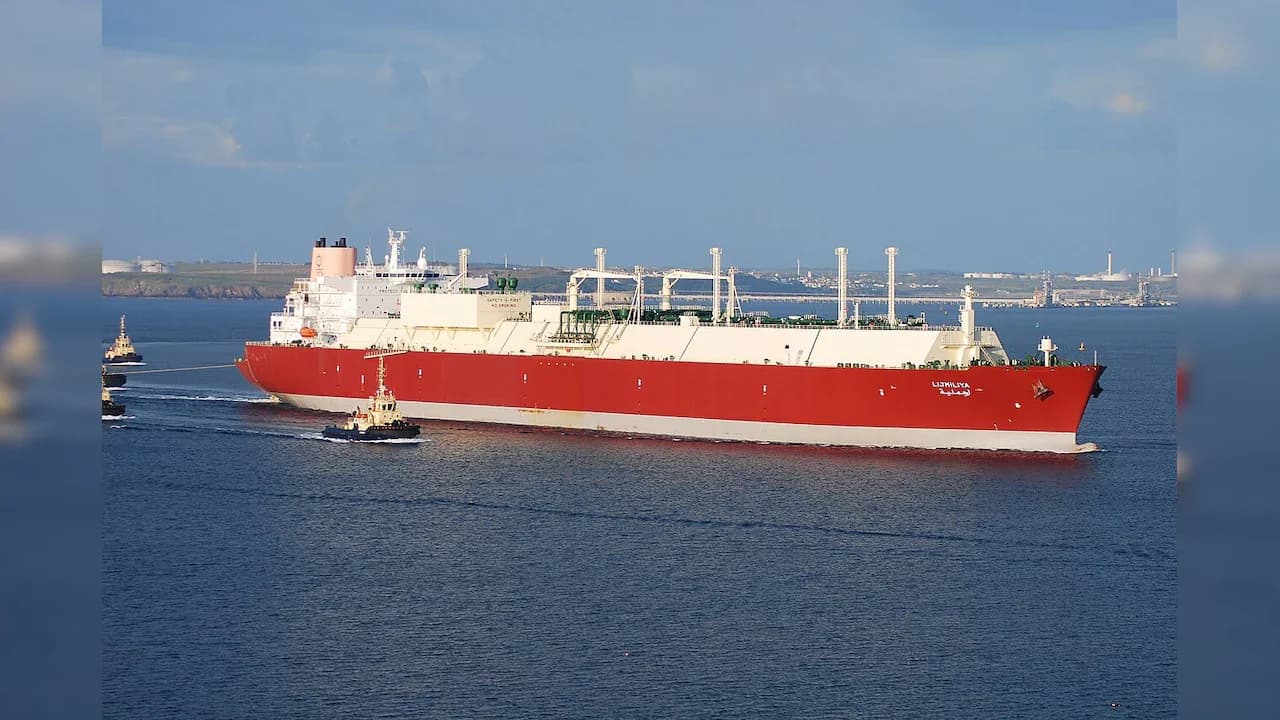
Qatar had shut down the world's largest LNG facility in the first week of the conflict following an attack by Iran, resulting in cancellations and hampering the supplier's longstanding reputation for reliability. The Ras Laffan complex, a facility that exported nearly a fifth of global supply last year, remained primarily idle for over three months as the closure of Hormuz disrupted shipping of gas. However, the country's position represents the most severe long-term supply impairment in the regional recovery picture. QatarEnergy's leadership acknowledges the loss of approximately 17% of Qatar's total LNG capacity for a period projected to extend up to five years. This single data point fundamentally reshapes near-term global LNG supply forecasts, as Qatar is the world's largest LNG exporter, and a five-year partial capacity impairment of this scale will create structural tightness in global markets that cannot be offset by other producing nations in the short to medium term.
LNG production operates under physical constraints that have no direct parallel in crude oil restart dynamics. The cooldown phase of LNG liquefaction, where gas is transformed into liquid form at approximately minus 162 degrees Celsius, must proceed slowly and deliberately to prevent thermal shock to cryogenic infrastructure. Each LNG processing train requires approximately two weeks for cooldown under ideal conditions, with each train brought back online in a deliberate sequence. The $46 billion in estimated Middle East energy infrastructure repair expenditure, with refining and petrochemical facilities representing the largest share, underscores the operational complexity of the recovery process. European buyers who redirected procurement toward Qatari volumes following the Russia-Ukraine supply disruption now face a compounding supply availability challenge as the recovery timeline extends beyond initial expectations. Business Standard reports that Qatar has been testing equipment and performing necessary maintenance since April, with several production trains operating at reduced capacity so the plant can deliver shipments to neighbors while being able to increase output when necessary.
The return of LNG from Qatar is expected to ease a global supply concern, even after confirmation of a US and Iran peace agreement. However, the inventory deficit of over 1 billion barrels acts as a structural price support mechanism that will limit the pace and depth of any sustained price decline regardless of near-term diplomatic developments. LNG prices in Europe and Asia remain high in comparison to pre-war levels, indicating ongoing market tightness despite the potential restoration of Qatari production capacity. The distinction between supply resumption and market rebalancing is critical, as global oil stockpiles are estimated to have contracted by more than 1 billion barrels since the onset of the conflict, representing a drawdown with a market value in excess of $83 billion at prevailing prices. As per Ninety One's Paul Gooden, "Oil markets will therefore likely suffer a 'hangover' for several years as governments seek to rebuild inventories and to insulate themselves from further geopolitical shocks."
The US and Iran peace agreement, set to be signed in Switzerland, is expected to significantly benefit India's energy security and economic stability. According to Indian Gas Exchange (IGX) Managing Director Rajesh Kumar Mediratta, restoration of LNG trade flows through Hormuz could bring Asian spot LNG prices down to the $12-15/MMBtu range from the current $18-20/MMBtu levels. Nearly 60% of India's LNG imports come from Qatar and the UAE, making the Strait of Hormuz disruption particularly impactful. Indian buyers were forced into the spot market during the crisis, with LNG prices surging above $25/MMBtu at peak and averaging $17-18/MMBtu during much of the disruption. For India, which imports over 50% of its total gas requirement, a stable supply corridor through Hormuz is not just a market event but an energy security imperative. The agreement could also improve India's fiscal and external balances, with Bank of Baroda's Chief Economist Madan Sabnavis noting that "fiscal breathing space will ensue if prices cool, especially of gas, as the fertilizer subsidy was expected to be a major challenge."