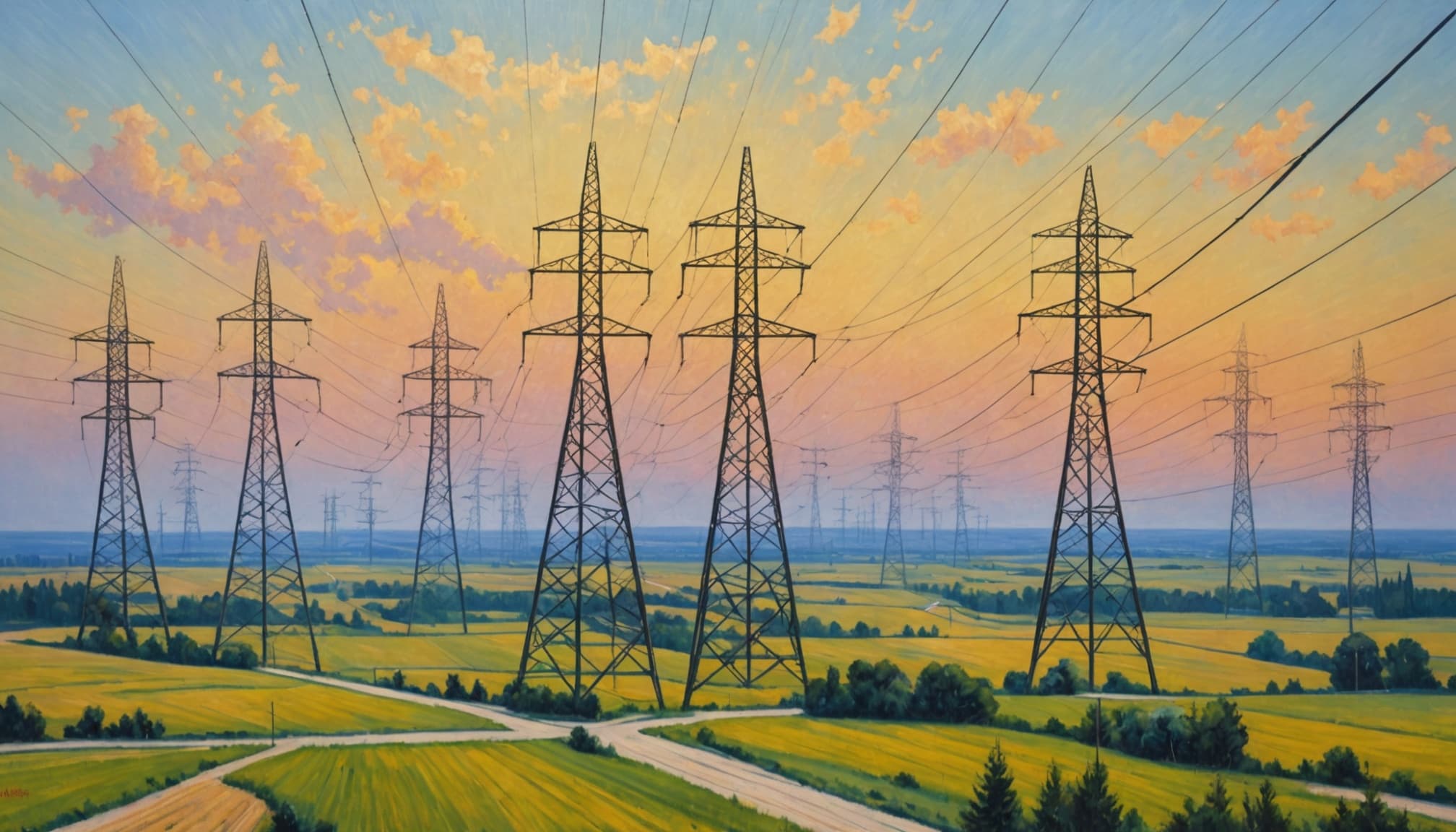
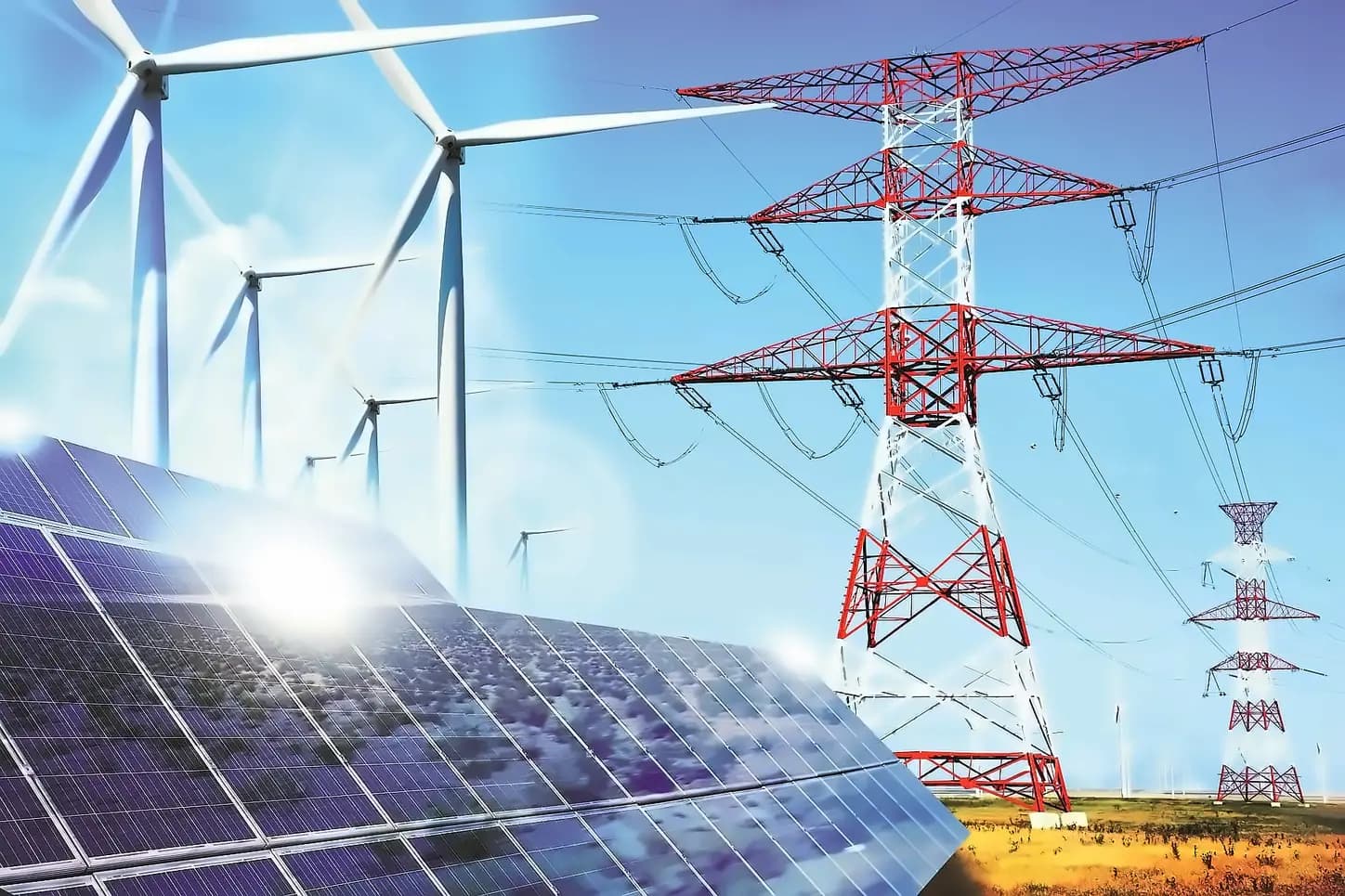
India just approved something massive. The PM-DHARA scheme—short for PM-Developing Harmonized and Accelerated Renewable-energy Access—comes with a staggering ₹1.86 lakh crore outlay. Think of it as building the highways needed to carry clean energy from where it's generated to where it's consumed. The scheme targets evacuating 135 GW of renewable energy by FY 2032-33, supporting India's ambitious goal of 900 GW non-fossil fuel capacity by 2035.
The money breaks down simply: ₹1.36 lakh crore for strengthening intra-state transmission systems, ₹50,000 crore for deploying 50 GWh of battery storage, and ₹54,082 crore in Central Financial Assistance to offset transmission charges and keep power costs affordable for consumers.
Transmission Giants: Order Book Bonanza
For Power Grid Corporation of India, this is familiar territory. The Maharatna PSU already sits on ₹1.75 lakh crore of works in hand and boasts a bidding pipeline of ₹1.19 lakh crore. What makes Power Grid formidable is its 47% cumulative market share in all Tariff Based Competitive Bidding (TBCB) projects since inception. Recent wins include a massive ₹26,000 crore Barmer transmission system and a Gujarat RE integration project with an annual tariff of ₹822.91 crore. InvestorPresentations +1
Adani Energy Solutions, India's largest private transmission company, brings different strengths. With 27,949 circuit kilometers of transmission network and an orderbook exceeding ₹80,000 crore, AESL captured 29% of TBCB bids in FY26. The company is targeting ₹20,000-25,000 crore of annual capex addition to maintain roughly 25% market share in the transmission sector. Recent wins include an ₹8,500 crore project in Andhra Pradesh designed to support green hydrogen and ammonia projects. InvestorPresentations +1
The Bidding Battlefield: What Really Wins Projects
Here's how TBCB works under the Build-Own-Operate-Maintain (BOOM) model: companies bid the lowest annual transmission charge they're willing to accept for a 35-year period. The bidder with the lowest quote wins through e-reverse bidding. Simple in theory, brutal in practice.
Power Grid's advantages are structural. As a central PSU, it enjoys regulatory backing, a stronger balance sheet with a borrowing limit of ₹2.2 lakh crore, and lower cost of capital due to sovereign support. Its sheer scale and experience across all voltage levels make it the default choice for complex, high-value projects.
Adani Energy Solutions counters with private sector agility and an aggressive bidding strategy. The company maintains 99.63% system availability and has developed expertise in HVDC technology, with major projects like the Bhadla-Fatehpur line (₹21,900 crore billing) and KPS III (₹5,400 crore billing). AESL's integrated business model—spanning transmission, distribution, and smart metering—also provides cross-selling advantages. InvestorPresentations +1
The Money Question: CFA, Tariffs, and Returns
The ₹54,082 crore Central Financial Assistance is the scheme's secret sauce. This money offsets intra-state transmission charges, effectively subsidizing the cost of moving renewable power and keeping electricity bills lower for end consumers.
Here's what's crucial: this subsidy doesn't eat into transmission company returns. Transmission charges are structured as fixed annual amounts (₹/annum), not linked to how much power actually flows through the lines. Once assets are commissioned, revenue is predictable. The Central Electricity Regulatory Commission (CERC) determines returns through a structured framework, approving Return on Equity based on effective tax rates and ensuring debt-equity ratios align with regulatory norms. Transcripts
For Power Grid, equity in operational TBCB projects has grown from ₹4,671 crore to ₹9,965 crore, reflecting substantial capital deployment. For AESL, transmission operational revenue jumped 54% year-on-year to ₹7,117 crore in Q1 FY27, with locked-in tariffs of ₹9,510 crore for under-construction assets. Transcripts +2
Equipment Makers: The Real Winners?
The stock market told an interesting story after the PM-DHARA announcement. While Power Grid shares dipped 1.42%, equipment makers like Transformers & Rectifiers India surged nearly 10%. The market sees something: transmission companies build the highways, but equipment makers provide the asphalt.
The ₹1.36 lakh crore transmission allocation will drive massive demand for transformers, switchgear, and high-voltage equipment. Companies like GE Vernova T&D India, Hitachi Energy India, CG Power and Industrial Solutions, and Transformers & Rectifiers India are positioned to capture this demand. The question is whether their manufacturing capacity can handle the surge.
Battery Storage: The New Frontier
The ₹50,000 crore allocation for 50 GWh of Battery Energy Storage Systems opens a completely new opportunity set. This storage capacity addresses renewable energy's biggest weakness: intermittency. Solar doesn't work at night, wind doesn't always blow. Batteries solve this problem by storing surplus power and releasing it when needed.
For Exide Industries and Amara Raja Energy & Mobility, this represents a potential transformation from traditional battery manufacturers to grid-scale energy storage players. The integration of BESS at renewable energy developer ends changes the business model—manufacturers aren't just selling batteries, they're enabling grid flexibility and reducing peak-hour curtailment.
Renewable Developers: Finally, Some Relief
For renewable energy developers like KPI Green Energy, Suzlon Energy, and Waaree Energies, PM-DHARA addresses a chronic pain point: grid curtailment. When transmission infrastructure can't handle the power being generated, renewable projects are forced to curtail output, losing revenue and wasting clean energy.
The scheme's focus on strengthening intra-state transmission directly tackles this problem. Better transmission infrastructure means higher capacity utilization for existing projects and fewer curtailment losses. The 50 GWh of battery storage specifically helps wind energy developers like Suzlon by smoothing out variability and ensuring power is available during peak demand hours.
The 135 GW evacuation target also provides visibility for project pipelines. Solar developers like Waaree Energies and KPI Green Energy can plan commissioning timelines with greater confidence, knowing the transmission infrastructure will be ready to carry their power to market.
The Financial Reality Check
Participating in PM-DHARA projects requires serious capital. Power Grid shareholders have already approved raising the borrowing limit by ₹40,000 crore to ₹2.2 lakh crore to fund aggressive network expansion. Adani Energy Solutions carries higher leverage but compensates with faster growth—transmission operational revenue grew 54% YoY in Q1 FY27. InvestorPresentations
For equipment makers, the challenge is different. They need to expand manufacturing capacity without overextending balance sheets. The stock market's enthusiasm for Transformers & Rectifiers India suggests investors believe the company can scale up profitably.
The timing of project awards will determine earnings visibility. TBCB projects typically take 26-30 months to execute, meaning revenue recognition will be back-ended. Companies with strong balance sheets and execution track records will navigate this cycle better than those stretching to participate.
What Comes Next
The PM-DHARA scheme isn't just about building transmission lines—it's about enabling India's energy transition. The ₹1.86 lakh crore investment will create jobs, reduce carbon emissions, and support long-term energy security.
For investors, the opportunity set is clear. Transmission companies offer predictable, regulated returns over decades. Equipment makers provide cyclical upside tied to execution capacity. Battery storage players represent the growth frontier with potentially exponential demand.
The winners will be those who can execute at scale while maintaining financial discipline. Power Grid's scale and Adani Energy's agility make them the transmission leaders to watch. Equipment makers with capacity to expand will capture the hardware boom. And battery manufacturers who can crack grid-scale storage economics could transform their businesses entirely.
The grid is getting a massive upgrade. The companies building it stand to benefit for years to come.