The National Green Hydrogen Mission is the catalyst, but the money flows in two very different directions. The ₹17,490 crore SIGHT programme splits into ₹4,440 crore for electrolyser manufacturing and ₹13,050 crore for actual hydrogen production. This structure tells you everything you need to know about the challenge: we need the machines first, then the fuel.
For Waaree Energies, the policy support is clear but not all-encompassing. The company won a ₹444 crore PLI for a 300 MW electrolyser facility and another ₹510 crore for 90,000 tonnes per annum of hydrogen production. That's substantial, but it's not the whole story. Waaree is committing about ₹676 crore to build a 1 GW alkaline electrolyser plant in Gujarat. The PLI covers roughly two-thirds of that capex, but it's paid out over five years based on actual manufacturing. Think of it as a return booster, not a funding cheque. The company is putting its own capital on the line because it sees a bigger opportunity in the broader energy transition market. Investor Presentation +1
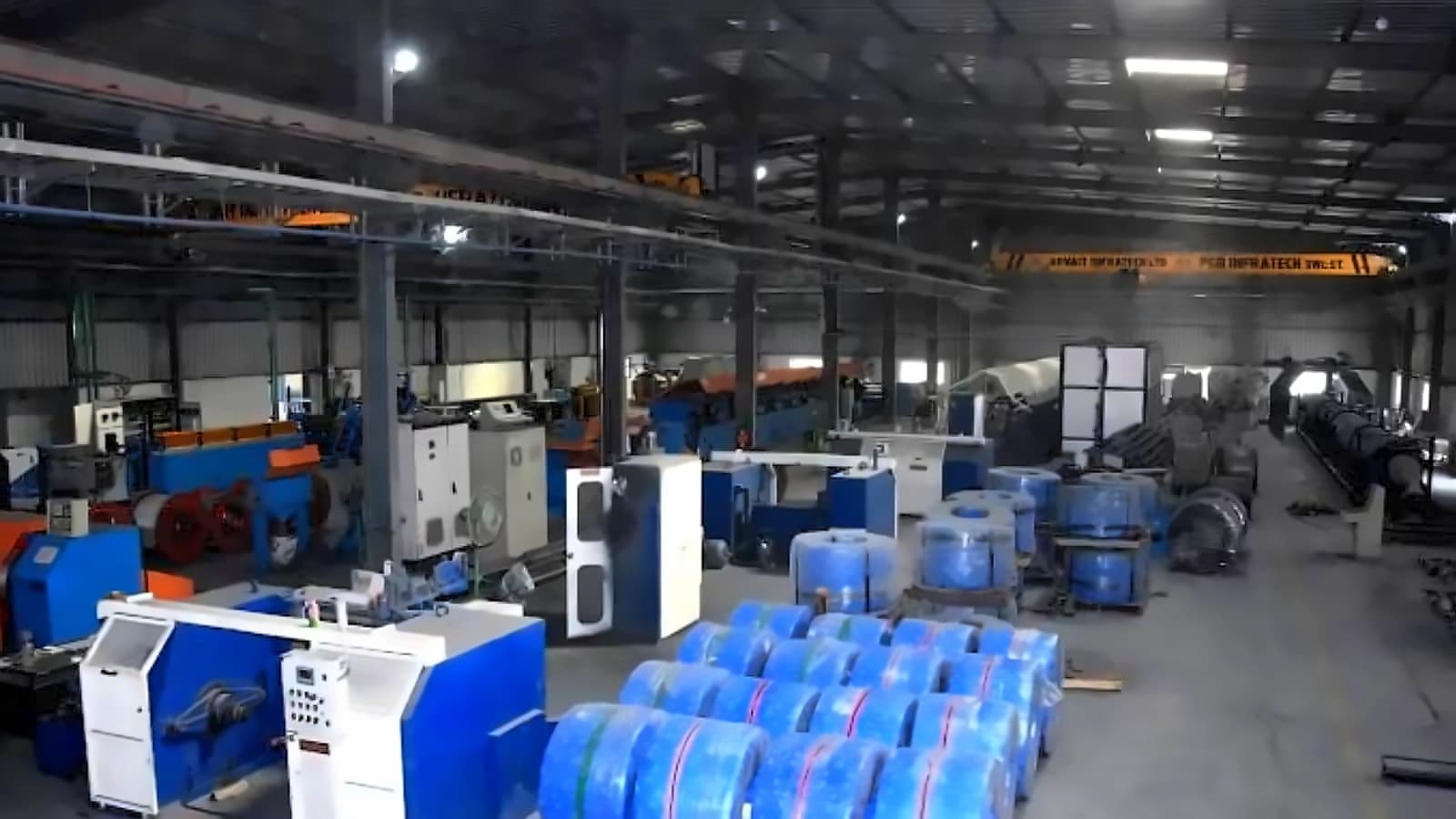
Advait Energy Transitions is playing a different game. It has secured a 300 MW PLI allocation and is building a 30 MW assembly plant in Ahmedabad with about ₹200 crore of capex. The company is targeting over 95% localisation, but this appears to be its own strategic goal rather than a government mandate I could verify. The real driver here is technology transfer. Advait has exclusive Indian rights to Jiangsu Guofuhee's electrolyser designs, allowing it to move quickly from semi-assembly to integrated systems. The policy incentives help, but the core bet is on importing know-how to build a domestic manufacturing base. Other +2
Returns: Why Waaree Beats NTPC on Ratios
Here's where the numbers get interesting. Waaree Energies posts an ROCE of about 35.7% and ROE of 32.5%. NTPC, despite its massive balance sheet, manages only 9.4% ROCE and 14.2% ROE. Why such a gap? Transcript
It comes down to business models, not just ambition. Waaree is a high-turnover manufacturer. FY26 revenue jumped 84% to ₹26,537 crore, with operating EBITDA up 117% to ₹5,909 crore. The company turns capital quickly through solar module sales, and it's integrating backward into cells and forward into storage and electrolysers. That's a recipe for strong returns, even if margins fluctuate with commodity prices. Transcript
NTPC is a utility. Its returns are regulated and predictable, but inherently lower. The company is planning a staggering ₹16.86 lakh crore of capex over 11 years, with ₹7.24 lakh crore earmarked for renewables. That's the scale of a national energy transition, but it creates a near-term drag. Assets under construction earn nothing until commissioned, and NTPC's capital work-in-progress is growing faster than its profits. The ₹1 lakh crore Pudimadakka green hydrogen hub in Andhra Pradesh is a prime example: it's a visionary project, but it won't move the needle on returns anytime soon. Investor Presentation +1
Valuation: Growth Trumps Current Returns
If returns were all that mattered, Waaree Energies would trade at a premium to Advait Energy Transitions. It doesn't.
Why? Transcript
The market is paying for growth and optionality. Advait is smaller, with FY26 revenue around ₹727 crore, but it's growing fast—management guides for 40%+ expansion. More importantly, Advait is positioning itself at the cutting edge of the hydrogen value chain. It has a 150–200 MW pipeline of enquiries from green ammonia players, a 5 MW electrolyser that passed factory acceptance tests in China, and a joint venture with Norway's TECO Group for fuel cells targeting data centres and marine applications. These are early-stage bets, but they offer the potential for higher margins (management sees electrolyser margins rising to 20% as the supply chain matures) and a niche in emerging markets. Annual Report +4
Waaree, by contrast, is mainly a solar manufacturer. Its hydrogen business is tiny relative to the group—the ₹676 crore electrolyser plant is about 2% of its roughly ₹30,000 crore Waaree 2.0 capex programme. Investors apply a lower multiple to cyclical manufacturing earnings, even if current returns are stellar. The hydrogen story is promising, but it's not the main driver of the stock today. Investor Presentation
Three Strategies, Three Risk Profiles
The companies aren't just competing—they're playing different games.
Waaree is building an integrated platform. Under Waaree 2.0, it's expanding from modules into cells, polysilicon, storage, inverters, transformers, and electrolysers. The logic is compelling: shared infrastructure, procurement advantages, and the ability to bundle solar, storage, and hydrogen for industrial customers. The first deal is a 2.5 MW Electrolyser-as-a-Service contract with Zero Footprint Industries, serving customers in steel, chemicals, and pharma. But the synergies are largely theoretical so far—I found no quantified data on shared supply chains or power cost advantages. Transcript +1
Advait is the technology partner. Its 30 MW plant can assemble stacks from 250 kW to 5 MW, linking together to create 100 MW systems. The Jiangsu Guofuhee partnership gives it proven designs, but it also creates dependency. The company completed India's first green hydrogen microgrid in Rishikesh in early 2024 and ran a 5 MW test for over 13 Indian players in Q1 FY27. These are credibility builders, but converting enquiries into orders at scale is the real test. Management expects deliveries to start in FY27–28. Transcript +4
NTPC is the infrastructure giant. Its Pudimadakka hub spans 1,200 acres and aims for 1,400 tonnes per day of green hydrogen, with derivatives like green ammonia and methanol. It has the land, the balance sheet, and the power—NTPC targets 60 GW of renewable capacity by FY32. But the model is capital-intensive and dependent on partnerships. Offtake agreements are mostly non-binding MoUs so far, and there's no firm commissioning date. The market discounts this ambition because the risks—execution, offtake, policy—are high, even for a company with NTPC's financial strength. Investor Presentation +3
The Timeline Gap and What It Means
Timing is the hidden variable in all of this. Waaree's 1 GW electrolyser plant is targeted for FY27. Advait expects electrolyser demand to kick in around the same time, with full revenue from its new facility in FY28. NTPC's hub is a multi-year project with no clear finish line. Investor Presentation +1
This gap shows up in how investors value the companies. NTPC's low P/E of 10.6x reflects its utility profile today, not its hydrogen ambitions tomorrow.
Waaree and Advait are closer to the action, but they're also exposed to the early-stage risks of a market that's still finding its feet.
Pilot projects help, but only up to a point. NTPC's Surat gas blending project and Leh hydrogen buses prove the technology works, but they don't de-risk the economics of a gigawatt-scale hub. Advait's microgrid and 5 MW test demonstrate technical capability, but they don't guarantee bankability at 100 MW. The real test will be converting pipelines into orders and pilots into commercial plants.
The Bottom Line
India's green hydrogen story isn't a monolith. It's three distinct bets on the future. Waaree is betting on scale and integration, Advait on technology and niche markets, NTPC on infrastructure and long-term contracts. The global market projections—growing from roughly $11–12 billion today to over $200 billion by the mid-2030s—provide the backdrop, but the outcomes will depend on execution.
For investors, the choice comes down to risk appetite. Want current returns and a proven manufacturing machine? Look at Waaree. Chasing high-growth potential in a nascent market? Advait offers upside, but with real execution risk. Prefer steady, regulated returns and can wait a decade for hydrogen to pay off? NTPC is the play, but don't expect a quick re-rating.
The race is on, but the finish line is further away than the hype suggests.