Nvidia's decision to raise prices on Vera Rubin and Grace Blackwell chip-powered servers by over 15% represents a structural shift in AI infrastructure economics. For hyperscalers already spending $602 billion on AI capex in 2026—75% allocated to AI-related infrastructure—this adds another layer of pressure to already stretched balance sheets. The question for Indian IT majors becomes: can they pass these costs through to clients?
The answer varies significantly by company. Tata Consultancy Services (TCS) demonstrates the strongest cost pass-through capability, with AI and data services delivering significantly better revenue productivity than traditional business. TCS's annualized AI services revenue has reached $2.3 billion, and the company maintains strong operating margins of 25.3% despite absorbing approximately 100 basis points of margin impact from AI-related investments. Its direct infrastructure partnerships with OpenAI and AMD provide leverage in negotiations, while its scale and diversified client base support pricing power. Transcripts +4
Infosys takes a different approach. The company maintains an asset-light AI strategy, focusing on embedding AI capabilities in services rather than making infrastructure investments. This limits direct exposure to cost inflation but may constrain pricing leverage. Management notes that clients are currently in cost control mode, with AI primarily leveraged for cost reduction rather than discretionary growth spending. However, Infosys generates substantial internal productivity benefits from AI deployment—$50 million in incremental cash flow from automation—which helps offset external margin pressures. Transcripts +2
HCLTech occupies an interesting middle ground. The company categorizes the AI market into three segments: AI-Disrupted (40% of industry, facing 3-5% CAGR compression), AI-Amplified (55%, growing at 10%+), and AI-Native (5%, growing at 30% CAGR). HCLTech's Advanced AI revenue jumped 62.1% year-on-year to $171 million, and its AI Force platform now operates across 75 distinct accounts. The company has strategically walked away from hyper-competitive traditional deals, forgoing roughly $1 billion in business over the past six months to focus on value-based AI offerings. Transcripts +3
The Margin Squeeze on Mid-Tier Players
For Wipro and Tech Mahindra, the margin equation looks more challenging. Wipro management acknowledges that token costs are "skyrocketing," with CFOs carefully evaluating ROI and deciding between high-end LLMs versus open-source models. The company faces margin pressure in traditional deals where AI is used to drive productivity and cost takeout, though it sees premium pricing opportunities in net new "Reimagine AI" projects. Transcripts +2
Tech Mahindra, however, tells a different story. The company has achieved margin expansion from 9.7% in FY25 to 12.6% in FY26 while making substantial AI investments. It has developed sophisticated service token-based and vector squad-based pricing models that make the combination of human and AI resources transparent to clients. Management reports they are not seeing unreasonable requests for price deflation or productivity pass-ons from clients, with most taking a "fairly realistic and pragmatic view". Transcripts +4
The divergence between these mid-tier players highlights a critical insight: pricing power in the AI era depends less on size and more on commercial model sophistication. Tech Mahindra's innovative pricing structures and 95% GenAI adoption across peak accounts demonstrate that execution capability matters more than market cap. Transcripts
The AI Bubble and Discretionary Spending
Concerns over AI bubble valuations and rising hyperscaler debt levels are creating a complex environment for discretionary AI spending. Hyperscalers have issued $121 billion in corporate bonds in 2025 versus a $28 billion annual average from 2020-2024, with AI-related debt ballooning to $1.2 trillion by October 2025. This leverage raises questions about the sustainability of current spending levels.
For TCS and Infosys, this translates to cautious client behavior. TCS management reports that client IT budgets have remained flat, reflecting "cautious optimism" amid geopolitical uncertainties. Discretionary spend remains under pressure in communications, media, and information sectors. Infosys notes that clients are "in mode of a lot of cost control," making it difficult to ascertain how IT service budgets will expand due to AI. Transcripts +2
However, both companies maintain strong pipelines. TCS indicates the pipeline is higher for AI projects, though many tend to be medium to small rather than transformational. Infosys reports strong large deal traction (six large deals in a recent quarter) with deep interest in specific AI projects covering knowledge processes, credit risk, and software development. Transcripts +1
Acceleration or Deceleration of Enterprise Adoption?
Nvidia's price hikes create contradictory forces for enterprise AI adoption. On one hand, rising infrastructure costs could slow adoption as clients reassess ROI calculations. On the other, urgency to implement AI before further price increases could accelerate deployments.
HCLTech is experiencing decisive movement toward AI adoption, with 123 new AI lab engagements in a single quarter focused on agentic AI-driven enterprise transformation. The company secured a $100+ million AI Factory deal for a global technology major to build next-generation AI data centers. This suggests that strategic, executive-led AI investments continue despite cost pressures. Transcripts +2
Wipro reports that AI has evolved from being part of deal conversations to becoming "central to almost every opportunity, big or small". Interestingly, the company notes that customer budgets are getting freed up by GenAI benefits, allowing them to undertake incremental work for the same customer. This dynamic can help offset potential revenue drops in other areas. Transcripts +3
The timing of Nvidia's 2027 price implementation creates a critical window for mid-tier vendors. Mphasis, for instance, reported Q1 FY27 revenue up 17.5% year-on-year, with 63% of wins being AI-led deals . The company's strong performance suggests that mid-tier firms can capture market share before large-cap competitors fully mobilize their AI capabilities.
The 'Anti-AI' Hedge Narrative
Perhaps the most fascinating development is the emergence of Indian IT stocks as "anti-AI" diversifiers. This positioning rests on specific cost structure advantages that provide insulation from AI infrastructure cost inflation affecting hyperscalers.
Indian IT companies maintain structural cost advantages through labor cost arbitrage—loaded FTE costs in India run $8,000–$15,000 annually versus $60,000–$120,000 in the US. They benefit from dollar-denominated revenues with rupee-denominated costs, providing automatic currency hedging. Their asset-light service models avoid direct exposure to GPU procurement and data center construction.
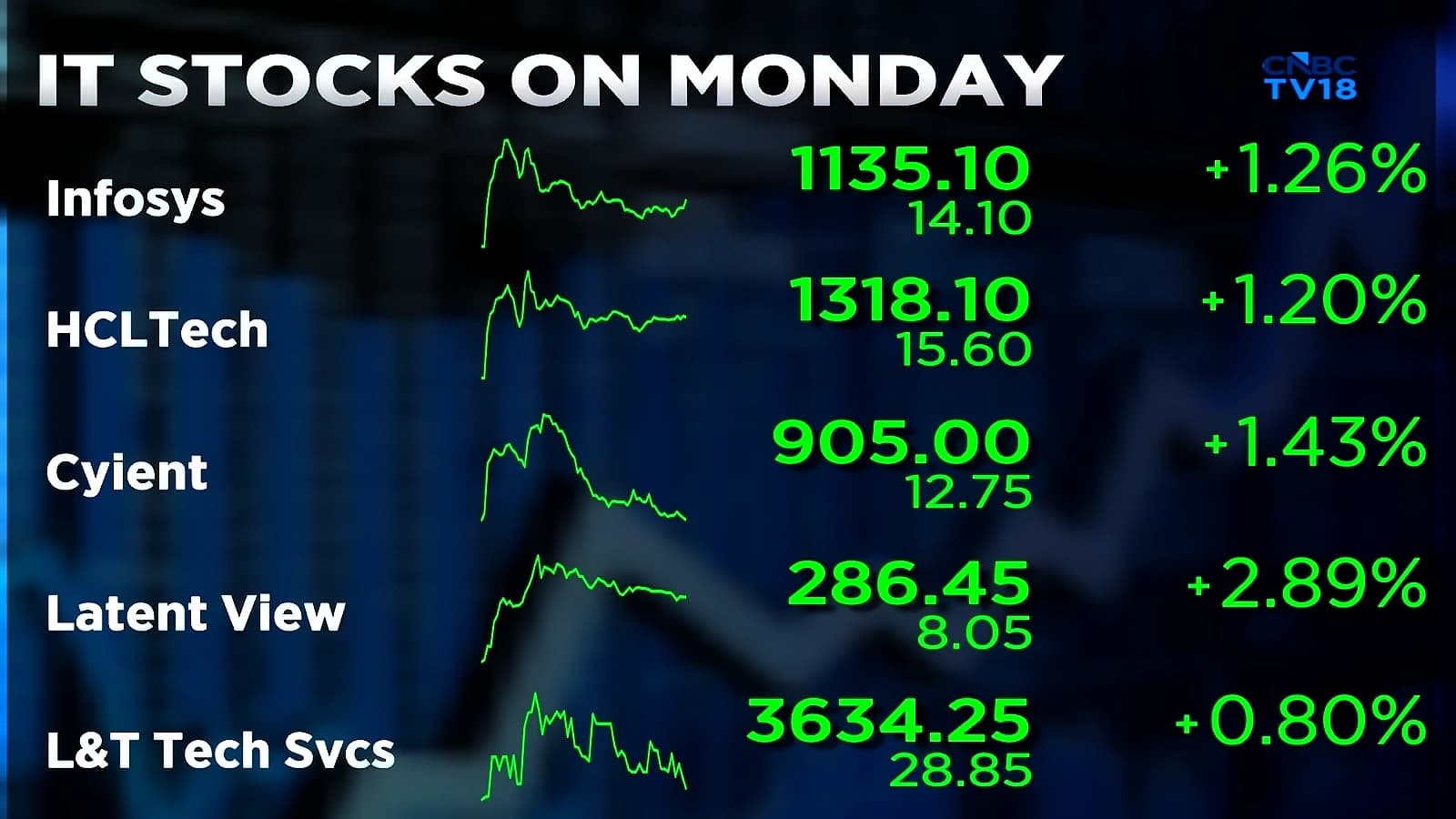
This positioning has attracted investor attention. The Nifty IT index surged over 16% in July 2026, rebounding more than 21% from its 52-week low. The rally was triggered by a $1 trillion selloff in AI chip stocks, with money moving toward Indian software services firms that build no AI hardware.
Brokerage Perspectives: CLSA vs. HSBC
Brokerage views on Indian IT diverge sharply, reflecting different time horizons and analytical frameworks. CLSA recently downgraded TCS, Infosys, and Tech Mahindra to Hold from Outperform, and cut Wipro and Mphasis to Underperform from Hold. The brokerage flags three structural pressures: the rise of Global Capability Centres as clients build in-house teams, limited market-share gains against global peers, and AI-native software and hardware players capturing spend that used to flow to services vendors.
CLSA estimates that AI-led deflation in current service lines, combined with a drag on legacy managed services, means AI-related volumes might only offset deflationary impact by FY30. The brokerage doesn't expect AI to reach a third of TCS, Infosys, and HCLTech's revenue until FY31.
HSBC takes a more constructive view. The bank identifies India as an anti-AI diversifier, noting that more than 80% of active global emerging-market funds remain underweight India. A move to neutral positioning could generate about $25 billion of inflows. HSBC maintains Buy ratings on Tech Mahindra and HCLTech, seeing them as beneficiaries of AI-rotation outflows.
Sustainability of the Hedge Positioning
The sustainability of Indian IT's hedge positioning depends on several factors. For Tech Mahindra, strong telecom vertical exposure provides stability during AI infrastructure build-out phases. The company's margin expansion trajectory and sophisticated pricing models demonstrate ability to navigate AI transitions while maintaining profitability.
HCLTech's AI-Native segment positioning with 30% CAGR growth expected to reach 20%+ of market within five years provides strong growth visibility. However, analyst views remain mixed, with some concerned about valuation sustainability versus growth prospects. Transcripts
The key differentiator will be execution capability. Companies that can leverage their cost structure advantages while successfully navigating AI-driven service model changes will be best positioned. The divergence between Wipro and Tech Mahindra—both mid-tier players with different outcomes—illustrates that execution matters more than market cap in the AI era.
Looking Ahead
As Nvidia's price increases take effect in early 2027, Indian IT companies face a critical transition period. Large-cap players like TCS and Infosys have the scale and partnerships to absorb costs, while mid-tier firms like Mphasis have agility to capture market share. The companies that succeed will be those that combine cost structure advantages with sophisticated pricing models and strong AI execution capabilities.
The "anti-AI" hedge narrative has merit, but it's not a blanket endorsement. Investors need to differentiate between companies with genuine structural advantages and those merely benefiting from sector rotation. The next 12-18 months will separate the wheat from the chaff as AI infrastructure costs rise and the market rewards execution over hype.