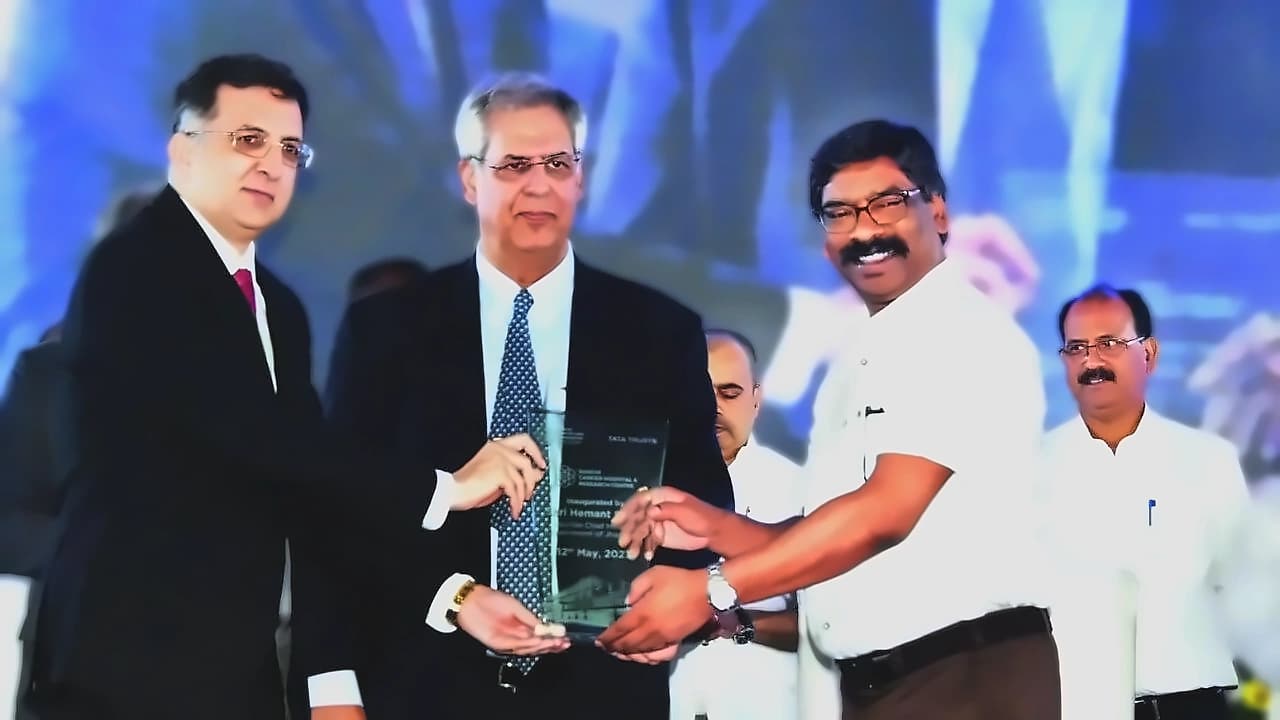
Noel Tata announced his departure as Chairman of both Voltas Limited and Trent Limited in June 2026, but this wasn't breaking news—it was a scheduled event. At 69, with his 70th birthday approaching in November, Noel Tata is stepping down in line with Tata Group's governance norms. The Companies Act 2013 mandates that Managing Directors and Whole-Time Directors cannot continue past age 70. While this rule doesn't technically apply to Non-Executive Chairpersons, the Tata Group extends similar principles across its leadership structure.
This isn't an isolated exit. Noel Tata will step down from six Tata Group company boards by November 2026, including Tata Steel, Titan Company, Tata Investment Corporation, Tata International, Voltas, and Trent. What makes this transition noteworthy is its timing and the strategic context surrounding it.
Why Now? The Regulatory and Strategic Context
The Companies Act 2013 creates a hard stop at age 70 for executive roles. For Noel Tata, who has served the Tata Group for 40 years, this represents a natural transition point rather than a forced exit. His departure from Voltas and Trent follows a similar announcement at Trent's AGM on June 23, 2026, indicating a coordinated approach to succession planning across the group.
But there's more at play here than just age limits. The Tata Group is navigating a broader leadership restructuring at its highest levels. Noel Tata, now Chairman of Tata Trusts which controls 66% of Tata Sons, has proposed a 2-year term extension for Tata Sons Chairman N. Chandrasekaran instead of the usual 5-year term. This reflects a deliberate strategy to formalize succession planning and potentially decentralize leadership across business verticals rather than concentrating power in one chairman overseeing everything.
Voltas: Built on Strong Foundations
Noel Tata's confidence in Voltas's leadership transition isn't empty rhetoric. The company just achieved a remarkable milestone—selling 1 million room air conditioner units in a record 81 days, which he highlighted as reaffirming the company's "undisputed market leadership". This achievement came during a challenging year when the overall AC industry faced approximately 10-12% degrowth. Others
Voltas has been preparing for this transition. The company has developed its next generation of leaders through a combination of internal promotions and lateral hires. Sunil Alaric D'Souza, former Managing Director & CEO of Tata Consumer Products, was appointed as Additional Director in May 2026. Pragya Bijalwan, with over two decades of experience at companies like Crompton and Castrol, joined the Senior Leadership Team. Mukundan Menon has been referenced as Managing Director Designate alongside current MD Pradeep Bakshi. Others
The financial picture, however, shows some strain. FY26 net profit declined to ₹370 crores from ₹834 crores in FY25, with unitary product margins compressing from 8.4% to 3.2%. The stock trades at a premium P/E ratio of 115.93x, suggesting high growth expectations are already priced in. Others
Trent: Peak Performance at Transition Time
Trent's story reads differently. Noel Tata's departure coincides with what appears to be a performance peak. FY26 consolidated revenue hit ₹20,074 crore (up 17.2% YoY), with net profit reaching ₹1,721 crore. Under his leadership spanning nearly three decades, Trent expanded from a single store to 1,286 stores across 321 cities, with revenue growing from approximately ₹2,333 crore in FY14 to ₹19,701 crore in FY26.
The company has approved a ₹2,500 crore fundraise for supply chain automation and announced a 1:2 bonus share issue—both signals of management confidence. Aggressive expansion targets remain unchanged: 5,000 Zudio stores and 700 Westside stores are the goals.
Trent's governance structure provides continuity. Venkatesalu Palaniswamy transitioned from CEO to Managing Director in October 2024, ensuring operational leadership remains stable. The company operates under a robust three-tier governance framework with seven specialized board committees, including Audit, Risk Management, and Stakeholders Relationship committees. Others
The Broader Tata Group Coordination Challenge
Noel Tata's reduced direct involvement at Voltas and Trent raises questions about strategic coordination across the Tata Group ecosystem. He continues as Vice-Chairman of Tata Steel and Titan Company, maintaining some cross-group strategic influence. But the simultaneous exits from multiple companies create a temporary coordination challenge.
The Tata Group maintains sophisticated cross-holdings and shared services. Voltas holds strategic investments in Tata International, Tata Services, and Tata Industries. Trent holds investments in Tata Investment Corporation and preference shares in Tata Sons and Tata Digital. Intercompany transactions are substantial—Tata Steel alone purchases goods worth ₹4,488 crore from and sells ₹3,433 crore to group companies annually. Others
This deep integration means leadership transitions at individual companies don't occur in isolation. However, the Tata Group's institutional strength and established governance frameworks should maintain coordination through formal processes rather than depending on individual leaders.
Market Interpretation: Confidence or Caution?
The market's reaction to these leadership transitions will likely be measured. Both companies are trading at expensive valuations—Trent at P/E of 101x and Voltas at 115.93x—meaning growth expectations are already high. Analyst sentiment remains bullish on Trent with 76% Buy ratings, while Voltas shows mixed sentiment with 37% Buy, 43% Hold, and 20% Sell ratings. Others +1
Short-term sentiment may remain neutral as investors await successor announcements and early execution signals. The market views these as "managed exits rather than sudden disruptions" given the governance-driven nature of the transitions. Both companies have strong operational momentum entering the transition period—Voltas with its record AC sales and Trent with its robust revenue growth.
What Investors Should Watch
For Voltas, the critical metrics will be margin recovery and execution in the Commercial Air Conditioning segment, which management has identified as "the next growth engine". The room AC industry is expected to grow 15-20% in FY27, recovering from the weak FY26 base. Investors will also monitor the performance of joint ventures, particularly Voltbek (the Arçelik partnership), which contributed losses of ₹130.57 crores in FY26 despite strong revenue growth. Others +2
For Trent, the focus will be on flawless execution of aggressive expansion targets. Scaling Zudio from current levels to 5,000 stores while maintaining industry-leading margins that investors have priced into the stock represents the real test for incoming leadership. International expansion, currently being tested in UAE, will also be closely watched.
The Bottom Line
Noel Tata's departure from Voltas and Trent represents a test of the Tata Group's institutional strength rather than a crisis. Both companies have strong operational foundations, prepared leadership teams, and clear strategic roadmaps. The governance-driven nature of these transitions, aligned with age-based retirement norms, provides structure and predictability.
However, the high valuations at both companies mean investors have little room for execution errors. The next 12-18 months will be crucial as new leadership teams demonstrate their ability to sustain growth trajectories while managing the operational complexities of rapid expansion. The Tata Group's track record suggests these transitions will be managed effectively, but the market will be watching closely for any signs of stumble.