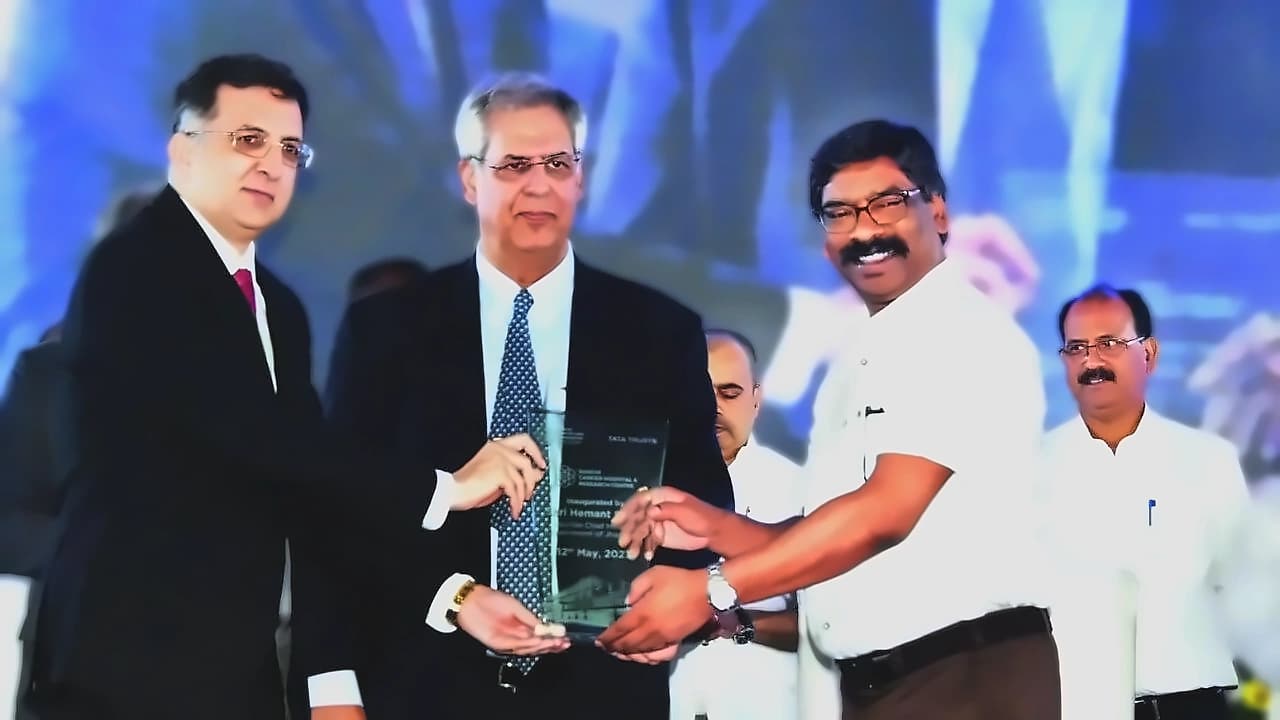
Noel Tata has officially stepped down as chairman of Trent Ltd at the company's 47th Annual General Meeting on June 23, marking the end of his nearly three-decade leadership journey at the Tata Group's retail arm. Addressing shareholders, Noel confirmed this would be his final AGM as chairman, stating 'As you might be aware, this will be my last annual general meeting as chairman.' His departure comes as he approaches the Tata Group's retirement age limit for non-executive directors, with Noel turning 70 in November 2026. Noel joined Trent's board as a director in 1998 after the company was established by his mother, Simone Tata, following the divestment of Lakme, and later became Trent's first managing director in June 1999.
The departure occurs at a high point for the company, which has transformed from a market cap of ₹3,400 crore in 2014 to a staggering ₹1.73 lakh crore over the past decade. As per Trent's latest financial reports, the company has delivered 2.5x growth in revenue and profitability since 2023 under Noel's vision. The retailer now operates 1,286 stores across 321 cities with a retail area of 17.7 million square feet, having expanded from a single Westside outlet into a multi-brand retail network. The company also approved a ₹2,500 crore equity fundraise to automate supply chains and upgrade infrastructure, while announcing a 1:2 bonus share issue as of April 2026. The numbers alone justify the transformation, with revenue growing roughly ninefold from ₹2,333 crore in FY14 to ₹20,193 crore in FY26, while profit swung from a ₹19 crore loss to ₹1,477 crore over the same period. Shareholders have pocketed gains of roughly 3,500% during this remarkable journey.
Under Noel's leadership, Trent has evolved from a two-brand strategy (Westside/Zudio) to a multi-brand portfolio including Samoh and Burnt Toast, with the company maintaining its aggressive roadmap to reach 5,000 Zudio and 700 Westside stores. As reported in Trent's FY26 annual report, Noel reflected on the journey: 'From a single Westside store to a network of over 1,200 stores, our journey has been one of steady evolution. Over the years we have added powerful growth engines to our portfolio — most notably Zudio and Star — which are now a significant part of our portfolio.' His approach emphasized disciplined execution, believing in homegrown brands and playing the long game when much of the industry chased faster gains. The patience paid off twice over, with Zudio launched in 2016 as a private-label menswear chain aimed at the value segment, walking into a corner of the market where organised retail barely existed but demand was enormous.
If Westside built Trent's foundation, Zudio triggered its meteoric rise with a hyper-focused strategy that has allowed it to scale from zero to 960 stores in just a decade. Launched in 2016 as India's first 100% private-label value fashion brand, Zudio kept all products highly affordable, strictly in the range of ₹1,000, tapping directly into the aspirations of the Indian middle class. Instead of fighting for saturated metro markets, Zudio expanded aggressively into Tier 2, 3, and 4 cities, capturing unmet demand for organized retail. In a move that surprised analysts, Zudio completely avoided e-commerce, sticking resolutely to a brick-and-mortar model and avoiding the massive cash burns associated with online customer acquisition and shipping logistics. The approach gave Trent greater control over pricing, merchandising and margins, while allowing it to respond quickly to changing consumer preferences.
Looking ahead, Noel expressed confidence in Trent's future growth prospects, stating 'As we look ahead, I firmly believe that the best years of Trent are ahead of us. The opportunities before us are vast – not just in India.' The company is testing Zudio in the UAE as part of its international expansion strategy, while maintaining its focus on private labels and own-brand retail to maintain superior margins compared to peers who rely on third-party brands. Noel has previously talked of growing Trent tenfold in revenue terms, noting that run rates have already grown more than 2.5 times since he first floated that ambition in 2023, and has voiced confidence the goal will arrive in the 'not-so-distant future.' The market is likely to view this transition as a managed exit rather than a sudden disruption, with the approved ₹2,500 crore fundraise and 1:2 bonus issue suggesting strong capital allocation strategy for long-term expansion. He leaves behind a company that looks nothing like the one he inherited, and a Tata group retail bet that quietly became one of its loudest wins.