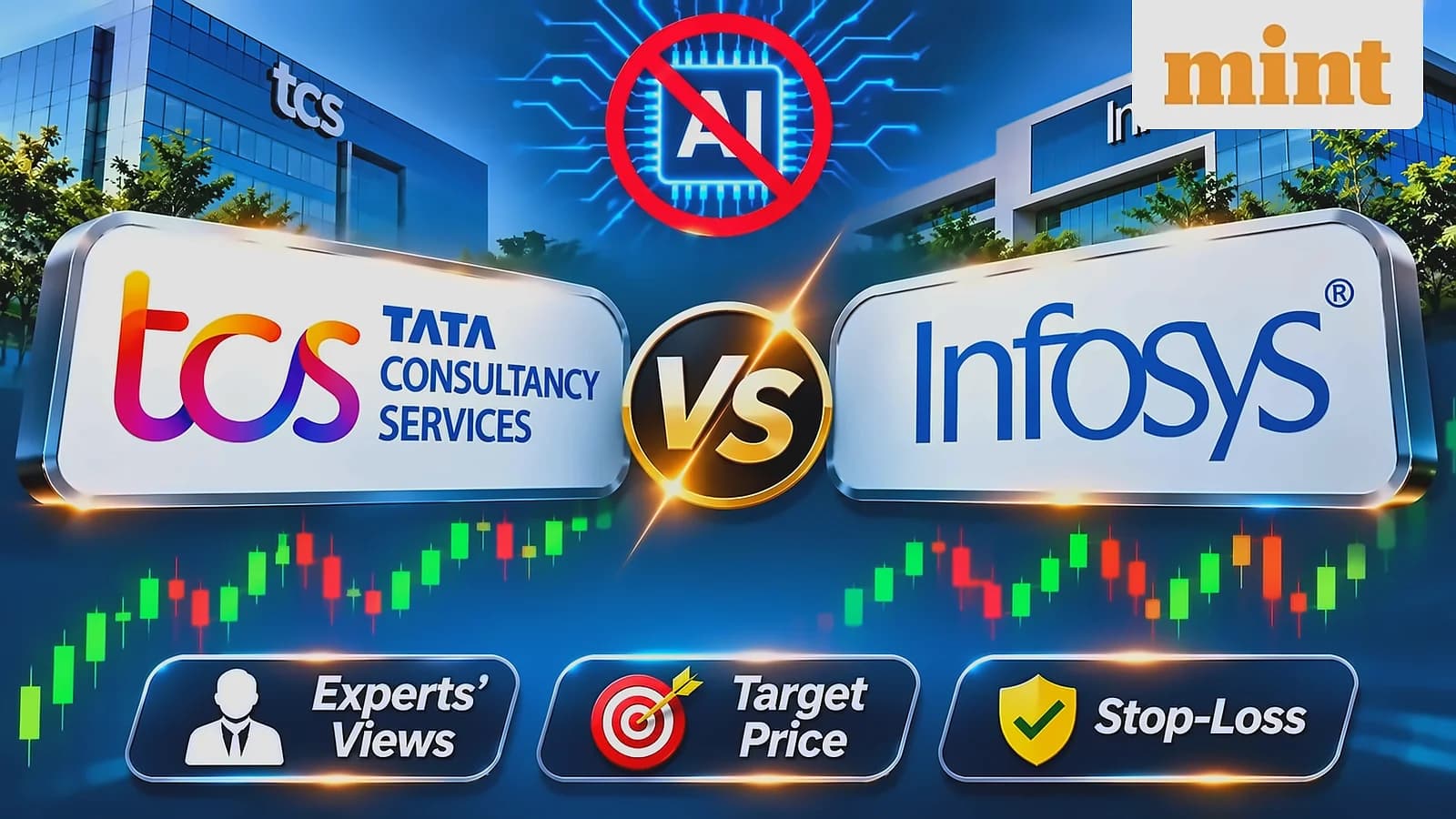
The index climbed about 13% in a month and roughly 16% in October, reclaiming the 30,000 mark and hitting its highest level in eight months. This happened even as the broader Nifty 50 struggled and global tech stocks faced pressure.
The rally has been broad-based. Tata Consultancy Services surged about 22% in October, while Tech Mahindra and Wipro gained around 20% each. Infosys and HCL Technologies weren't far behind, with gains of 16% and 15.5% respectively. This is not just a dead cat bounce. The index has recovered about 22% from its July low, though it remains down roughly 18% for the year, putting it on track for its worst annual performance since 2022.
Why Now? The Valuation Story
The simplest answer is often the right one in markets: things got too cheap. After months of selling on fears that artificial intelligence would disrupt traditional IT services, the sector's valuations fell to levels that value investors found hard to ignore.
In other words, stocks are going up because they were cheap, not because companies suddenly started growing much faster.
Consider the numbers. Tata Consultancy Services trades at a PE ratio of around 17.5, Infosys at about 15.4, and HCL Technologies at roughly 21.1. These are not the nosebleed valuations you see in many global tech stocks. Add dividend yields of 3.8% to 4.4%, and you have a group of companies offering steady cash returns in a volatile world. This is the "reverse AI trade" that Jefferies strategist Chris Wood has been talking about. As investors question whether the massive capital expenditures by AI giants will ever pay off, money is rotating into companies that are not burning cash on data centers and chips.
Earnings That Didn't Spook Anyone
September quarter results played a crucial role in calming nerves. The fear was that earnings would collapse. They didn't. Tata Consultancy Services reported a net profit increase of 15% to INR 13,884 crore, while revenue climbed 11% to INR 73,188 crore. HCL Technologies saw its profit surge 21.2% year-on-year to INR 5,132 crore, with revenue growing 3% quarter-on-quarter and 11.5% year-on-year in rupee terms. Tech Mahindra, often seen as the laggard, delivered constant currency growth of 7.2% year-on-year.
Growth is not explosive. It is low single-digit in constant currency terms for the large players. But stability has its own price.
Discretionary programs without near-term value remain under scrutiny. However, deal pipelines remain healthy. Tata Consultancy Services reported total contract value of $9.6 billion. HCL Technologies notched new deal bookings of $3.3 billion, up 27% year-on-year. Tech Mahindra's last-twelve-month deal wins grew 34.8% year-on-year. This tells investors that while clients may be cautious, they are not walking away. Investor Presentation +2
The Capital-Light AI Hedge
This brings us to the most interesting part of the story. Why is Indian IT seen as a hedge against the AI trade? The answer lies in the business model.
They are building data centers, buying chips, and laying fiber. This spending is so heavy that Meta's free cash flow turned negative for the first time since its 2012 IPO, falling to -$2.1 billion in the third quarter. The stock fell about 7% on the news, despite beating revenue expectations.
Indian IT companies operate on the other side of that equation. They do not need to spend billions on infrastructure to benefit from AI. Their revenue comes from helping enterprises adopt these technologies—strategy, data readiness, integration with legacy systems, security, and ongoing operations. This is services work, paid for by the hour or by contract. Tata Consultancy Services says its annualized AI services revenue has crossed $3.1 billion and is growing at a higher margin than its corporate average. HCL Technologies reports that its "Advanced AI" revenue reached $219 million in the quarter, up 78% year-on-year. Transcript +1
The causal chain is straightforward. Hyperscalers build the roads and bridges. Indian IT companies help businesses figure out how to drive on them. This means Indian IT benefits from AI adoption without carrying the capital risk. If the AI trade slows because investors question the return on all that spending, the hyperscalers get hit first. The services companies, with their lighter balance sheets and steady cash flows, look relatively safer.
The DII vs. FII Puzzle
There is a twist in the ownership story. You might expect domestic institutional investors (DIIs) to be piling into this rally. The data tells a more nuanced picture. Mutual funds, a major component of DII money, actually cut their exposure to IT stocks to a record low of 5.3% of assets under management in September 2026, down from 9.24% at the end of 2024. This reduction reflects concerns about slower global technology spending and uncertainty around AI's impact on traditional services.
However, DIIs as a broader group have been net buyers of Indian equities, absorbing heavy foreign selling.
This pattern has repeated over several sessions. While aggregate mutual fund data shows a falling IT weight, some individual schemes have increased positions in selected companies like Infosys and Tata Consultancy Services. The rally may be partly driven by stock-specific domestic buying, even as the sector's overall weight in mutual fund portfolios has declined.
The argument that money is rotating out of sectors with high raw material costs into IT is logical but not strongly supported by the data I found. In June, mutual funds did reduce exposure to Oil & Gas, Metals, Utilities, and Cement, but they added to private banks and healthcare, not IT. The rotation into IT seems to be driven more by valuation and the "reverse AI" narrative than by a systematic shift away from commodity-sensitive sectors.
The Asian Tech Selloff and India's Decoupling
The divergence between Indian IT and Asian tech markets has been stark. In October, South Korea's Kospi index fell over 5%, with Samsung Electronics dropping 7.4% and SK Hynix plunging over 10%. Japan's Nikkei 225 dropped, with chip equipment maker Tokyo Electron falling over 7%. These markets are heavily exposed to the AI hardware supply chain. When investors question whether AI spending will justify high valuations, these stocks get hit first.
Indian IT stocks decoupled because they are not in the hardware business. They are in the services business. On the very day the Kospi was tumbling, the Nifty IT index was trading firmly in the green, with 10 out of 10 stocks advancing. This is not to say Indian IT is immune. A severe global unwind in AI stocks would likely affect all risk assets, including India. Foreign investors remain net sellers of Indian equities, concerned about high US Treasury yields and global risk-off sentiment. But in a mild correction, the capital-light services model offers a relative safe harbor.
What Lies Ahead
So, is this the start of a new bull market for Indian IT, or just a relief rally? The technical indicators suggest caution. The Relative Strength Index (RSI) for Tata Consultancy Services hit 88.4, while HCL Technologies and Infosys also entered overbought territory. Jefferies maintains an Underperform rating on Tata Consultancy Services with a target price of INR 2,125, well below the current market price. The brokerage sees the recent gains as driven by multiple expansion rather than fundamental improvement.
The fundamental picture remains one of modest growth and stable margins. Management teams are not calling a turnaround in demand. They are navigating a world where clients are cautious, discretionary spending is under scrutiny, and AI is both an opportunity and a deflationary force. The companies that can offset pricing pressure through share gains and higher-margin AI services will likely outperform. HCL Technologies seems to be doing this well, with its EBIT margin expanding to 18.2% in the quarter. Investor Presentation
For investors, the lesson is clear. The AI boom is creating winners and losers. The winners are not just the companies making the chips and building the data centers. They are also the companies that help the rest of the world use this technology. Indian IT, with its cheap valuations, high dividend yields, and capital-light model, has staked a claim as the hedge in the AI trade. Whether that hedge holds up will depend on how the global economy navigates the transition to an AI-powered future. For now, the sector has earned a moment in the sun after a long, cold winter.