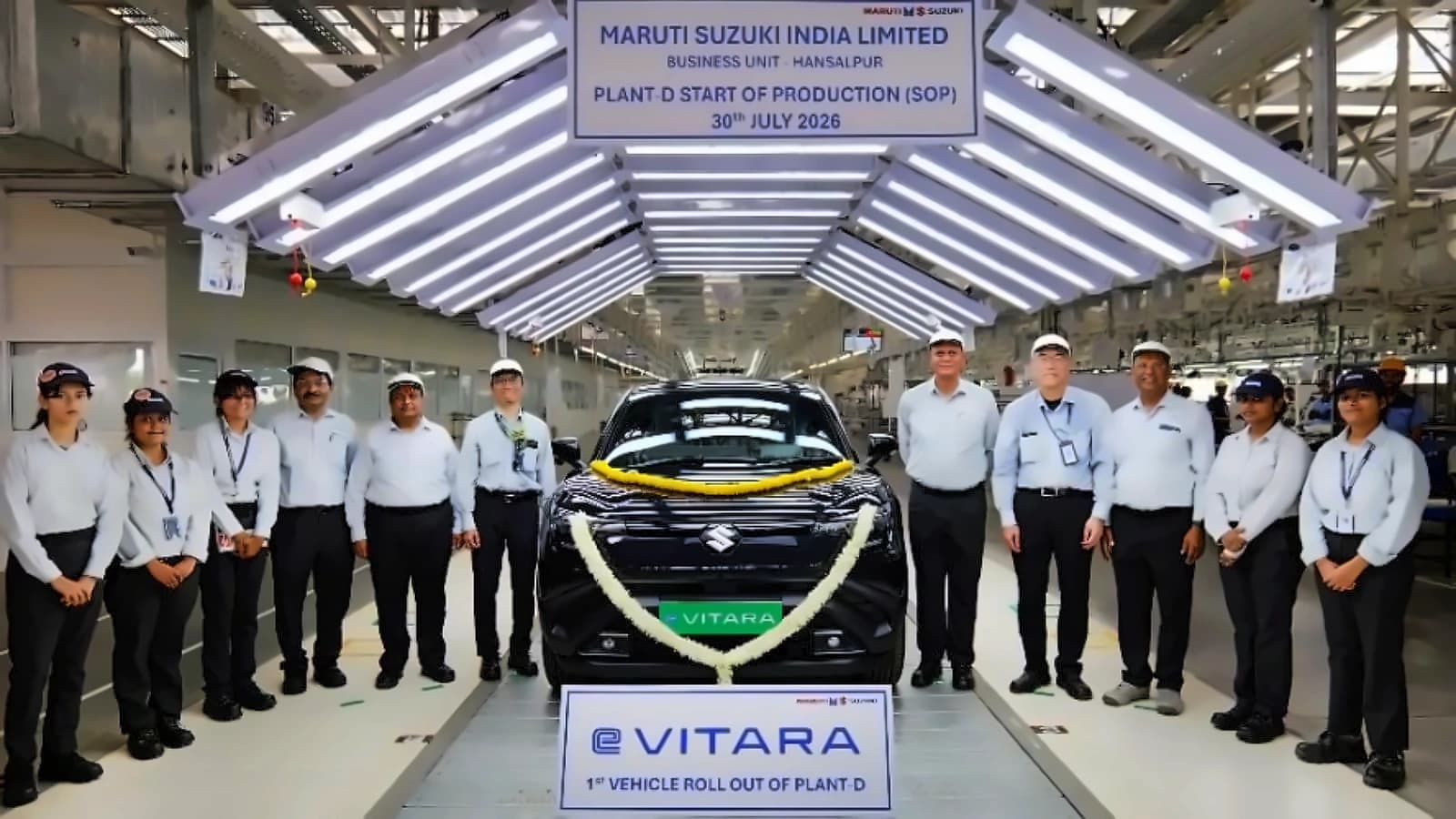
In July 2026, Maruti Suzuki India Limited commissioned Plant D at its Hansalpur facility in Gujarat, marking a Rs 3,900 crore investment that pushes the site's total capacity to 1 million units annually. This brings the cumulative investment in Hansalpur to Rs 25,288.7 crore, representing 15.4% of the total facility cost allocated to this single expansion line. The decision wasn't just about adding capacity—it was a strategic move to address production constraints that were limiting growth, with management explicitly stating they were "constrained by production capacity" and needed to ramp up supplies to both domestic and export markets. Transcripts
The capital allocation efficiency is notable.
This approach aligns with Maruti Suzuki's improving capital efficiency metrics—
The Rs 3,900 crore investment leverages existing infrastructure, supplier relationships, and workforce expertise, enabling faster ramp-up and better capital deployment. Transcripts +1
Capacity Utilization Dynamics
Plant D's addition of 250,000 units (2.5 lakh) significantly alters Maruti Suzuki's capacity utilization landscape. Pre-expansion, the company operated at approximately 95% capacity utilization across its facilities, with total sales of 2.23 million units against 2.35 million of capability. The new capacity takes total production capability to 2.9 million units annually across four facilities: Hansalpur (1 million), Manesar (0.9 million), Gurugram (0.5 million), and Kharkhoda (0.5 million). AnnualReports +1
The immediate impact is relief from capacity constraints. Management expects effective additional volume of about 250,000 cars in FY26 over the previous year due to ramp-up considerations. This is critical given the pending order book of approximately 190,000 vehicles at the end of FY 2025-26, with about 130,000 in the small car segment alone. The expansion allows Maruti Suzuki to maintain high utilization rates while addressing demand backlogs—a delicate balance that management emphasizes as key to cost management. Transcripts +2
Cost Structure and Margin Implications
Scaling Hansalpur from 7.5 lakh to 10 lakh units delivers meaningful operating leverage benefits. Maruti Suzuki's cost structure shows material costs at 75.9% of net sales (predominantly variable), employee costs at 5.2%, other expenses at 11.7%, and depreciation at 3.9%. The expansion improves fixed cost absorption—management cited "favorable fixed cost incidence due to inventory accretion" contributing approximately 50 basis points to margin improvement in Q4 FY26. InvestorPresentations +2
The incremental margin impact comes from multiple sources. Higher volumes spread fixed costs (particularly depreciation from the Rs 3,900 crore investment) across a larger production base. Operating leverage benefits are evident in sequential margin expansion—Q4 FY26 showed 70 basis points improvement driven by volume growth and cost control. Management targets 10% EBIT margin by 2030, up from 8.4% in FY26, suggesting confidence in these operating leverage benefits. InvestorPresentations +1
However, margin headwinds exist. Commodity price volatility impacted margins by 80 basis points in Q4 FY26, and new model expenses added another 60 basis points. The net effect depends on sustained demand visibility to ensure rapid capacity utilization of the expanded facilities. Transcripts
Export Hub Dominance
Hansalpur has emerged as Maruti Suzuki's largest export hub, accounting for 47% of overseas shipments in FY 2025-26. This dominance stems from several strategic advantages. The facility features India's first automobile in-plant railway siding, commissioned in March 2023, with capacity to dispatch 300,000 vehicles annually via rail. This infrastructure advantage has enabled Maruti Suzuki to increase rail-mode share from 5.1% in 2016 to 26.5% in FY25-26, dispatching over 600,000 vehicles through railways and saving 35 million litres of fossil fuel annually. Others +3
The export concentration creates geographic diversification considerations. Maruti Suzuki exports to nearly 100 countries, with Africa as the top destination, Latin America showing fastest growth, and significant presence in Middle East, ASEAN, and Oceania. The largest single market is South Africa at 95,597 units, representing approximately 21% of export volumes—indicating reasonable diversification despite Hansalpur's concentration. AnnualReports +2
Foreign exchange exposure is actively managed. The company maintains a Board-approved foreign currency risk management policy, using forward contracts and options exclusively for hedging. Net foreign exchange position shows positive exposure in Japanese Yen (₹20,124 million), US Dollar (₹4,520 million), and Euro (₹809 million). Favorable foreign exchange movements contributed 30 basis points to margin improvement in Q4 FY26. AnnualReports +3
Export-focused production provides pricing advantages.
The company contributes 49% of India's total passenger vehicle exports, providing scale advantages that smaller competitors cannot match. Transcripts +1
EV Transition Strategy
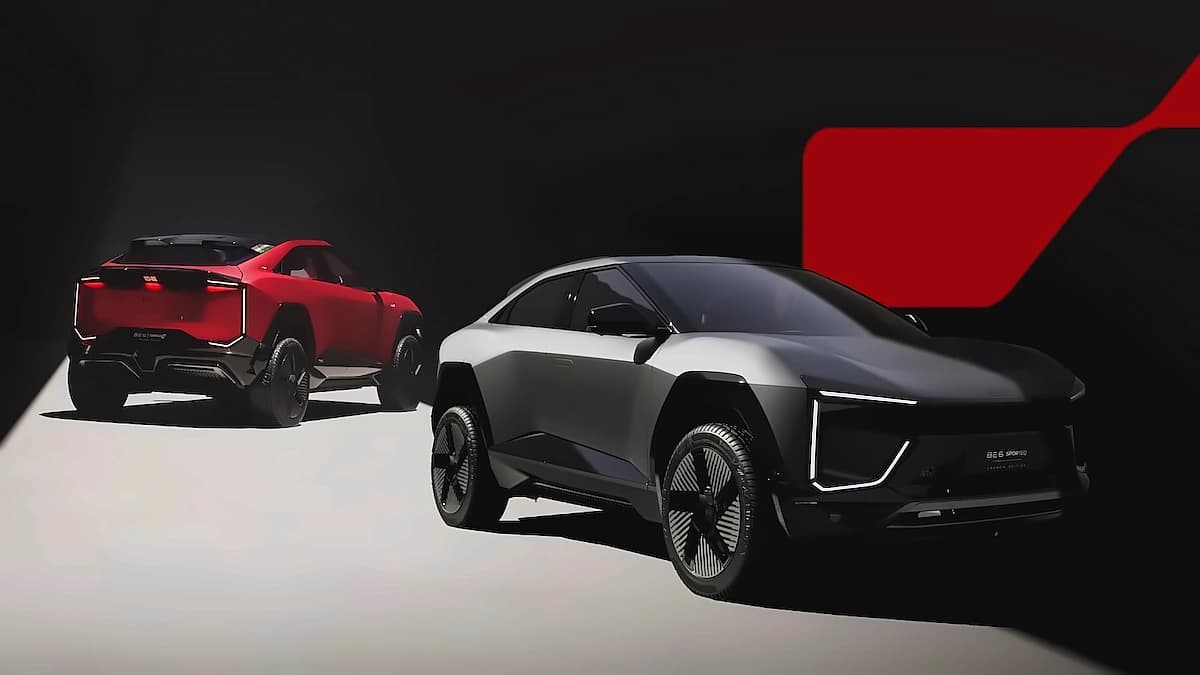
Plant D's strategic significance extends beyond capacity—it's the initial manufacturing site for e VITARA, Maruti Suzuki's first battery electric vehicle. The choice of dedicating new capacity to EV production rather than retrofitting existing plants offers compelling advantages. Brownfield expansion at Hansalpur provides minimal startup costs, faster ramp-up with existing infrastructure, and shared administrative and quality control systems. Transcripts
The production mix shift will enhance average revenue per unit.
This aligns with industry dynamics—EVs benefit from 5% GST versus 40% for ICE vehicles above 4 meters, enabling competitive on-road pricing despite higher upfront costs. Transcripts +1
The margin trajectory for EVs follows a familiar pattern. Industry comparisons show EV margins typically start at roughly half of ICE margins—Mahindra achieved 5% PBIT on EVs versus 10.4% overall auto margins. However, EV costs are on a deflationary trend while ICE costs face inflationary pressure from emission regulations. Manufacturers have achieved much higher cost reduction rates in EVs over the past 3-4 years. Transcripts +1
Plant D supports Maruti Suzuki's electrification targets: 4 million units production capacity by FY 2030-31, multiple EV models planned, and a network of over 1 lakh charging points by 2030. The company has invested approximately Rs 104.4 billion in Gujarat for local EV and battery production, including Rs 31 billion for BEV capacity expansion and Rs 73 billion for an in-vehicle battery plant. InvestorPresentations +3
Path to 4 Million Units
Maruti Suzuki's expansion strategy centers on achieving 4 million units annual production by FY 2030-31—a target that requires doubling capacity in 5-6 years compared to the 40 years taken to reach the first 2 million units.
The execution risks are substantial. The accelerated scale-up requires significantly more human capital, financial investment, and technical expertise with faster decision-making processes. Supply chain synchronization is critical—over 400 Tier-1 and nearly 1,300 Tier-2 suppliers must scale operations in tandem. Geopolitical tensions, particularly West Asia conflicts, have strained supply chains for rare earth metals and electronic components. AnnualReports +2
Workforce development is a key focus. The company skilled up 44,117 workforce members in FY 2024-25, provided 240,000+ person-hours of supplier training, and maintained voluntary attrition at a low 2.5%. Market demand uncertainties add complexity—the passenger vehicle market declined 0.4% in first half of FY 2025-26 but rebounded with 16.7% growth in the second half following GST reforms. AnnualReports +2
Manufacturing Execution Excellence
Hansalpur's rapid scaling from inception in 2017 to one million units in 2026 reflects exceptional manufacturing execution capabilities. The facility achieved cumulative production milestones: 1 million by October 2020, 2 million by August 2022, 3 million by December 2023, 4 million by March 2025, and 5 million by May 2026. This represents one of the fastest capacity expansions in the Indian passenger vehicle industry. Others
The competitive advantages of single-location scale are significant. Concentrated production enables superior economies of scale through higher capacity utilization, reduced per-unit fixed costs, and optimized resource allocation. The supplier ecosystem is tightly integrated—86% of supplier plants are located within 100km of manufacturing facilities. Cost optimization programs generated ₹7,693 million in savings through employee suggestion schemes alone in FY24. AnnualReports +2
Advanced manufacturing capabilities include Industry 4.0 and 5.0 frameworks, machine vision systems for continuous quality monitoring, and fool-proofing systems for error prevention at source. The agile manufacturing systems support production across diverse segments—from mini and compact cars to UVs and vans—allowing the company to shift production based on changing consumer preferences. AnnualReports +1
The Hansalpur expansion positions Maruti Suzuki strongly for future growth. The combination of advanced technology integration, agile production systems, supply chain excellence, and quality leadership provides a robust foundation for executing ambitious expansion plans while maintaining operational efficiency. As the company targets 4 million units by 2030, Hansalpur's one million unit capacity serves as both a manufacturing powerhouse and a strategic platform for EV transition and export growth.