This achievement makes it the fastest-selling SUV from India to reach this landmark, according to Society of Indian Automobile Manufacturers (SIAM) data.
This velocity isn't just a number; it's a signal that India has arrived as a serious global manufacturing hub for SUVs.
What Drove This Demand?
The Fronx's export success didn't happen in a vacuum. It rode a massive structural shift in global consumer preferences. The SUV segment's share in the overall market rose from 23.8% in FY2017 to 48.3% in the first half of FY2023. This created a favorable demand environment that the Fronx was perfectly positioned to capture. The model is now exported to nearly 90 countries worldwide, including Japan—a market known for being one of the most quality-conscious and advanced automobile markets globally. Transcripts
The company's "Make in India, Make for World" strategy, leveraging India's manufacturing capabilities to tap into global markets, has been instrumental in this success.
How Does This Compare to Other Models?
While specific export velocity comparisons with other Maruti Suzuki models like Swift, Baleno, or Dzire are not publicly disclosed, the Fronx stands out as the fastest SUV from India to reach the 2-lakh export milestone. The company's overall export performance provides context—Maruti Suzuki exported 3.95 lakh passenger vehicles in 2025, its highest-ever tally and over 21% more than in 2024. The Fronx has emerged as Maruti Suzuki's largest-selling passenger vehicle in overseas markets, contributing significantly to this record performance.
Revenue and Market Share Impact
The Fronx's contribution to Maruti Suzuki's export revenue is substantial, though specific model-level revenue data isn't disclosed. What we do know is that Maruti Suzuki achieved its highest-ever annual exports of 447,000 vehicles in FY26, representing 34.6% year-on-year growth. Export volume share increased to 15% of total sales volume in FY25. The company contributes 49% of India's total passenger vehicle exports, making it the largest contributor among 18 car manufacturers in the country. Transcripts
Regarding margins, management doesn't provide specific comparisons between export and domestic businesses. However, they consistently highlight exports as a critical growth driver that enhances capacity utilisation, contributes to foreign exchange gains, and supports overall margin expansion through diversification and scale benefits. Favourable foreign exchange movements contributed positively to margin expansion, with exports helping maintain optimal capacity utilisation. Transcripts
Production Capacity and Supply Chain Optimizations
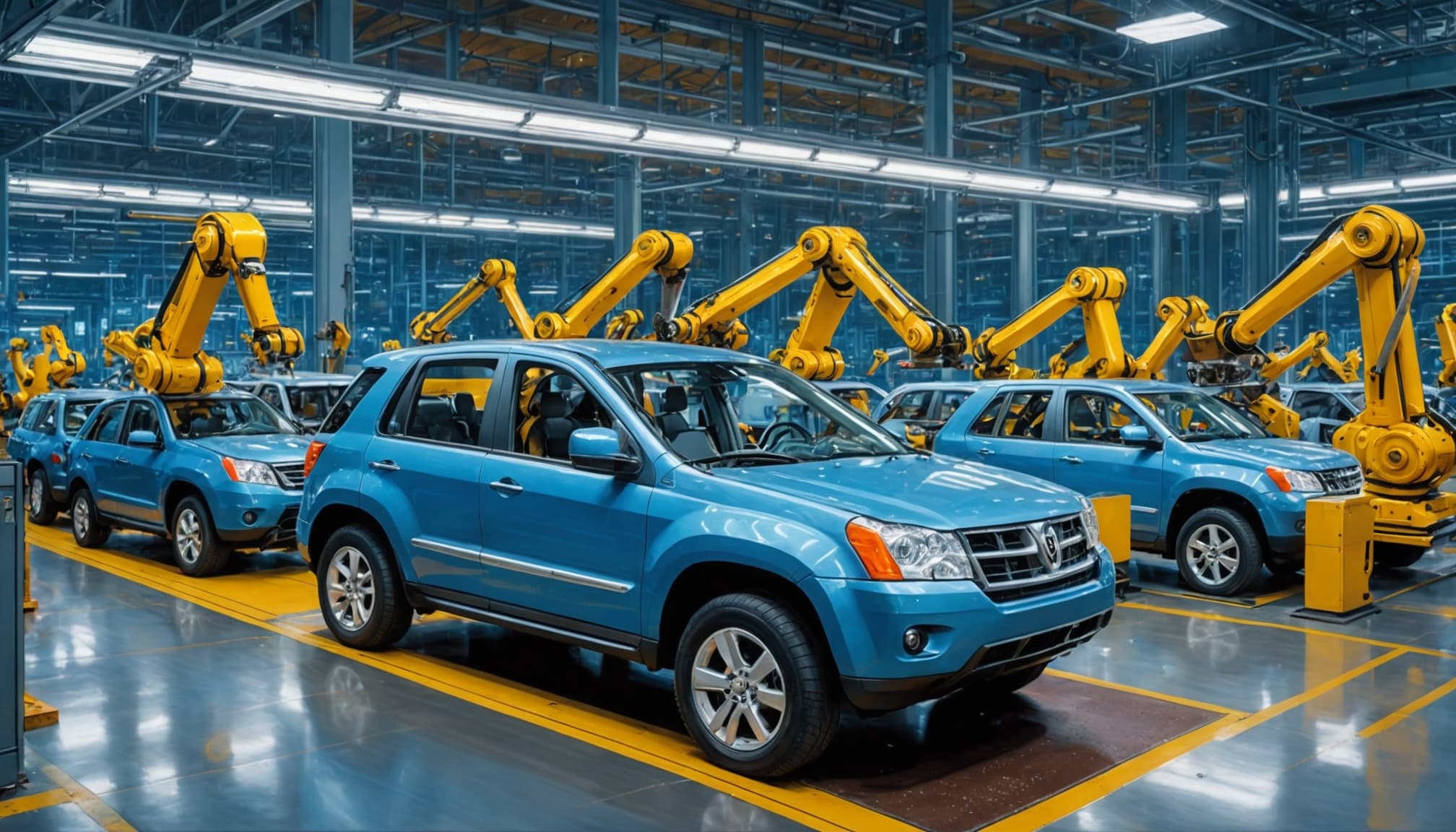
Supporting this record export pace required significant manufacturing infrastructure investments. The Hansalpur facility in Gujarat, where the Fronx is manufactured, has undergone major expansion. In July 2026, Plant D at Hansalpur commenced commercial production, increasing the site's capacity from 750,000 to 1,000,000 units annually. This makes Hansalpur Suzuki's first global manufacturing site to hit an annual capacity of 1 million units and India's largest passenger vehicle manufacturing facility at a single location.
The cumulative investment at the Hansalpur facility stands at ₹25,288.7 crore, including ₹3,900 crore for Plant D. Beyond capacity, Maruti Suzuki commissioned India's first automobile in-plant railway siding at Hansalpur in March 2024 under the Prime Minister's GatiShakti programme. This infrastructure has cumulatively dispatched over 750,000 vehicles since March 2023, reducing CO2 emissions, fuel consumption, and easing road congestion.
Managing Domestic vs Export Allocation
The Fronx demonstrates a balanced production allocation strategy—one in every five units manufactured is exported (20% export ratio), indicating 80% domestic allocation. However, this allocation happens against a backdrop of severe capacity constraints. Plants are operating at nearly 100% utilisation, with approximately 190,000 customer orders remaining unserved at the end of FY26. Transcripts
Monthly production stands at around 220,000 to 230,000 units, of which roughly 170,000 to 180,000 units are allocated to the domestic market, while about 50,000 units are exported. Dealer inventory levels remain tight at around 12 days, significantly below the typical 30-day benchmark considered comfortable for the industry. This creates inherent trade-offs—balancing strong domestic demand with export growth ambitions, managing waiting periods that could prompt customers to consider alternatives, and optimizing margin profiles across different markets.
Influence on Product Strategy and Export Portfolio
The Fronx's success has fundamentally shaped Maruti Suzuki's product strategy for international markets.
The company is working towards strengthening its SUV product lineup with multi-powertrain technologies, including BEVs, hybrids, and other technologies to cater to evolving global customer preferences. Transcripts
The Fronx validates the company's approach to designing models for young trailblazers with modern SUV design and futuristic aerodynamic styling. This success provides confidence for similar product development strategies for international markets. The upcoming product roadmap includes a Fronx EV expected in CY2027, a new SUV project codenamed Y43 (an A-Low SUV slotting below Brezza), and a Grand Vitara facelift with ADAS features. Transcripts
Top Exported Models and Portfolio Composition
The Fronx sits at the top of Maruti Suzuki's export hierarchy. The top exported models are Fronx, Jimny, Swift, Baleno, and Dzire. The Fronx and Jimny together comprised 35% of Maruti's total exports between April and December 2024 and 74% of its utility vehicle exports. Maruti Suzuki maintains the widest export portfolio among all OEMs in India with 18 models exported to over 100 countries.
This portfolio includes a strong mix of sedans, small cars, SUVs, and light commercial vehicles. With the inclusion of Battery Electric Vehicle in its powertrain mix through the e VITARA, the company is increasingly able to cater to varied customer preferences across emerging and developed markets alike.
Regional Markets Driving Export Volumes
The Fronx's export success is driven by a diversified geographic footprint. Latin America has emerged as the fastest-growing region, with exports to Latin America and Oceania growing faster than to Africa, the Middle East, and ASEAN. Japan represents the most significant recent development—exports commenced in August 2024, and the Fronx currently has a three-month waiting period in the Japanese market, indicating strong demand. Transcripts
The Japan-spec Fronx features a 1.5-litre mild-hybrid petrol engine, AWD technology, and an ADAS suite—significant upgrades from the Indian version which has 1.2-litre petrol and 1.0-litre turbo-petrol engine options and is front-wheel drive only. This product differentiation for quality-conscious markets demonstrates Maruti Suzuki's ability to manufacture world-class vehicles that meet international standards.
Competitive Positioning Against Global Rivals
Maruti Suzuki has established dominant leadership in India's passenger vehicle export market.
The company currently has a 43% market share in PV exports.
In the compact SUV segment, the Fronx competes with global rivals like Hyundai Venue, Kia Sonet, Tata Nexon, Nissan Magnite, and Renault Kiger. The Fronx positions itself as a style-led product with a focus on efficiency, ease of use, predictable driving, and Maruti's ownership peace of mind. It is the most fuel-efficient compact SUV in its segment, with ARAI mileage figures leading the competition.
The Road Ahead
The Fronx's export milestone is more than just a number—it's a validation of India's manufacturing capabilities on the global stage. With management aiming to more than double export volumes from current levels and planning to resume exports to advanced economies such as Europe with the e VITARA, Maruti Suzuki is clearly positioning itself for sustained international growth. Transcripts
The company has put plans in place to increase production capacity to 4 million units per annum in the medium term to support this export growth. The Fronx has transformed from being a successful model to becoming the strategic blueprint for Maruti Suzuki's international ambitions, influencing everything from product development to market selection and powertrain strategy. Transcripts
As the automotive industry undergoes rapid transformation driven by electrification and changing consumer preferences, the Fronx's success demonstrates that India can manufacture world-class vehicles for global markets. It validates the "Make in India, Make for World" vision and positions Maruti Suzuki as a formidable player in the global compact SUV segment with sustainable competitive advantages built on manufacturing excellence, product value, and geographic diversification.