Market Overview: Intraday Gains vs. Weekly Weakness
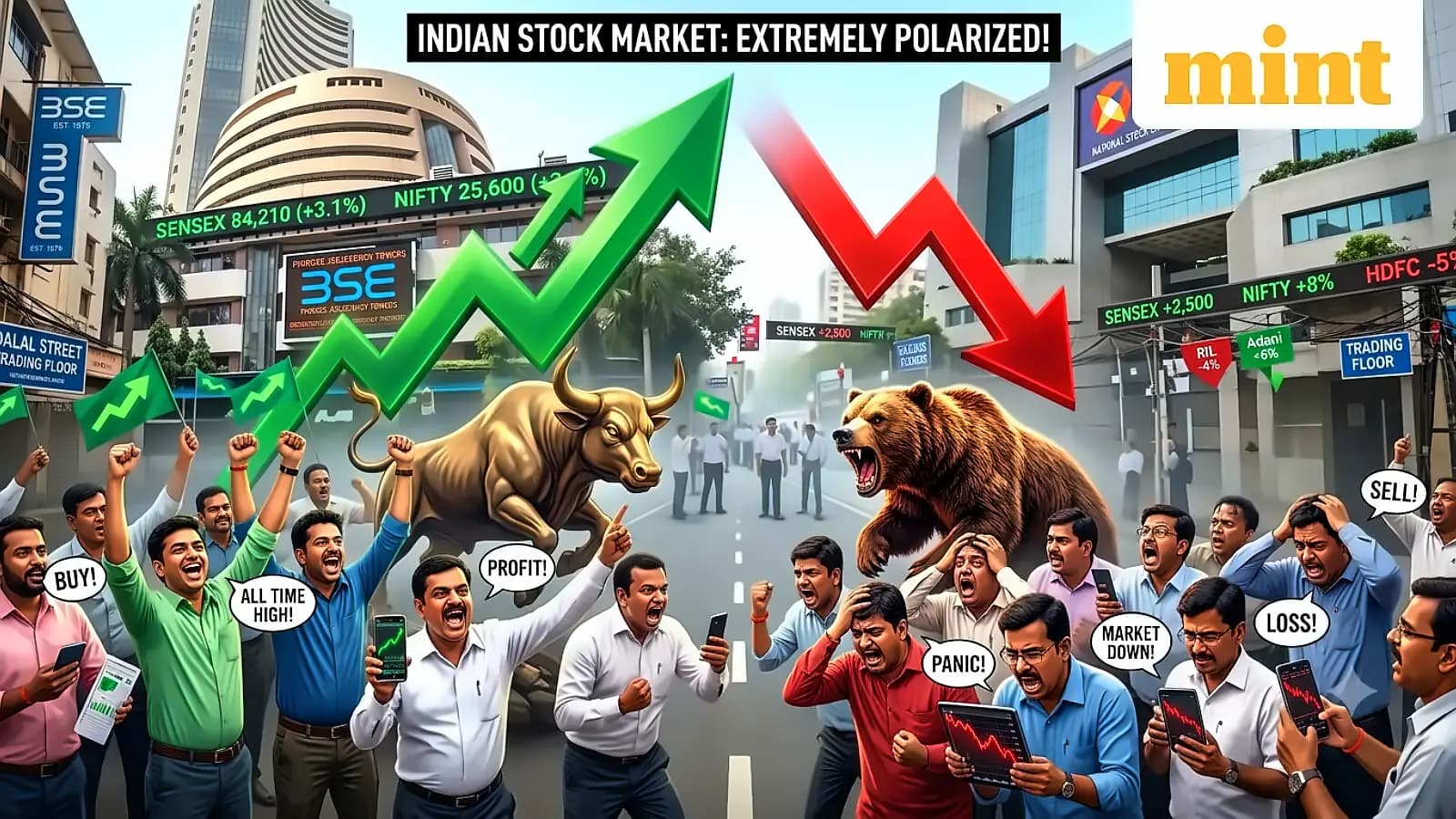
Sensex and Nifty displayed intraday resilience on September 25, 2026, with Sensex adding approximately 315 points and Nifty gaining around 77 points at session highs. However, this intraday strength contrasts sharply with the seventh consecutive weekly decline in Nifty, highlighting a persistent downtrend. The index is forming lower highs and lower lows, a classic bearish technical structure that weighs on investor sentiment. Nifty is currently hovering around the psychologically important 23,000 support level, with immediate support at ₹23,004.50 and a stronger support zone at ₹22,945.90–₹22,887.30. A decisive break below 23,000 could accelerate selling pressure and expose deeper corrections toward 22,800. The bearish weekly RSI suggests downside momentum remains intact, limiting the sustainability of daily recoveries. Elevated crude oil prices (Brent near $98–$101 per barrel) and global bond yields (US 10-year near 5%) are capping upside potential despite robust domestic liquidity, as these factors fuel inflation concerns and foreign portfolio outflows.
Sectoral Performance: Realty and Auto Outperform
Nifty Realty and Nifty Auto have emerged as relative outperformers, driven by distinct demand-supply dynamics and policy support. Realty stocks such as DLF, Oberoi Realty, and Godrej Properties gained over 1% each, underpinned by strong end-user demand, controlled inventory levels, and favorable interest rate expectations. Home loan rates have stabilized around 8.5–9.0%, and developers are managing supply carefully, supporting steady price appreciation. Policy tailwinds, including RERA compliance improvements and infrastructure status for affordable housing, further bolster the sector. In Auto, Mahindra & Mahindra led gains with a nearly 2% rise, supported by robust SUV demand and expectations of 10% sales growth for its Thar lineup. The sector benefits from stable rural demand, with tractor industry growth projected at 1–4% in FY27, and strong product pipelines including electric vehicles. Both sectors reflect a rotation toward domestic consumption stories, which are less exposed to global headwinds.
IT and Pharma Underperformance: Global Headwinds
Nifty IT and Nifty Pharma have lagged, pressured by global factors and regulatory challenges. The IT index declined 0.52%, with heavyweights like Infosys and Wipro down over 1.5% each. Global technology spending, while projected to exceed $6 trillion in 2026, faces headwinds from flat consumer tech spending and potential smartphone/PC market contractions. Moreover, a weaker rupee (USD/INR at 95.96, down 8.21% over the past year) has not provided the expected export margin boost due to competitive pricing pressures and rising talent costs. Pharma stocks also faced pressure, with Lupin declining 0.64%. The sector grapples with ongoing pricing pressures in generics, stringent US FDA compliance costs, and intense competition. Over 75 biosimilars were approved in the US in 2025, intensifying price competition. This contrasts with the resilience in consumer-facing sectors like Realty and Auto, which benefit from domestic demand and policy support.
Company-Specific Drivers: Axis Bank, Asian Paints, M&M, and Transport Corp
Axis Bank emerged as a top gainer, rising over 3%, driven by strong fundamentals. The bank reported 22% YoY net profit growth in FY27 Q1, with robust loan growth of 18.6% and stable asset quality (net NPAs at 1.28%). Its retail banking franchise, contributing 91% of revenue, provides a competitive edge, and analyst sentiment remains overwhelmingly positive (90% Buy ratings).
However, margins have compressed over 815 basis points over three years, and rural demand faces uncertainty from a below-normal monsoon forecast. Mahindra & Mahindra’s nearly 2% gain reflects operational excellence, with August 2026 total vehicle sales up 42% YoY and SUV sales up 50%. The company expects Thar and Thar Roxx sales to grow at least 10% annually, and its strong analyst consensus (97% Buy ratings) underscores confidence.
The stock trades at an attractive PE of 13.91x with a low debt-equity ratio of 0.12, and the buyback announcement triggered a volume explosion, indicating strong institutional interest.
Global Macro Constraints: Oil, Yields, and Foreign Flows
Elevated crude oil prices and rising global bond yields are key constraints on market upside. Brent crude’s recent decline to around $100.60 per barrel, driven by hopes of a US-Iran truce, offers some relief to inflation expectations and corporate margins, particularly for oil-sensitive sectors like Auto and Realty. However, prices remain elevated, and any sustained increase could reignite inflation concerns, limiting RBI’s room for monetary easing. US 10-year Treasury yields near 5% are attracting capital away from emerging markets, contributing to foreign portfolio outflows.
These outflows pressure the rupee and increase import costs, creating a feedback loop that weighs on export-oriented sectors like IT and Pharma.
This domestic liquidity cushion has helped Sensex and Nifty absorb external pressures, but the divergence between intraday gains and weekly declines reflects the underlying tension between domestic resilience and global headwinds.
Market Structure: MidCap vs. SmallCap Divergence and Selective Opportunities
A notable divergence exists between Nifty MidCap 100 and Nifty SmallCap 100. While both indices have outperformed large caps over the past year,
This indicates elevated risk appetite in smaller companies, driven by strong domestic mutual fund flows into small-cap funds (record ₹7,973 crore in August 2026). However, volume metrics for these indices were unavailable, limiting liquidity assessment. The broader market is witnessing selective bargain hunting, as evidenced by Transport Corporation of India’s surge on a buyback catalyst. Similar stock-specific rallies are occurring in companies with company-specific triggers like dividends, order wins, or sector tailwinds, even as broader indices remain constrained. Domestic institutional liquidity plays a crucial role in supporting the 23,000 level for Nifty, with high DII holdings in index heavyweights like ITC, Infosys, and Axis Bank providing a stable ownership base. Narrow trading ranges in Nifty 50 (0.44% monthly range) reflect market indecision and are impacting trading volumes and efficiency. Volume is concentrated in select stocks with catalysts, while overall index participation remains subdued, suggesting investors are prioritizing stock-specific stories over index-wide trends.