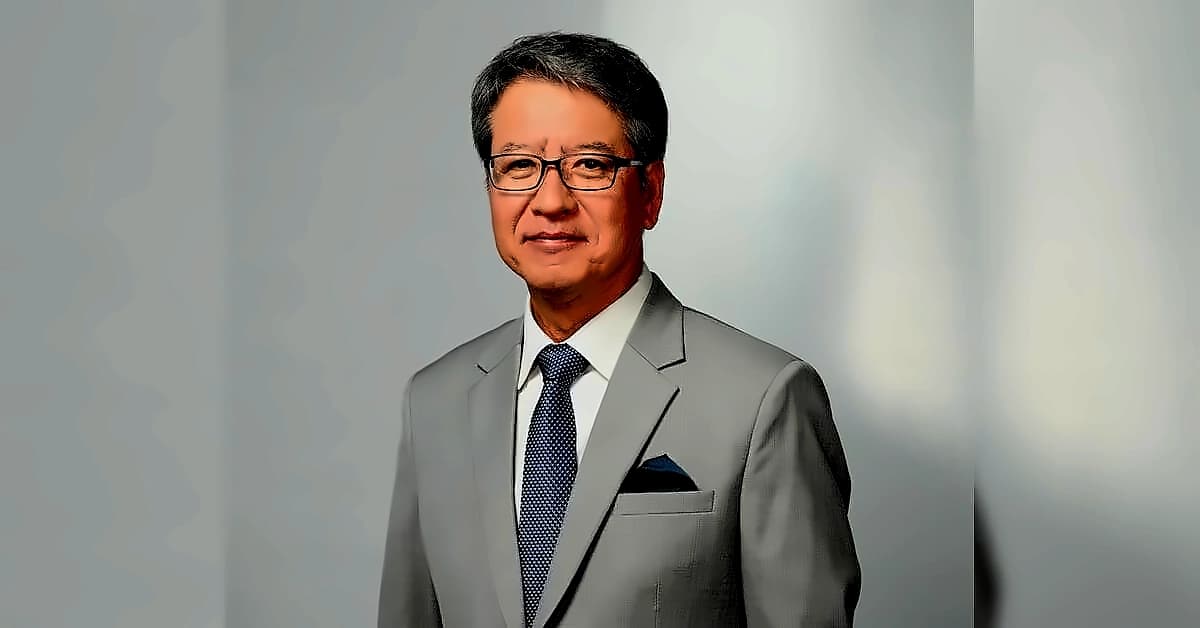
Mahindra Group Chairman Anand G Mahindra announced the group would move into 'Attack Mode' at Mahindra & Mahindra's 80th Annual General Meeting on Thursday. According to reports from Business Standard, Mahindra drew on the group's experience in Formula E racing to explain this strategic approach, stating that 'Attack Mode is not reckless speed. It is strategic acceleration. It is speed backed by preparation. Confidence backed by capability. Ambition backed by execution.' The strategy emphasizes strategic acceleration backed by preparation, capability, and execution rather than reckless risk-taking, with Mahindra describing this moment as calling for 'Attack Mode' as uncertainty becomes the new normal. As per M&M Chairperson Anand Mahindra, this approach involves making deliberate choices to accelerate at precisely the right moment, even when conditions are imperfect, just like Formula E racing drivers. Mahindra argued that global uncertainty was no longer a temporary factor but a consistent norm and that this shift should be treated as an opportunity rather than a reason to tread lightly, stating 'This is not a time to stand still. It is time to move from navigation to acceleration.'
The announcement came after Mahindra & Mahindra reported record-breaking Q1 performance with consolidated net profit rising 34% year-on-year to ₹5,455 crore and revenue from operations increased 28% to ₹58,188 crore, as reported by Business Standard. Operational EBITDA rose 28.4% to ₹10,564.95 crore, with the EBITDA margin improving marginally to 18.16% from 18.07% a year earlier. The strong performance was driven by robust results across automotive, farm and services businesses, with auto and farm profits rising 18% while Tech Mahindra expanded EBIT margins by 330 basis points, underscoring the broad-based nature of the group's growth. Mahindra emphasized that uncertainty was no longer a temporary disruption but the new normal, stating that 'As the mist of uncertainty billows around us, we will not wait for perfect visibility. We will accelerate through the fog, confident in the strength of our vision, the clarity of our strategy, and the effectiveness of our execution.' The chairman noted that this was not a time to stand still, but to move from navigation to acceleration, with the group continuing to invest despite macroeconomic uncertainty and extraordinary commodity cost inflation of 400-500 basis points in the automotive business and 300-400 basis points in the farm equipment segment during the quarter.
As part of the 'Attack Mode' strategy, Mahindra is expanding manufacturing capacity for its SUV and electric vehicle portfolio, with the company planning to increase monthly SUV production capacity to 82,000 units in the second half of FY27 and 92,000 units by the end of FY28, according to Business Standard reports. The company's proposed ₹15,000-crore greenfield plant at Nagpur will support product launches from FY29 onwards, supporting the group's aggressive manufacturing expansion plans. This capacity increase aligns with the group's strategy of investing ahead of demand and using technology to strengthen competitiveness. Mahindra noted that the planned ₹15,000 crore investment over 10 years in Nagpur demonstrates major confidence in future growth prospects, with the group having committed ₹15,000 crore over the next 10 years to expand its presence in Nagpur, signalling its long-term confidence in India's growth story. The company retained its leadership in the domestic SUV market during the June quarter with a 25% revenue market share, while SUV volumes grew 15%, and tractor volumes rose 18%, helping Mahindra maintain its leadership in the segment with a 44.9% market share.
Addressing shareholders virtually at the 80th Annual General Meeting, Mahindra highlighted India's growing importance in global supply chains amid economic shifts. As reported by Rediff Moneynews, Mahindra stated that 'The global economy is moving from old-style globalisation to more selective partnerships. Supply chains are being reconfigured. Countries are looking for scale, stability, manufacturing capability, talent and trust. And India is increasingly being seen as a credible answer. It has scale, a large internal market, talent, political stability and it has the strategic flexibility to work across divides.' He emphasized that India's role in global manufacturing is changing, noting that 'In an uncertain world, India is not merely coping but gaining relevance. We are rewriting the rules of mobility and comfort through the revolutionary NU_IQ platform. Our innovation engine is gaining force.' Mahindra described the current moment as one where 'the next global order may not be built around rigid blocs. It may be built around multiple coalitions. Around countries that can connect rather than divide. That creates a major opportunity for India to become a connector economy.'
The group is stepping up artificial intelligence adoption across businesses, with Mahindra stating the group already has more than 50 AI experts, 19 proprietary AI models and over 15 AI transformation projects underway, spanning manufacturing quality checks, service operations, loan processing, marketing and collections, as reported by Business Standard. Mahindra emphasized that the group's strategy is built around investing ahead of demand and using technology to strengthen competitiveness. The AI initiatives demonstrate the conglomerate's commitment to leveraging technological advancement to maintain competitive edge in an increasingly uncertain global environment. The group has also expanded its innovation capabilities and increased its portfolio of granted patents from just 56 to more than 1,300 over the past decade, showcasing its commitment to technological leadership and intellectual property development. Mahindra pushed back against the perception that Indian companies underinvest in research and development, stating 'I know there is a widespread perception that Indian companies do not spend enough on R&D... On the contrary, the patents granted to your company have gone from 56 to over 1,300 in the last decade.'
The company's electric vehicle strategy is showing strong results, with electric SUV penetration reaching 12% during the quarter, as reported by Business Standard. The XEV 9S emerged as India's highest-selling electric passenger vehicle by wholesale volumes, while the battery electric vehicle business swung to a PBIT profit of ₹288 crore from a loss a year ago, reflecting improving scale and operating leverage. This electric vehicle success forms a key component of the group's 'Attack Mode' strategy, with the company positioning itself to capitalize on the growing EV market despite global uncertainty and cost headwinds. The electric vehicle success demonstrates the group's ability to extract opportunity from disruption, aligning with Mahindra's theme of 'Samudra Manthan 2.0' - a period of intense churn in which businesses capable of extracting opportunity from disruption will emerge stronger. The services businesses also posted strong growth, with revenue rising 31% and profit increasing 80%, showcasing the group's diversified portfolio strength across multiple business segments.