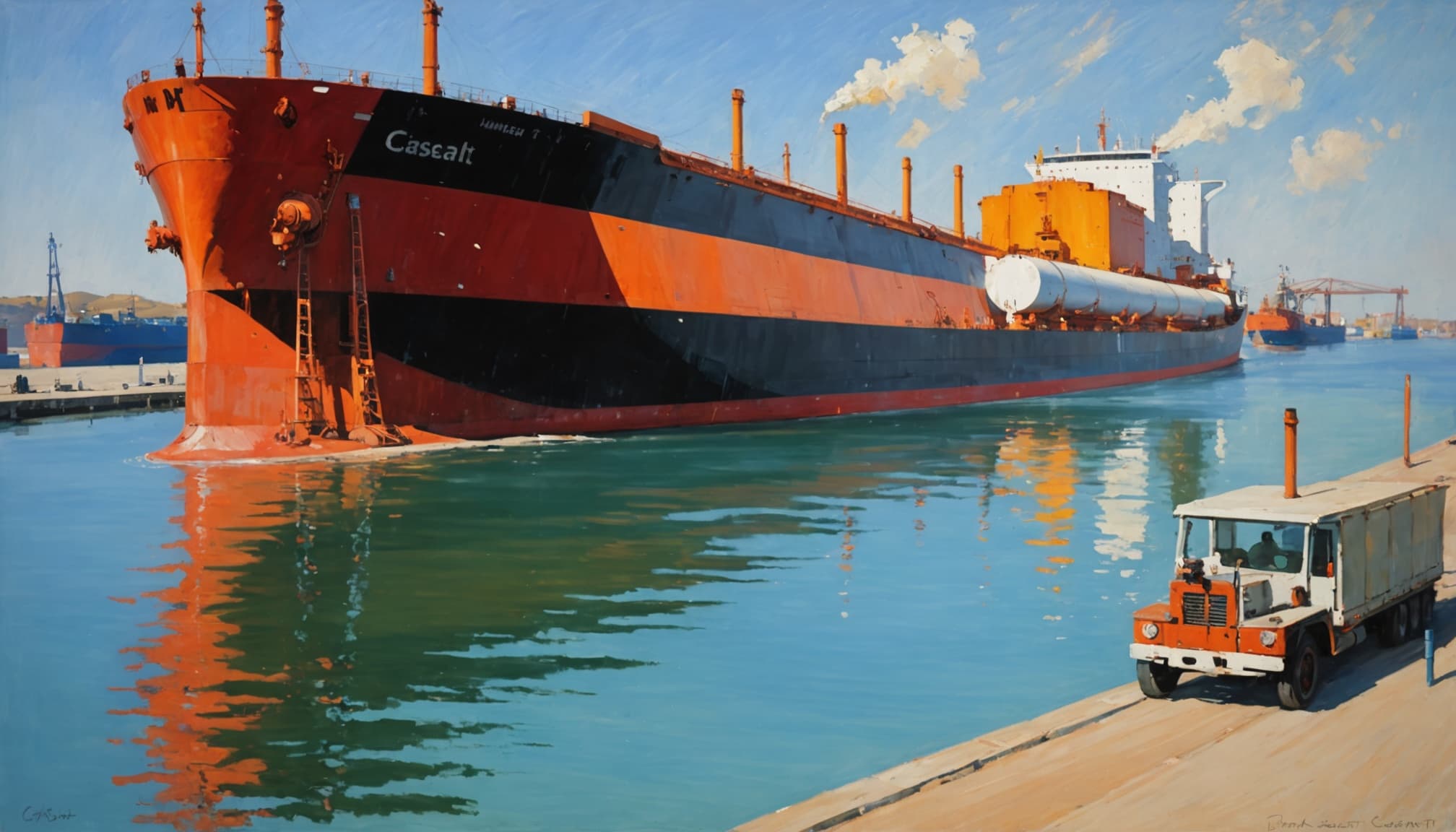
When the Strait of Hormuz turned into a geopolitical flashpoint, Indian Oil Corporation faced a problem it couldn't simply refine away. The narrow waterway handles roughly a fifth of global oil consumption, and any disruption there sends shockwaves through freight markets. For India's largest refiner, which imports about 85% of its crude, this wasn't just a headline—it was a direct hit to the bottom line.
The impact showed up in freight costs almost immediately.
That's a spread of roughly USD 5.50-8 per barrel, or about 3.2 to 5 times the chartered rate. For LPG, the surge was even starker: normal rates of about USD 40 per tonne jumped to USD 160-180 per tonne in the spot market.
War-risk insurance added another layer of cost. While IOC hasn't disclosed specific premium increases, historical data shows that during conflict periods in the region, additional premiums can reach up to 2% of a vessel's market value for a seven-day policy. For a USD 100 million very large crude carrier (VLCC), that translates to roughly USD 2 million per transit, or about USD 1 per barrel when spread across a 2-million-barrel cargo. The company has also noted that vessel turnaround times lengthened and sourcing shifted to alternative routes, further squeezing margins. Other
The Three-Pronged Response
IOC's response has been both defensive and offensive. The company is pursuing three approaches simultaneously: optimizing existing charter arrangements, owning ships, and supporting domestic shipbuilding under the Make in India initiative.
The defensive play is the charter fleet. IOC currently has three crude vessels and nine LPG vessels on time charter. These arrangements provided significant cost savings during the crisis, locking in rates far below spot market peaks. But with only three crude ships, a large portion of IOC's cargoes remains exposed to volatile spot rates.
The offensive play is vessel ownership. The board has approved purchasing a few vessels, and tenders were issued several months ago. IOC is also exploring a joint venture with Shipping Corporation of India, BPCL, and HPCL to acquire, own, and operate Indian-flagged vessels, including LPG carriers, crude tankers, and product tankers. The initial plan starts with four medium-range (MR) vessels, with tenders already out. Other +1
The strategic play is domestic shipbuilding. IOC has said it will give priority procurement to Indian shipyards for these vessels. This aligns with the government's broader push to strengthen domestic maritime capacity, backed by a ₹69,725 crore package that includes the Shipbuilding Financial Assistance Scheme (SBFAS) and the Maritime Development Fund. Other
Capital Structure Shift
Moving from chartering to owning fundamentally alters IOC's capital structure. Chartering keeps freight as a variable operating expense. Ownership converts that into fixed costs: depreciation, interest, crew, maintenance, and insurance. This increases operating leverage—profits become more sensitive to utilization rates but less exposed to freight spikes on covered volumes.
The financial implications depend on IOC's stake in the proposed joint venture. A minority stake would likely be equity-accounted, with debt sitting in the JV unless IOC provides guarantees or long-term charter commitments. Direct ownership would add both assets and debt to IOC's balance sheet. Long-term charters back to IOC would carry lease-like obligations either way.
Current asset prices suggest this could be material. A new 320,000 deadweight tonnage VLCC costs about USD 120-130 million. A five-year-old VLCC is valued at about USD 159.5 million, and a 10-year-old very large gas carrier (VLGC) costs about USD 105 million, up from USD 75 million before the war. Domestic financing costs run at 9-10%, against 4-8% in leading maritime economies, though government schemes aim to narrow this gap.
The Russian Pivot
While IOC works on the shipping side, it has also aggressively diversified its crude sourcing.
Africa contributed about 10%, Brazil 7%, the United States 2-5%, and Venezuela 3-4%.
This shift directly reduces exposure to Hormuz disruptions. Russian barrels reach India from Baltic, Black Sea, and Far East ports without passing through the Strait. A closure therefore affects roughly a quarter of IOC's crude instead of most of it. Management said the Middle East had been the main source before the war and that sourcing was shifted to Russian, West African, and Latin American crude. Transcript
However, this strategy replaces a physical risk with a regulatory one. US sanctions on Rosneft and Lukoil, which took effect in November 2025, have created uncertainty around Russian supply. Analysts expect a noticeable drop in Russian crude flows to India in the near term, though non-sanctioned producers and intermediaries may fill part of the gap.
Spot Versus Term
The sourcing mix has also shifted toward spot purchases. Spot imports accounted for about 87% of crude sourcing in the first half of FY27, compared to around 50% in the previous financial year. This gives IOC flexibility to switch origins quickly but exposes it to price volatility.
During the September quarter, the premium or discount paid over benchmark crude ranged from a discount of USD 5 per barrel to a premium of USD 12 per barrel. In the preceding quarter, the range was zero to USD 18. Pre-war, IOC bought crude at Brent minus USD 1-2. The narrower and lower range in Q2 helped the quarter-on-quarter GRM improvement. Transcript
Regional shifts to Africa, Brazil, and Venezuela come with longer voyages and higher freight costs. Analysts noted that long-haul freight caps how far substitution can go. Atlantic-basin freight has been repricing sharply, with West Africa-China VLCC rates hitting about USD 697,000 per day.
The Inventory Turnaround
These sourcing and inventory management moves contributed to a dramatic turnaround in IOC's financial performance. The company swung from a standalone net loss of ₹2,661 crore in Q1 FY27 to a net profit of ₹21,630 crore in Q2. Consolidated profit was ₹22,503 crore, up 174.7% from the previous year.
Several factors drove this recovery. A temporary decline in crude oil prices between mid-June and mid-August, alongside stronger margins in petrochemical and gas businesses, provided the tailwind. Inventory gains also played a significant role—management corrected the cumulative inventory gain to ₹6,948 crore for Q2 across refining and marketing.
Gross refining margin (GRM), net of the special additional excise duty (SAED), improved to USD 18.52 per barrel in Q2 from USD 15.59 in Q1. However, management has cautioned that future profits may be adversely impacted by inventory losses if crude prices fall with normalization of the Middle East situation. Investor Presentation
Domestic Shipbuilding: The Long Game
The domestic shipbuilding initiative is a long-term play with significant execution risks. The government's SBFAS offers financial assistance ranging from 15% to 25% per vessel, depending on category, with a minimum domestic content requirement of 40%. This subsidy aims to offset the cost disadvantage of Indian yards.
However, Indian shipyards have limited experience building large crude and LPG carriers. Cochin Shipyard's recent export orders are for container ships, tugs, and service operation vessels, with deliveries scheduled for 2029-2031. Global newbuild slots are already tight, with VLCC orderbooks representing about 30% of the existing fleet and deliveries extending into 2028.
The execution timeline is therefore measured in years, not months. Tenders were issued several months ago, but no definitive joint venture agreement, vessel specifications, or shipyard awards have been announced. Management has not disclosed targeted returns, funding splits, or governance structures for the JV. Transcript +1
What Lies Ahead
IOC's strategic response to the Hormuz crisis is ambitious but carries significant risks. The shift toward vessel ownership increases fixed costs and capital commitments in a cyclical industry. The reliance on Russian crude exposes the company to regulatory uncertainty. The domestic shipbuilding initiative is a long-term bet that won't address immediate freight pressures.
The company's ability to execute this three-pronged strategy while maintaining financial discipline will determine whether these moves strengthen energy security or create new vulnerabilities. For now, the record Q2 profit shows that flexibility and inventory management can offset some of the geopolitical headwinds. But as management itself has warned, the situation remains volatile, and future quarters may look very different.