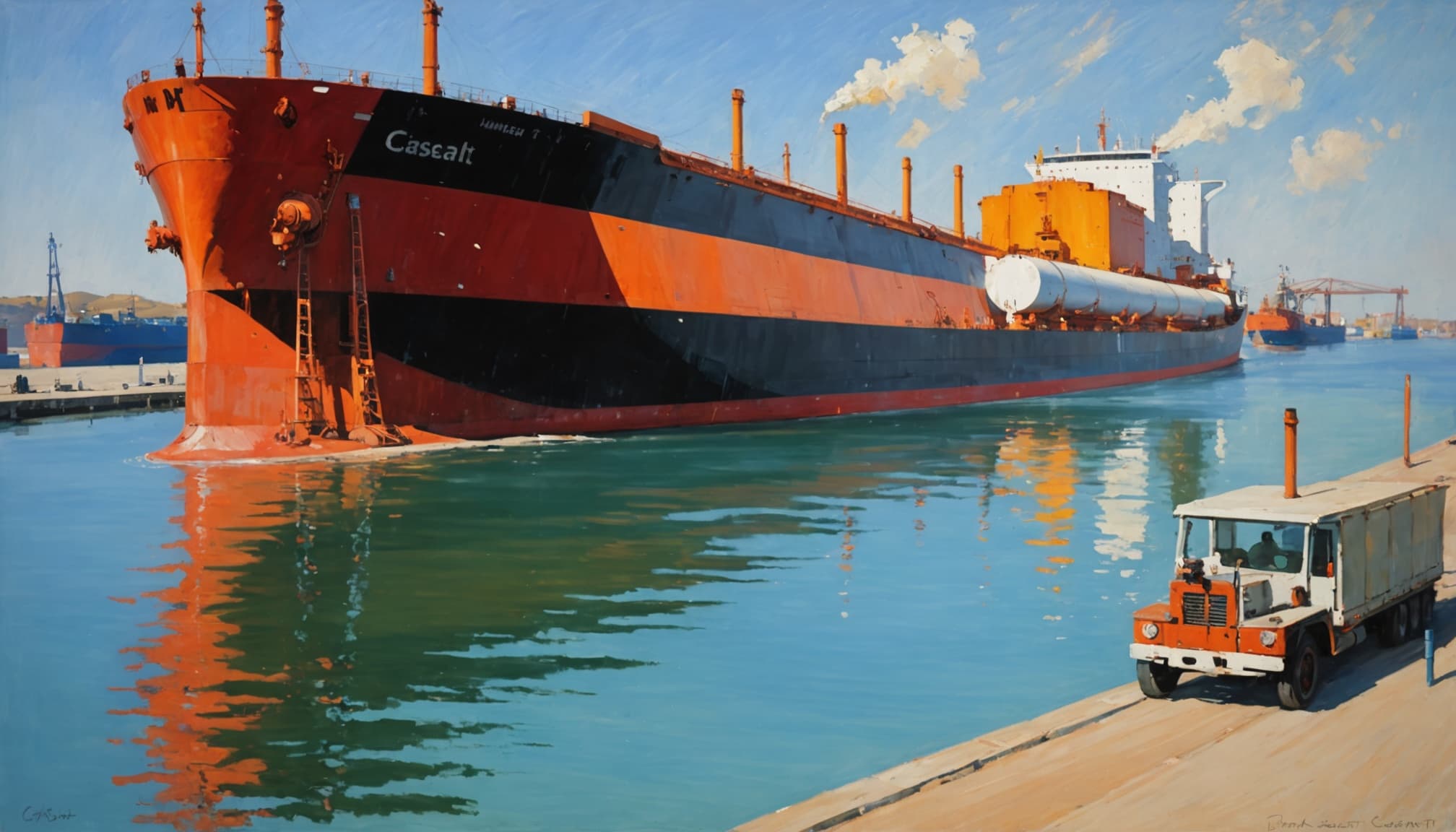
State-owned Indian Oil Corporation (IOC) is planning to acquire crude oil and liquefied petroleum gas carriers of its own as disruptions to shipping around the Strait of Hormuz and soaring freight costs prompt India's largest oil refiner to strengthen control over its energy supply chain. According to reports from The Times of India, the company's board has already approved the purchase of several vessels, and tenders were issued several months ago. Director of Finance Anuj Jain confirmed during the second-quarter earnings call that board approval is already in place for the vessel purchases and that tenders were floated several months ago. The move signals a potential pivot from IOC's traditional reliance on time- and voyage-chartered vessels, with the company now examining three approaches: optimising existing charter arrangements, owning ships and supporting domestic shipbuilding under the government's Make in India initiative.
IOC currently has three crude oil vessels and nine LPG vessels on time charter, which have provided significant cost savings during the current crisis. As reported by The Times of India, the company's time-chartered crude carriers cost around $2-2.50 per barrel, compared to spot-market rates of as much as $8-10 per barrel. LPG freight rates, which would normally be around $40 per tonne, have risen to $160-180 per tonne in the spot market. The shipping strategy is part of a broader effort to diversify crude procurement and reduce exposure to supply disruptions, with the importance of securing shipping capacity increasing as geopolitical tensions in West Asia disrupt commercial movement near the Strait of Hormuz, pushing up freight rates and war-risk insurance costs.
IOC's crude procurement strategy has become increasingly diversified, with the company sourcing 55 per cent of its crude requirements from Russia during the first half of the current financial year, while Middle Eastern supplies accounted for 24 per cent. Africa contributed about 10 per cent, Brazil 7 per cent, the United States 2-5 per cent and Venezuela 3-4 per cent. The company has substantially increased its reliance on spot purchases, with spot imports accounting for about 87 per cent of crude sourcing in the first half of FY27, compared to around 50 per cent in the previous financial year. According to The Times of India, IOC has been able to negotiate discounts against benchmark prices even as global crude markets remained volatile, with the premium or discount paid over benchmark crude during the September quarter ranging from a discount of $5 per barrel to a premium of $12 per barrel, compared to a range of zero to $18 per barrel in the preceding quarter.
IOC reported a net profit of ₹21,630 crore in the September quarter, compared with a loss of ₹2,661 crore in the preceding quarter and a profit of ₹7,610 crore in the year-earlier period. According to The Times of India, the company recorded a gross refining margin of $18.52 per barrel and an inventory gain of ₹6,948 crore during the quarter. Despite supply-chain disruptions, IOC maintained refinery operations at optimal levels and increased crude inventories to about 39 days, from its usual 33-35 days, while holding 20 days of LPG inventory and 23-25 days of petrol and diesel stocks. The company said inventory gains and improved performance across several businesses contributed to its profitability, with IOC continuing to buy Russian crude at what it described as optimal prices and also processing Venezuelan crude.
The proposed vessel purchases and domestic shipbuilding initiative reflect a wider effort by Indian oil companies to strengthen logistics resilience as India remains heavily dependent on imported crude and overseas shipping routes. As reported by The Times of India, Jain cautioned that geopolitical developments remained a key source of uncertainty for the company, particularly because of their impact on crude procurement, freight and marketing margins. The move comes against the backdrop of sharp rise in oil prices following the escalation of US-Iran hostilities towards the end of February, with Indian basket crude averaging around $65-70 per barrel in February and remaining above $100 for much of the first quarter, before averaging about $120 per barrel in October. Rising geopolitical tensions in West Asia are disrupting transit near the Strait of Hormuz, driving up freight and war-risk insurance costs and making it more critical than ever to lock in shipping capacity.