Indian Oil Corporation has signed a landmark five-year agreement with Mauritius' State Trading Corporation (STC) to supply the island nation's entire import requirement of petrol, diesel, and aviation turbine fuel. This marks the first long-term supply agreement concluded by an Indian public-sector oil marketing company outside South Asia in recent years. The deal, formalized during Petroleum Minister Hardeep Singh Puri's visit to Port Louis on August 20-21, 2026, operates alongside a broader Government-to-Government (G2G) Memorandum of Understanding covering cooperation in oil and gas, biofuels, training, and capacity building.
For Mauritius, petroleum products account for a significant share of total import bill, with supply historically concentrated on a single geographic source in the Gulf region. This structural dependence exposes the island economy to global oil price volatility, amplified by regional tensions involving Iran and disruptions to Gulf shipping routes. The long-term contract is specifically designed to provide Mauritius with assured supplies and reduce its exposure to price volatility.
Revenue Diversification and Export Margin Implications
The Mauritius agreement represents a strategic expansion of IOC's export footprint beyond its traditional South Asian markets. IOC has maintained a presence in Mauritius for approximately 25 years through its subsidiary, Indian Oil (Mauritius) Limited, which began serving the Mauritian market in 2001. This latest agreement builds on that foundation and moves the partnership toward a more structured framework for country-to-country energy cooperation.
While neither side has disclosed contracted volumes or pricing mechanisms, the structure suggests potential margin advantages. Mauritius is willing to pay for reduced supply risk, given its vulnerability to Gulf region disruptions and the recent US-Iran standoff over the Strait of Hormuz. The five-year commitment provides predictable revenue streams, reducing IOC's exposure to spot market volatility. However, it's important to note that IOC's management has indicated that given India's growing domestic demand, the company does not anticipate having a major exportable surplus on a sustained basis from its refining systems. InvestorPresentations
Refining Utilization and Product Mix Considerations
India's position as a net exporter of refined products with approximately 267 million tonnes of annual refining capacity provides a strong foundation for maintaining supply commitments to Mauritius during West Asia instability. Indian refineries typically operate at 105-115% of nameplate capacity, pushing annual production to almost 300 million tonnes and leaving an export surplus of around 61.5 million tonnes after meeting domestic demand of approximately 239 MMTPA.
The Mauritius agreement covers petrol, diesel, and ATF—all high-value distillate products. IOC has maintained healthy distillate yields of 80.2% (Q1 FY27) and 79.0% (Q4 FY26). Supplying Mauritius' entire import requirement for these products could potentially optimize IOC's product slate by securing off-take for specific grades, reduce storage costs through long-term commitments, and enhance margins through high-value distillates that typically command better margins compared to fuel oil or naphtha. InvestorPresentations
Long-term Contracts vs Spot Market Dynamics
The long-term contract structure with Mauritius' STC offers several advantages over spot market sales. Long-term arrangements provide greater certainty in the availability of essential petroleum products and support price stability for both parties. During recent supply disruptions, IOC demonstrated procurement flexibility by diversifying spot procurement sources from Indonesia, Nigeria, Angola, and Oman when multiple suppliers declared force majeure due to Strait of Hormuz closure. InvestorPresentations
Management indicated that refining margins are expected to remain on the higher side for the next 1-2 years due to geopolitical uncertainties and disruptions in refining and upstream assets from Russia-Ukraine conflict, U.S. sanctions, and Iran-related issues. Long-term contracts allow IOC to capture some of this elevated margin environment. However, they also present certain challenges, including opportunity cost if spot market prices surge significantly above contract prices, volume commitments that could limit flexibility during domestic demand spikes, and the undisclosed pricing mechanism that will determine actual margin capture relative to spot markets. InvestorPresentations
Infrastructure Investment: The Mer Rouge Storage Facility
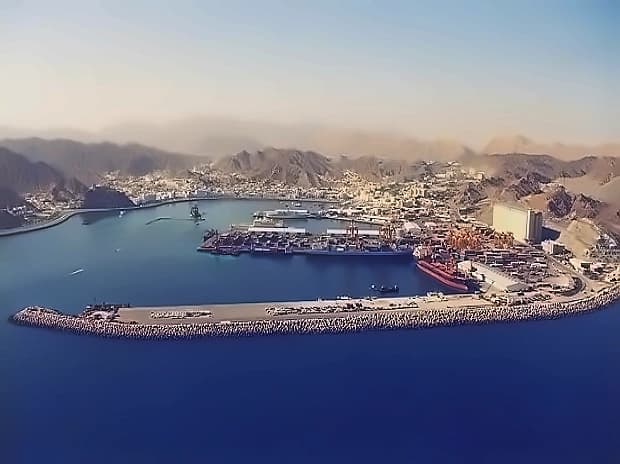
Separately from the fuel supply agreement, IOC said the 27,500-tonne bunker fuel storage facility at MAP Land in Mer Rouge, Mauritius has been built at an investment of USD 25 million. This facility significantly strengthens IOC's physical presence and operational capabilities in Mauritius through enhanced storage capacity, strategic location advantages at Mer Rouge in Port Louis with proximity to main port facilities and access to major Indian Ocean shipping routes, and operational independence through ownership of dedicated storage infrastructure.
The storage facility plays a pivotal role in expanding IOC's market share in Mauritius' marine fuel supply chain by supporting Mauritius' ambitions as a strategic bunkering hub in the Indian Ocean region. Mauritius is actively developing its Blue Economy and has set ambitious goals to expand its bunkering business. The facility provides inventory buffer that allows for competitive pricing during supply disruptions, quality control capabilities that ensure fuel meets international maritime standards, and flexibility to offer various fuel grades including Marine Gas Oil (MGO) and Marine Diesel Oil (MDO).
Beyond South Asia: Strategic Expansion
The Mauritius agreement represents a significant strategic milestone for IOC as it marks the first long-term supply agreement concluded by an Indian public-sector oil marketing company outside South Asia in recent years. This breakthrough aligns with and accelerates IOC's broader international expansion strategy.
IOC's international presence has historically been concentrated in South Asia, with significant operations in Nepal (leadership position with 2.66 MMT export volumes), Bhutan (established supply relationships), Sri Lanka (Lanka IOC PLC, 75.12% subsidiary), Bangladesh and Myanmar (regional export presence). The Mauritius agreement represents a strategic leap beyond this traditional South Asian focus, establishing IOC as a reliable energy partner in the broader Indian Ocean region. InvestorPresentations
Government-to-Government Framework Facilitation
The G2G MoU creates a comprehensive framework that significantly facilitates the commercial agreement between IOC and Mauritius' STC. This two-tiered structure operates at distinct but complementary levels. The high-level agreement builds a broader framework for cooperation between India and Mauritius in the oil and gas sector, going beyond just fuel supply. It creates diplomatic backing that elevates the commercial agreement from a transactional arrangement to a strategic partnership and provides government-level assurance that enhances the credibility and reliability of the commercial commitment.
The commercial IOC-STC agreement serves as the operational implementation mechanism within the broader G2G framework. According to Indian Oil, "the landmark G2G MoU provides a framework for stronger collaboration in petroleum & gas, biofuels, sustainability and other emerging energy areas—strengthening energy security and bringing greater predictability in a volatile global energy environment". The five-year commercial agreement is specifically described as "one important instrument of this broader and overarching collaboration, reinforcing India's commitment to Mauritius' energy security and the enduring India–Mauritius friendship".
Biofuels Cooperation and Future Opportunities
Mauritius' status as a founding member of the Global Biofuels Alliance (GBA) significantly expands the scope of cooperation between IOC and Mauritius' Ministry of Energy and Public Utilities under the oil and gas MoU. The GBA was launched on September 9, 2023, on the sidelines of the G20 Summit in New Delhi, as India's G20 Chair initiative, with Mauritius among the founding nations.
The Biofuels Country Landscape Policy framework launched jointly by Petroleum Minister Hardeep Singh Puri and Mauritius Energy and Public Utilities Minister Patrick Gervais Assirvaden on August 21, 2026, marks "a step towards exploring the role of biofuels in Mauritius' energy transition". This framework creates substantial opportunities for IOC across multiple alternative fuel segments, leveraging IOC's extensive biofuels capabilities including ethanol blending expertise (achieving 19.97% ethanol blending on an all-India basis), Sustainable Aviation Fuel (SAF) leadership (planning India's first commercial-scale SAF plant at Panipat), and Compressed Biogas (CBG) development (leading implementation of the SATAT initiative). InvestorPresentations
Competitive Positioning in the Indian Ocean
The Mauritius agreement provides IOC with significant competitive advantages relative to other international suppliers in the Indian Ocean region. As the first long-term supply agreement by an Indian PSU outside South Asia, IOC establishes precedent and market leadership. The anchor supplier status creates preferential positioning, while the USD 25 million infrastructure investment creates physical presence and operational control.
India's geographic proximity to Mauritius compared to Gulf suppliers provides shorter shipping routes and reduced freight costs. With 267 million tonnes annual refining capacity across 23 refineries, India is a net exporter of refined fuels with substantial surplus for exports. Perhaps most importantly, India has demonstrated its ability to maintain supply commitments during geopolitical disruptions, continuing to meet supply commitments to Nepal and Bhutan even during the ongoing West Asia crisis.
The Mauritius agreement represents a transformative step in IOC's international expansion strategy, providing both immediate commercial benefits and long-term strategic positioning. By establishing a proven model beyond South Asia, IOC has created a powerful template for expansion across the Indian Ocean region, while simultaneously strengthening India's broader strategic objectives in this geopolitically important area.