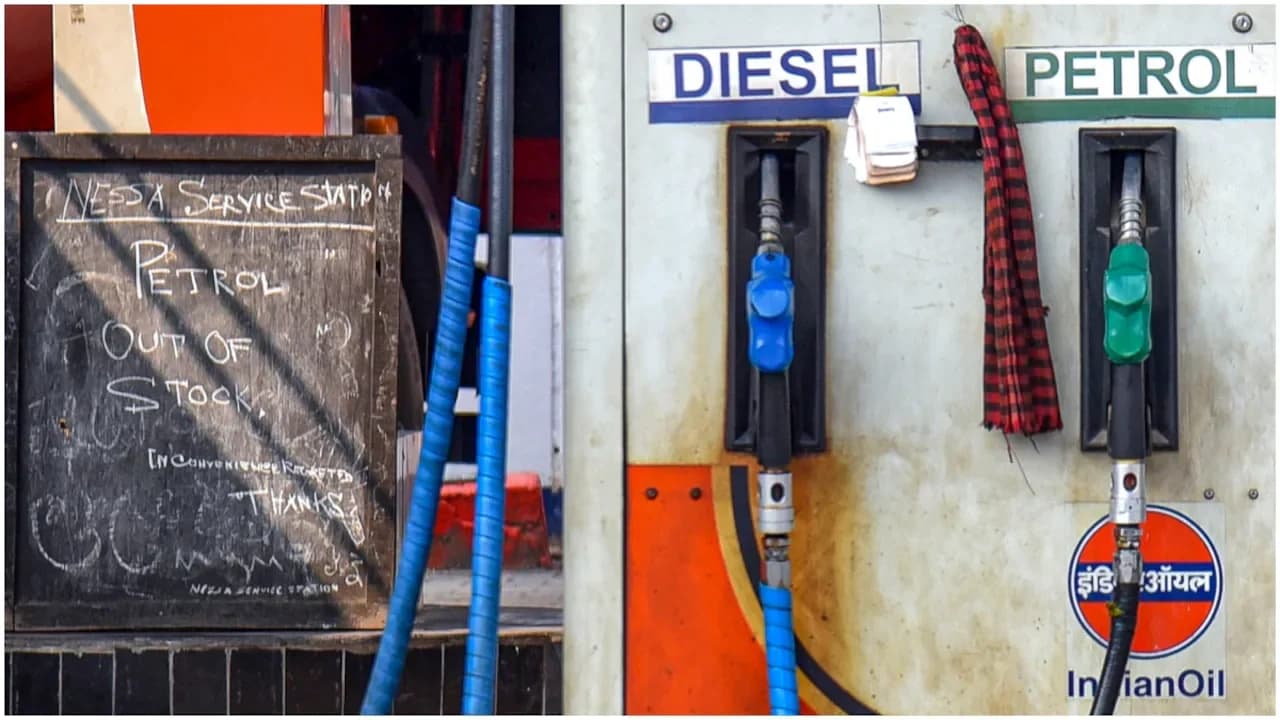
India's latest windfall tax adjustments on fuel exports, effective July 1, 2026, mark a significant shift in energy policy. The government has cut duties on diesel exports from Rs 14 to Rs 8.5 per litre and aviation turbine fuel (ATF) from Rs 12.5 to Rs 7.5 per litre, while simultaneously increasing petrol export duty from Rs 1.5 to Rs 4 per litre. This recalibration responds to declining global oil prices from peaks above $126 per barrel and easing geopolitical tensions, particularly the reopening of the Strait of Hormuz following the US-Iran ceasefire agreement.
The Oil Price Context and Tax Logic
Brent crude has fallen sharply, trading around $73 per barrel on June 30, 2026—a 23% decline over the past month. Economists forecast Brent will average approximately $84.50 per barrel in 2026, significantly below earlier projections of $90-100. This price softening, driven by restored shipping flows through the Strait of Hormuz after the US-Iran deal, has reduced refining margins globally. India's fortnightly windfall tax review mechanism allows the government to capture windfall gains when margins are high and provide relief when they compress. The latest cuts reflect this dynamic approach, with the tax structure now aligning with more normalized market conditions.
Differential Treatment: Why Petrol Gets Hit Harder
The government's decision to increase petrol export duty while cutting diesel and ATF taxes reveals strategic priorities. Diesel remains India's most consumed transport fuel, averaging 8.24 million tonnes monthly, powering agriculture, logistics, and industry. ATF supports the aviation sector's recovery. Petrol, while important, is more discretionary with lower economic multiplier effects. By maintaining higher taxes on petrol exports (Rs 4/L versus Rs 8.5/L for diesel and Rs 7.5/L for ATF), India discourages petrol exports while providing relief on fuels critical to economic activity. This differential treatment balances export revenue objectives with domestic supply security, ensuring that diesel and ATF remain available for domestic consumption during periods of high demand.
Impact on Public Sector Oil Companies
The tax changes create mixed outcomes for India's state-run refiners. Indian Oil Corporation (IOC), Bharat Petroleum (BPCL), and Hindustan Petroleum (HPCL) will benefit significantly from reduced diesel and ATF export duties. Assuming typical export volumes, the Rs 5.5/L cut on diesel exports could save IOC approximately Rs 600 crore annually, while the Rs 5/L reduction on ATF exports could add another Rs 900 crore to its bottom line. BPCL and HPCL stand to gain Rs 400-600 crore and Rs 250-300 crore respectively from these reductions. However, the increased petrol export duty will offset some of these gains. Companies with significant petrol export exposure may face margin compression, though the overall impact remains positive given the larger volumes of diesel and ATF exports. The net effect for the PSU refining sector is an estimated annual benefit of Rs 2,000-2,500 crore, with EPS improvements of 0.5-1.5% depending on individual company export profiles.
Domestic Supply Security Mechanism
The Rs 2.5/L increase in petrol export duty serves as a powerful tool for domestic supply security. By making petrol exports less economically attractive, the policy incentivizes refiners to prioritize the domestic market. This is particularly relevant given the surge in fuel demand—Maharashtra alone saw petrol demand rise 8.92% and diesel 20.1% in May 2026 compared to the previous year. The export disincentive ensures that fuel remains available domestically during periods of high demand or geopolitical uncertainty, complementing other measures like the 60-day national fuel stock requirement and enforcement against hoarding. The government has conducted over 750 raids in Maharashtra, seizing unauthorized fuel stocks and filing FIRs to prevent market manipulation.
Expanding Regional Energy Diplomacy
India has simultaneously expanded export exemptions for public sector oil companies to include Mauritius and Maldives, adding to existing exemptions for Nepal, Bhutan, Bangladesh, and Sri Lanka. This extension aligns with India's "Neighbourhood First" policy, using energy exports as a tool for strategic partnership building. Mauritius and Maldives heavily rely on petroleum imports, with Mauritius having a Comprehensive Economic Cooperation and Partnership Agreement (CECPA) with India since 2021.
This creates energy interdependence that supports broader security cooperation and counters Chinese influence in the Indian Ocean Region.
The Private Sector Competitive Landscape
Private refiners like Reliance Industries and Nayara Energy do not benefit from these export exemptions and must pay full windfall taxes on all exports. Reliance, which exported 21.66 million tonnes of refined products in the first half of 2025, and Nayara, with 2.97 million tonnes in the same period, face significant cost disadvantages in Mauritius and Maldives markets.
The policy also encourages private refiners to increase their domestic retail presence—Reliance's Jio-BP partnership operates 1,916 outlets, while Nayara has over 6,600 stations—further strengthening domestic supply security.
Strategic Implications and Future Outlook
India's windfall tax adjustments represent a sophisticated integration of energy policy, trade strategy, and diplomatic objectives. The causal chain is clear: easing geopolitical tensions and restored Hormuz flows have reduced oil prices and supply risks, allowing India to cut export taxes on critical fuels while maintaining higher duties on petrol to protect domestic supply. The expanded export exemptions to Mauritius and Maldives deepen regional energy partnerships, positioning India as the preferred energy security provider in its neighborhood. Looking ahead, the fortnightly review mechanism will continue to allow rapid policy responses to changing market conditions. If oil prices remain volatile due to prolonged geopolitical tensions, India may need to further adapt its windfall tax regime.