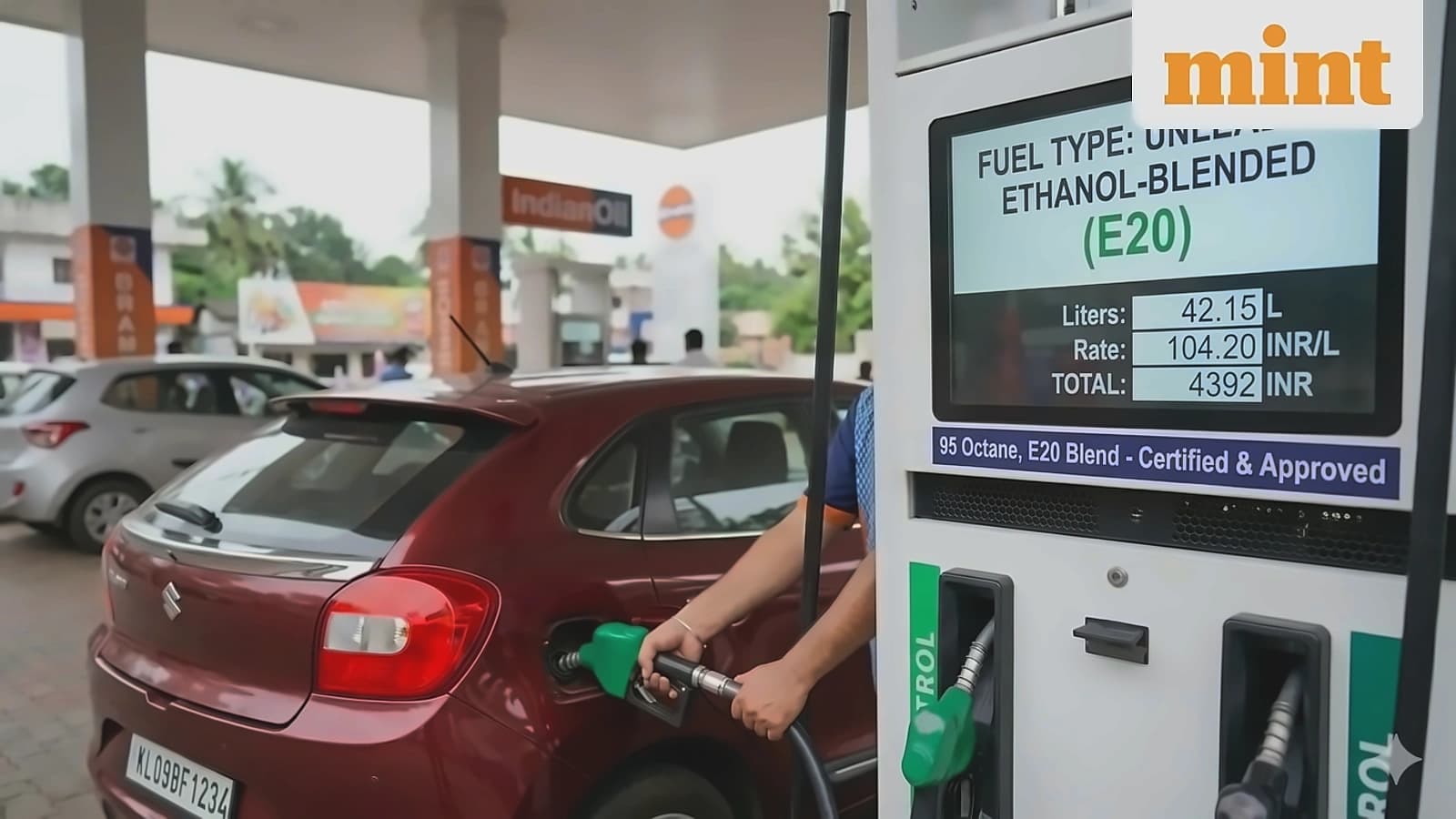
India is attempting something audacious in its quest for energy security. Instead of waiting for flex-fuel vehicles to populate the roads, the Ministry of Petroleum and Natural Gas has directed state-run oil marketing companies (OMCs) like Indian Oil Corporation, Bharat Petroleum, and Hindustan Petroleum to establish 5,000 E100 dispensing stations by 2027. This infrastructure-first approach flips the traditional vehicle-fuel market development model on its head, creating a unique set of financial and operational challenges.
The Strategic Logic Behind Infrastructure-First Rollout
The logic is strategic. India imported crude oil worth nearly ₹10.9 lakh crore last financial year. By pushing high-ethanol blends like E100 (nearly 100% ethanol) and E85 (85% ethanol), the government aims to slash this import bill and support the agricultural economy. The rollout begins with 50-100 stations in cities like Delhi-NCR, Mumbai, Pune, and Nagpur, scaling to 500 by end-2026 and 5,000 by end-2027. However, this supply-driven rollout creates significant demand uncertainty for automakers.
Demand Uncertainty for Automakers
Maruti Suzuki is launching its Wagon R Flex Fuel in 2026, capable of running on up to E100, while Hero MotoCorp has introduced E85-ready versions of its Splendor+ and HF Deluxe motorcycles. Yet, with fuel availability initially limited to major metros, mainstream adoption faces a geographic bottleneck. Automakers have urged the government to ensure E100 is priced nearly 30% lower than regular petrol to offset ethanol's lower energy density, but pricing clarity remains a work in progress.
Financial Burden on State-Run OMCs
For the OMCs, the financial implications of underutilized infrastructure are immediate. E100 stations require specialized storage tanks, dispensing equipment, and safety systems due to ethanol's corrosive and hygroscopic nature. These stations cost significantly more to build than conventional fuel pumps. During the initial low-demand phase, OMCs must bear fixed operational costs—electricity, staffing, maintenance—for stations that may see minimal throughput.
Manufacturing Cost Pressures
The technical requirements for flex-fuel vehicles add another layer of complexity. Vehicles like the Wagon R Flex Fuel need corrosion-resistant fuel lines, heavy-duty seals, and advanced Engine Management Systems (EMS) with ethanol sensors to detect fuel blend ratios in real-time. These components add approximately ₹50,000 to ₹1 lakh to manufacturing costs compared to conventional petrol variants. For Maruti Suzuki, this creates margin pressure, though Production Linked Incentive (PLI) schemes for flex-fuel components help offset some of this premium.
The Energy Density Challenge
Ethanol's lower energy density is the fundamental economic challenge. Ethanol contains about 33-35% less energy per liter than petrol. A vehicle running on E85 typically consumes 25-30% more fuel per kilometer. For Hero MotoCorp's E85 motorcycles, this means the fuel cost savings depend heavily on the price differential. If E85 is priced at ₹82.12 per litre (₹20 less than E20), the total cost of ownership can remain competitive despite the efficiency loss, but this requires consumers to refuel more frequently.
Policy Support Through Excise Duty Exemptions
The recent excise duty exemptions on E22, E25, E27, and E30 fuels are a critical policy intervention. By removing central excise duty and Agriculture Infrastructure Development Cess on these higher blends, the government has created room for competitive pricing. This fiscal support is essential for automakers to price flex-fuel vehicles attractively against traditional petrol models, as the higher upfront cost needs to be justified by lifetime fuel savings.
ISMA's Supply Chain Vision
On the supply side, the Indian Sugar & Bio-energy Manufacturers Association (ISMA) sees hydrous E100 as a game-changer. Unlike anhydrous ethanol used for blending, hydrous E100 eliminates the dehydration step and can be supplied directly from distilleries to retail outlets. This supply chain simplification translates into margin improvements for distilleries and sugar mills. ISMA projects ethanol production capacity scaling from 1,683 crore liters currently to 2,362 crore liters by 2030-31, driven by investments exceeding ₹42,000 crore.
Scaling Challenges and Bottlenecks
However, scaling production faces bottlenecks. Supply chain infrastructure, particularly storage capacity, remains a constraint. Some states lack adequate distilleries and blending infrastructure, creating regional imbalances. Additionally, the 20% blending mandate effectively caps demand until higher blend adoption accelerates, leading to concerns about capacity utilization and margin pressure for distilleries.
Foreign Exchange Savings Impact
The environmental and economic dividends are substantial.
At 20% blending, annual forex savings are projected at ₹43,000 crore. As India moves toward E100, these savings could multiply dramatically, potentially reducing crude import dependence by 4% and generating over ₹1 lakh crore in cumulative five-year savings.
India vs Brazil: A Tale of Two Strategies
Brazil built its flex-fuel ecosystem gradually, starting with low blends in the 1930s, moving to neat ethanol vehicles in the 1970s, and launching commercial flex-fuel cars in 2003. This bottom-up, market-driven approach allowed technology to mature organically. India is compressing this timeline into just over a decade, creating pressure on automakers to accelerate technology development.
The 30% Pricing Imperative
This requirement stems directly from ethanol's lower energy density. For OMCs already operating on thin marketing margins of ₹8-10 per litre, offering such steep discounts creates revenue pressure. The government's excise duty exemptions help, but the commercial viability of high-ethanol blends remains tightly linked to achieving sufficient volumes to offset lower per-liter margins.
Future Outlook: Conversion and Competition
Looking ahead, the potential conversion of existing BS6 vehicles to flex-fuel engines could reshape the competitive landscape. If regulatory traction gains momentum, Maruti Suzuki and Hero MotoCorp could leverage their extensive service networks to capture conversion revenue. However, this also opens the door to third-party competition, potentially impacting their aftermarket service revenue streams. For now, both companies are focused on integrating flex-fuel technology into new models, betting that India's energy transition will be technology-agnostic rather than purely electric.
The success of this reverse-order experiment hinges on coordinated execution. Infrastructure must roll out in sync with vehicle availability, pricing must remain attractive to consumers, and the supply chain must scale efficiently. If these pieces align, India's compressed ethanol strategy could achieve in a decade what took Brazil five decades—transforming the transport fuel landscape while boosting rural incomes and reducing import dependence.