Hero MotoCorp is executing one of the most significant strategic shifts in its history.
This isn't just a minor adjustment. It's a fundamental repositioning that's driving the company's FY27 performance.
The numbers tell a compelling story.
This divergence isn't happening by accident. It's the result of deliberate strategic choices, product launches, and market positioning that are reshaping Hero's growth trajectory.
What's Fueling the Scooter Surge?
Several factors are driving this dramatic shift. Internal combustion engine scooters delivered exceptional performance with 87% year-on-year growth in Q1 FY27. The Destini 125 led the charge with 76% YoY growth in May 2026, reaching 26,482 units, while the Xoom scooter range showed remarkable traction with 625% YoY growth in the same month.
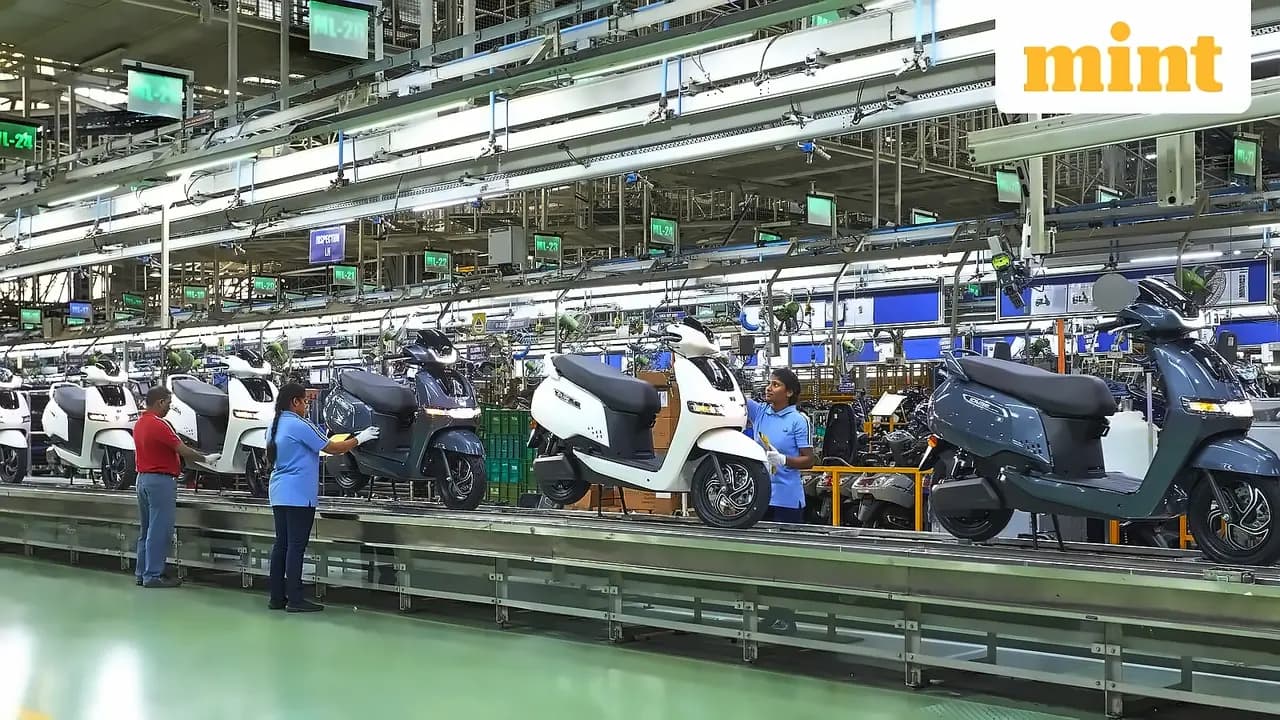
But the real game-changer is Vida, Hero's electric vehicle brand. In August 2026 alone, Vida dispatched 25,558 units, contributing substantially to the overall 42.80% YoY jump in scooter volumes to 74,547 units. This represents a dramatic acceleration from Vida's May 2026 sales of 20,130 units.
The Vida VX2 Go launch in August 2026 is playing a crucial role in this expansion. The 3.1 kWh fixed-battery variant offers a 120-kilometer IDC range, targeting consumers with easy access to home and office charging. Complementing this is the VX2 Plus (4.4 kWh) with twin removable batteries, which has already crossed 1,000 vehicle dispatches since launch. Transcripts
The Battery-as-a-Service (BaaS) model has been instrumental in driving adoption. Prices start at ₹44,990 under the subscription plan, significantly reducing entry barriers and making electric mobility more accessible. This "pay-as-you-go" ownership model is helping Hero capture a broader segment of price-sensitive consumers.
Domestic Resilience vs Export Volatility
The contrast between domestic and export performance in August 2026 reveals interesting dynamics.
However, this export decline masks a stronger underlying story—YTD exports for April-August 2026 actually grew 19.77% to 163,312 units.
The August export decline is primarily driven by Bangladesh, Hero's largest export market accounting for 27% of total dispatches historically. The country is facing severe political turmoil and economic crisis, with 240 factory closures, rising unemployment, and five consecutive months of declining exports through December 2025. Despite these challenges, Hero launched the XPulse 200 4V and XPulse 200 4V Pro in Bangladesh during August 2026, demonstrating long-term commitment to the market.
Domestic demand strength is evident in VAHAN retail registrations, which grew 19% YoY in August 2026, significantly outpacing the 4.46% domestic dispatch growth. This indicates strong retail pull and healthy consumer demand heading into the festive season. The domestic ICE business recorded 18% VAHAN retail growth, with key models like Splendor, Passion, Glamour X, and Super Splendor XTEC 2.0 maintaining strong traction.
Profitability Implications of the Mix Shift
The transition from motorcycles to scooters and EVs has significant profitability implications.
The shift toward scooters and EVs provides an 8% positive mix benefit that partially offsets commodity inflation pressures. Transcripts +1
Despite gross margin contraction of 300 basis points in Q1 FY27 due to approximately 4.5% net commodity inflation, overall EBITDA margin decline was limited to 120 basis points to 13.3%. This cushioning was achieved through disciplined cost management, strong operating leverage, and judicious price actions. Transcripts +1
The ICE portfolio demonstrated better resilience, with EBITDA margins contracting only 90 basis points sequentially to 15.9%, supported by strong operating leverage and higher profitability in the parts and accessories business, which grew 30% year-on-year. Transcripts
Vida's Path to Profitability
Vida's cost structure is improving rapidly as volumes scale. EV revenue reached approximately ₹660 crores in Q1 FY27, representing about 5% of total revenue. Despite 26% quarter-on-quarter volume growth to 57,000 units, total P&L investment in the Vida business remained flat sequentially at around ₹230 crores, demonstrating improved unit economics. Transcripts +1
The most encouraging metric is the EBITDA loss per vehicle, which improved from almost ₹50,000 in the previous quarter to ₹40,000 in Q1 FY27—a 20% improvement. At 25,558 monthly dispatches in August 2026, Vida is approaching the 25,000-30,000 monthly volume level where management previously indicated break-even potential. Transcripts
Four pillars are driving this profitability improvement: PLI benefits (60% of EV portfolio currently certified, generating ₹48 crores in Q1 FY27, with 100% compliance expected by December 2026), scale and operating leverage, BOM cost reduction through the internal LEAP savings program, and calibrated price increases. Transcripts +2
Balancing Growth and Investment
Hero is managing a delicate trade-off between maintaining its dominant motorcycle position and investing in future growth engines. The Splendor remains the undisputed volume driver, accounting for over 62% of total domestic dispatches in May 2026. Hero gained 230 basis points of market share in the 100cc segment, reaching approximately 86% market share. Transcripts
However, the company is simultaneously investing aggressively in capacity expansion. EV capacity is being tripled within FY27, scaling from 15,000 to 45,000 units per month. Capacity already doubled from 15,000 to 30,000 units per month by early August 2026. Additionally, Hero doubled Destini capacity and increased Xoom capacity by 50%. Transcripts +1
The 17.24% overall YTD volume growth to 2,779,127 units is translating into strong revenue momentum. Revenue from operations grew 35.7% YoY to ₹12,999 crore in Q1 FY27 (standalone), while consolidated revenue stood at ₹13,126.35 crore. This represents approximately 36% YoY revenue growth driven by volume expansion and premiumization.
The Road Ahead
The company's ability to maintain this margin target while executing its transformation will be the key metric to watch. The strong YTD volume growth, combined with improving product mix and Vida's accelerating path to profitability, suggests the strategy is gaining traction.
Hero MotoCorp is no longer just a motorcycle company. It's building multiple growth engines across EVs, premium motorcycles, scooters, exports, and high-margin after-sales businesses. The 70.93% YTD surge in scooter sales compared to 12.44% motorcycle growth isn't just a quarterly phenomenon—it's the early signs of a structural shift that could redefine Hero's competitive positioning and earnings profile for years to come.