The global green hydrogen market is projected to grow from about $12 billion in 2025 to $231 billion (₹22 lakh crore) by 2035 at a 34% CAGR, according to reports from The Financial Express. This growth reflects the expected demand for cleaner fuels across industries where reducing carbon emissions through electrification can be difficult. India is preparing for this transition under the National Green Hydrogen Mission (NGHM), which aims to achieve annual green hydrogen production of 5 million tonnes (MTPA) by 2030. The mission points to sectoral investments of around $89 billion, with the government introducing the Strategic Interventions for Green Hydrogen Transition (SIGHT) programme with an outlay of ₹17,490 crore. The SIGHT programme specifically allocates ₹4,440 crore for electrolyser manufacturing and ₹13,050 crore for green hydrogen production, supporting pilot projects, research and development, and development of hydrogen hubs to establish a domestic supply chain.
As part of its transformation from a solar PV manufacturer to a clean energy ecosystem (Waaree 2.0), Waaree Energies launched a green hydrogen business to diversify its operations. The company is building a one GW Electrolyser manufacturing facility in Dungri, Gujarat, targeted for commercialisation by FY27. The planned capex for electrolyser (₹676 crore), inverter (₹180 crore), and transformer (₹192 crore) manufacturing totals approximately ₹1,048 crore. Waaree has secured government allocations under national incentive frameworks, including a PLI worth ₹444 crore for 300 MW electrolyser capacity and ₹510 crore for 90,000-tonne-per-annum hydrogen production. Notably, Waaree has already secured an initial domestic order book of around ₹155 crore for its green hydrogen offerings. The company's strategy involves starting with electrolyser manufacturing, scaling into build-own-operate hydrogen projects, and transitioning to downstream green derivatives production. Phase 1 of the inverter and transformer lines is already commercialised in Q1FY27, supporting Waaree's larger ₹31,500 crore capital expenditure program under Waaree 2.0, which targets the global clean energy transition market estimated at US$ 1 trillion annually, projected to double to US$ 2 trillion by 2030.
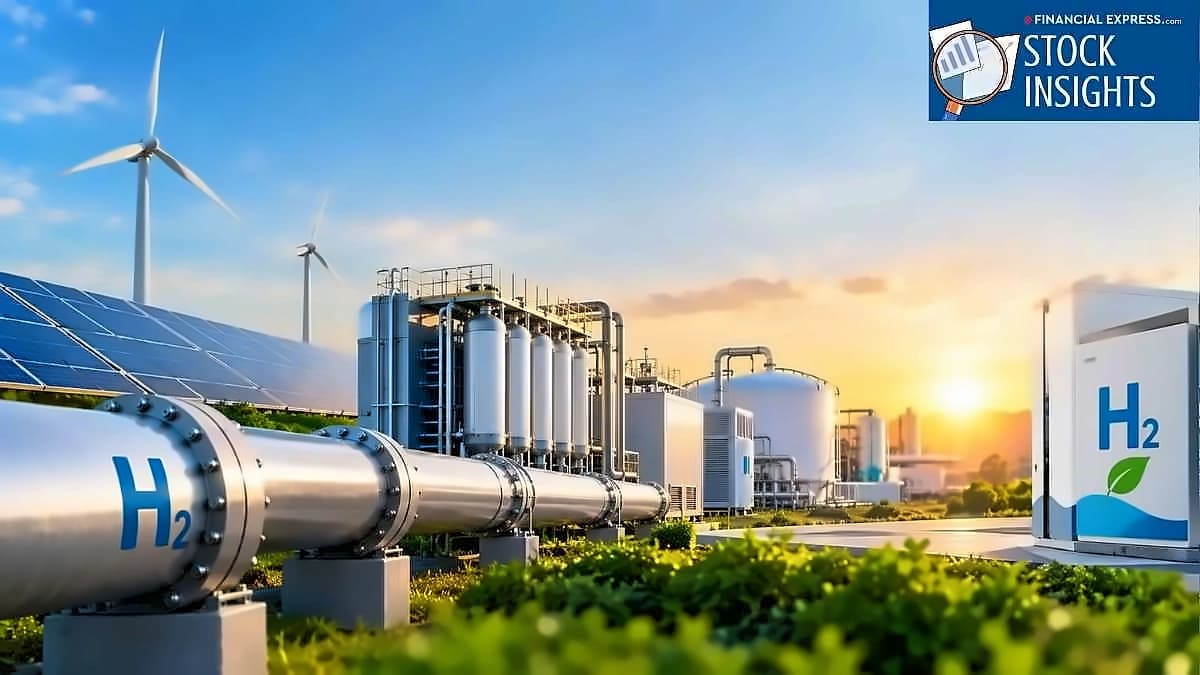
Advait Energy Transitions positions green hydrogen as a strategic pillar of its New & Renewable Energy vertical. Through its partnership with Jiangsu Guofuhee, the company has exclusive Indian technology transfer, manufacturing, and commercialisation rights for electrolyser technology. Advait operates across the green hydrogen value chain, including electrolyser manufacturing, fuel cell integration, green hydrogen EPC, and asset ownership. The company manufactures core electrolyser units in various sizes, ranging from small 250 Kilowatt (kW)-500 kW modules up to large 5 MW units, with multiple stacks linked together creating integrated systems of up to 100 MW in total capacity for green hydrogen and green ammonia production. Advait commissioned a 30 MW electrolyser semi-assembly unit in Ahmedabad in March 2026 and India's first green hydrogen microgrid during FY26. The company integrated a 300 kW electrolyser and 70 kW Proton Exchange Membrane (PEM) fuel cell in this facility, with Phase 1 slated for commissioning in Q4FY27 and full commercialisation targeted by mid-2028. In Q1FY27, Advait became the first Indian firm to conduct live testing of a 5 MW electrolyser test batch for 13+ green hydrogen players and completed a 1 MW green hydrogen generation EPC project in Bharuch. The company plans to localize 95% to align with domestic procurement mandates and is actively bidding on green ammonia representing a potential order pipeline of 150-200 MW, developing PEM fuel cell solutions for data centers, marine, defence, and critical backup-power applications.
NTPC is setting up a major green hydrogen hub at Pudimadakka spread across 1,200 acres with an envisaged investment of about ₹1 lakh crore. The facility will use roughly 5 GW of Round-The-Clock Renewable Energy to produce about 1,400 tons per day of green hydrogen. The hub is an integrated ecosystem covering hydrogen production, green chemical derivative manufacturing, and export infrastructure. NTPC has implemented several pioneering pilot projects including 10 hydrogen fuel cell buses along with 2 filling stations for public transport in Leh and Delhi. The company has established India's first green hydrogen blending project in the Piped Natural Gas network at Kawas, Surat and launched a hydrogen-based microgrid project in Ladakh. Management stated that green hydrogen is currently at a critical juncture globally and nationally, though large-scale commercial operations are still a long way off. The company projects a cumulative group capital expenditure of ₹16.86 lakh crore over the 11-year period leading up to FY37, with renewable energy accounting for ₹7.2 lakh crore of the allocation.