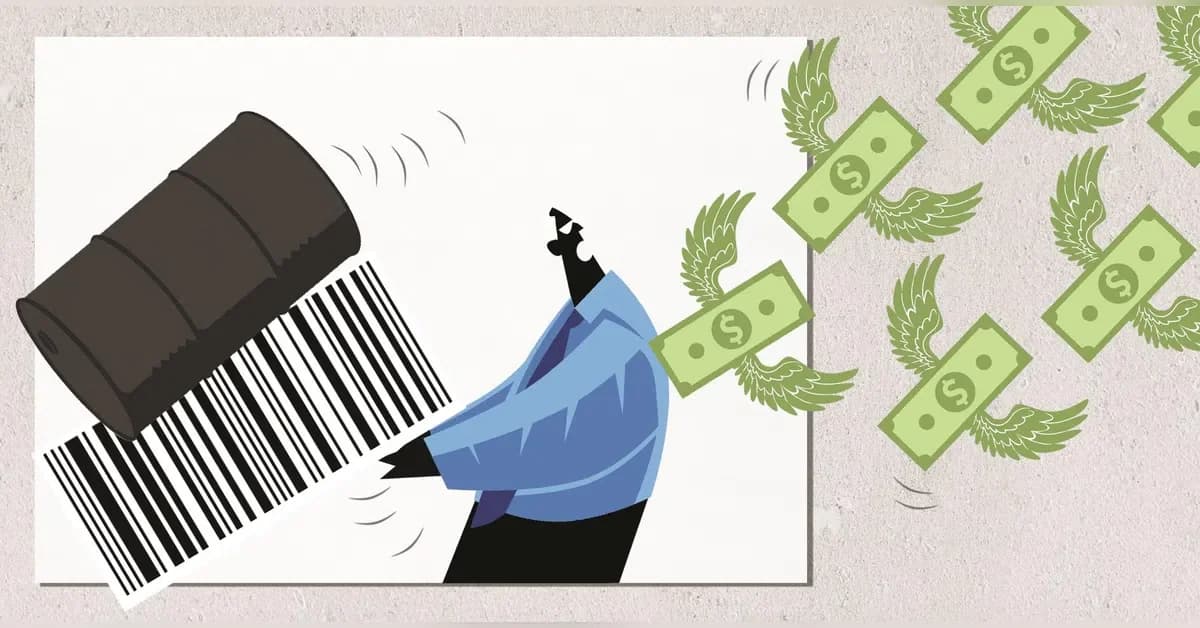
Despite the Centre providing a massive Rs 1.23 lakh crore support package, these companies continue to bleed approximately Rs 650 crore every single day. The math is brutal: the government’s excise duty cut of Rs 10 per litre on petrol and diesel was designed to be a lifeline, reducing the tax burden to absorb losses. However, this fiscal support only covers a fraction of the gap. At current international crude prices, under-recoveries—the difference between the cost of production and the fixed retail price—stand at roughly Rs 26 per litre for petrol and a staggering Rs 81.90 per litre for diesel. The excise reduction offsets only about 30-40% of these losses, leaving OMCs to shoulder the rest.
The trigger for this crisis lies in the West Asia conflict. When geopolitical tensions erupted and the Strait of Hormuz faced disruption, global crude prices surged. The government responded with a 78-day fuel price freeze to shield consumers from immediate pain. This freeze, combined with the excise duty cut, was a temporary buffer. Once the freeze lifted, OMCs implemented four rounds of price hikes, adding a cumulative Rs 7.50-8 per litre to pump prices. Even with these increases, the daily losses persist because the adjustments haven't fully caught up with the elevated global costs.
Adding insult to injury is the rupee’s depreciation. Since India imports nearly 90% of its crude oil, a weaker rupee directly inflates the import bill. Every dollar spent on oil becomes more expensive in rupee terms, widening the current account deficit and squeezing OMC margins further. It’s a vicious cycle: higher oil prices weaken the rupee, and a weaker rupee makes oil even costlier, trapping OMCs in a spiral of under-recoveries.
The Fertiliser Subsidy Explosion
While the energy sector burns, the fertiliser sector is facing its own fiscal firestorm. The Ministry of Chemicals and Fertilisers has sought to nearly double the budgeted fertiliser subsidy, escalating the demand from Rs 1.71 lakh crore to approximately Rs 3.4 lakh crore for FY27. This dramatic surge is driven by a perfect storm of global supply disruptions and skyrocketing input costs.
The core issue is the price of raw materials. Natural gas, the primary feedstock for urea production, has seen prices soar. Since natural gas accounts for 70-80% of urea production costs, this spike has been devastating. Consequently, the subsidy required per urea bag has jumped from around Rs 2,900 to Rs 4,500—a 55% increase—even though the price farmers pay remains statutorily fixed at Rs 242 per 45 kg bag. The government is bridging this massive gap to ensure food security, but the fiscal cost is enormous.
Compounding the problem is India’s heavy import dependence. The country produces about 50-55 million tonnes of fertilisers against an annual consumption of 60-65 million tonnes, relying on imports for the balance. This dependence makes India acutely vulnerable to global volatility. The situation worsened with China’s strategic re-entry into the global market after an eight-month absence. During its hiatus, China’s DAP exports to India plummeted from 22.28 LMT in 2023-24 to just 8.47 LMT in 2024-25. This supply contraction tightened global markets, pushing prices up and forcing India to secure expensive alternative supplies from countries like Saudi Arabia, Russia, and Morocco.
Fiscal Offsets: Selling Assets to Pay Bills
Faced with these combined subsidy pressures—Rs 1.23 lakh crore for OMCs and potentially Rs 3.4 lakh crore for fertilisers—the government is aggressively pursuing a strategy of asset monetisation to shore up its finances. The cornerstone of this plan is an ambitious Rs 80,000 crore disinvestment target for FY27, a massive jump from the previous year’s revised estimates.
The linchpin of this strategy is the strategic sale of IDBI Bank. The government aims to sell its 30.48% stake, which could fetch around Rs 37,000 crore alone. This transaction is critical; despite facing valuation challenges and rejected bids, officials remain confident it will move forward and help exceed the overall target. Beyond IDBI, the government is also looking to offload up to a 3% stake in LIC, potentially raising another Rs 20,000 crore. These moves are designed to generate non-debt capital receipts, reducing the need to borrow and thereby keeping the fiscal deficit in check.
Simultaneously, the government is opening the doors wider to foreign capital. In a bid to support India’s inclusion in global bond indices like Bloomberg’s Global Aggregate Index, it has scrapped capital gains tax on foreign portfolio investments (FPI) in government securities. This exemption, effective from April 1, 2026, aims to attract stable foreign inflows to finance the deficit at lower costs, providing a buffer against the rupee’s depreciation.
The Policy Trade-off: Consumers vs. Companies
The government’s strategy reveals a difficult trade-off. By maintaining fuel price controls and absorbing losses through subsidies, it is prioritising consumer affordability and political stability over the commercial viability of state-run enterprises. The fuel price freeze and subsequent hikes were calibrated to prevent a shock to the system, but the cost is borne by the OMCs’ balance sheets and the government’s fiscal health.
Economists argue that this universal shielding is unsustainable in the long run. The subsidy burden has already increased the fiscal deficit by an estimated 0.3% of GDP. The alternative—allowing market-driven pricing—would ensure OMC sustainability and reduce fiscal drag but would pass the pain directly to consumers through higher pump prices, potentially stoking inflation and public discontent. The government’s current path attempts to split the difference: using asset sales and foreign capital to fund the subsidies while gradually allowing prices to rise, as seen in the phased Rs 7.50-8 per litre increase.
Growth Resilience Amidst the Storm
Remarkably, this fiscal storm hasn’t capsized India’s growth boat. The economy grew at a robust 7.7% in FY26, with momentum continuing into Q1 FY27. This resilience is powered by strong domestic consumption and investment, which have acted as a buffer against external headwinds.
Private consumption remains buoyant, supported by low inflation and tax relief, while government capital expenditure has surged. However, the external sector is flashing warning lights. The combined import bill for crude and fertilisers is widening the Current Account Deficit (CAD), projected to hit around 2% of GDP. This, coupled with record foreign portfolio outflows of $27.6 billion since January 2026, has put significant pressure on the rupee.
The feedback loop here is dangerous: global commodity shocks increase the import bill, which widens the CAD and weakens the currency. A weaker rupee then makes imports even more expensive, further increasing subsidy requirements and the fiscal deficit. The government’s asset optimisation strategy—selling stakes and monetising infrastructure—is essentially a mechanism to break this loop by creating fiscal space without resorting to excessive borrowing that would exacerbate the external imbalance.
Ultimately, India is navigating a high-wire act. The government is using its balance sheet to absorb global shocks, protecting consumers and maintaining growth momentum. But the sustainability of this approach hinges on the success of its disinvestment agenda and the hope that global commodity prices stabilise. If the West Asia crisis prolongs or fertiliser prices remain elevated, the fiscal arithmetic will get even harder, forcing tougher choices between fiscal prudence and consumer protection.