RBI Governor Sanjay Malhotra has outlined the central bank's comprehensive strategy to address India's balance of payments crisis, emphasizing that "we will do whatever is required to ensure orderly price discovery in the forex market." As reported by Mint, the governor clarified that while the RBI does not target specific price levels or bands, it will intervene to curb undue speculation that could disrupt economic activity. Malhotra stressed that "if there is undue speculation, it is our duty to quell it" and confirmed that the RBI has sufficient forex reserves of $700 billion to deploy various tools to manage market volatility. The governor noted that "we have enough tools in our kit" to address speculative movements, representing a clear shift from the previous intervention-heavy strategy.
India is experiencing what commentators describe as a rupee or balance of payments problem, despite apparently strong economic fundamentals. According to reports from Business Standard, India is growing at a foreign capital-attracting rate of 7-plus percent with a healthy financial system, low inflation, and $700 billion in official reserves. However, the current account deficit is projected to reach $100 billion this year, with capital inflows to finance this gap looking slim. Foreign portfolio investment outflows have exceeded $20 billion since the West Asia war began, creating pressure on the rupee. The analysis suggests that basic arithmetic supports the argument that such pressure is conceivable even with India's strong fundamentals, highlighting the underlying structural challenges. Recent developments show that gross FDI inflows reached a historical peak of $94.5 billion in 2025-26, higher by 17% over 2024-25, indicating robust capital account performance despite current account pressures.
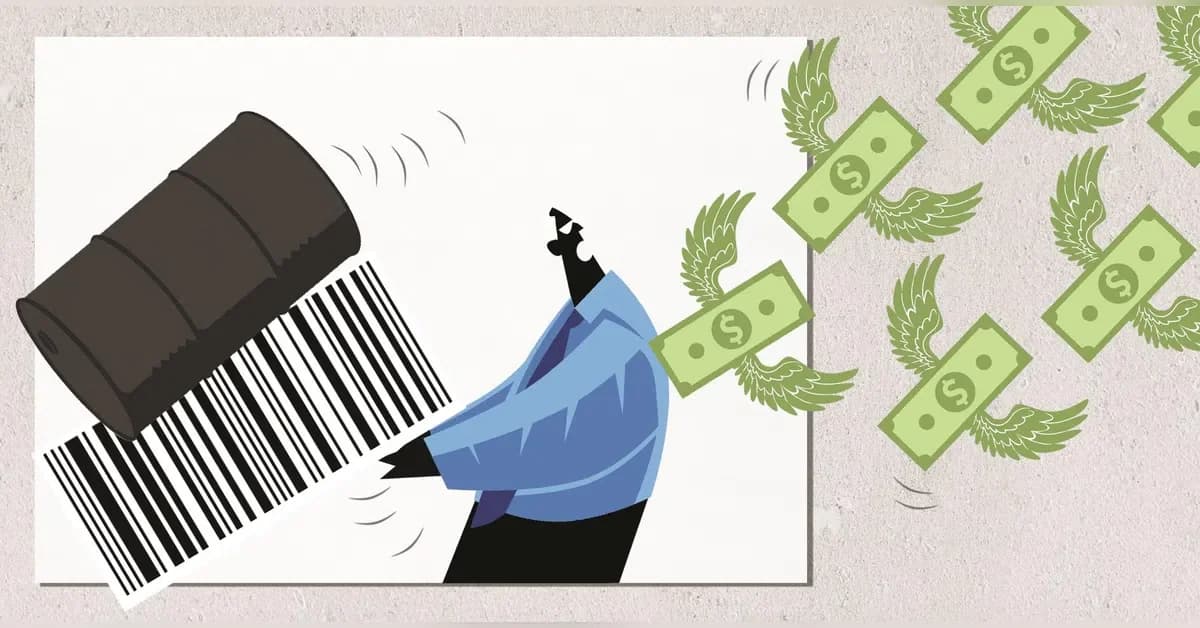
The primary underlying cause of India's balance of payments pressure is the inability to transmit higher energy prices to the economy during supply shocks. As reported by Business Standard, petroleum, fertiliser, and electricity prices are mostly fixed at heavily subsidised levels in rupee terms. Urea prices have been fixed at ₹5.4/kg for years with subsidies amounting to 70-80 percent in normal times. Electricity consumers receive subsidies of 90 percent for farmers and 45 percent for households. The analysis reveals that 60-70 percent of subsidies go to upper middle class and rich consumers, while 30-40 percent of urea consumption leaks through waste and profligate consumption. This pattern of energy pricing is described as a relic of the socialist past that no longer serves its original purpose of protecting the poor.
According to the analysis from Business Standard, the solution involves raising energy prices in small increments over a suitable period until full cost recovery, supplemented by direct benefit transfers targeting the bottom 40-50 percent of households. The report suggests implementing free electricity for the first 100-200 units of consumption for the poor, similar to existing schemes in Delhi and Tamil Nadu. This approach would allow governments to limit subsidies to the poor while getting the rich to pay production costs, addressing the current wasteful distribution of energy subsidies. The analysis notes that neither the Central nor state governments have used the new technology of JAM (Jan Dhan-Aadhaar-Mobile) trinity in this way, representing a political economy tragedy where cash handouts exist but direct benefit transfers are lacking. Governor Malhotra's recent comments emphasize that "we have never allowed a crisis to go to waste" and that India should use the West Asia crisis as an opportunity to expedite measures for energy security.
The Reserve Bank of India has intervened heavily in spot and forward markets to the tune of $250-300 billion, representing about 40 percent of the reserves stock since 2021 to limit rupee depreciation. As reported by Mint, Governor Malhotra confirmed that "when intervention proved ineffective, the RBI resorted to clunky regulatory measures that unsettled investors" and emphasized that "the easy part is allowing downward rupee flexibility while the government steps up and the RBI sits back." The governor noted that "we have sufficient reserves to curb undue speculation and reduce abnormal or high volatility" and that "we have been taking measures in this regard." Recent market dynamics show that the rupee has depreciated significantly but Governor Malhotra suggests that "if anything, one could argue that rupee has become undervalued, both in nominal as well as in REER (real effective exchange rate) terms." He expects that "once the situation in West Asia normalizes, one could very well see the rupee appreciate" as it has during previous external shock episodes.