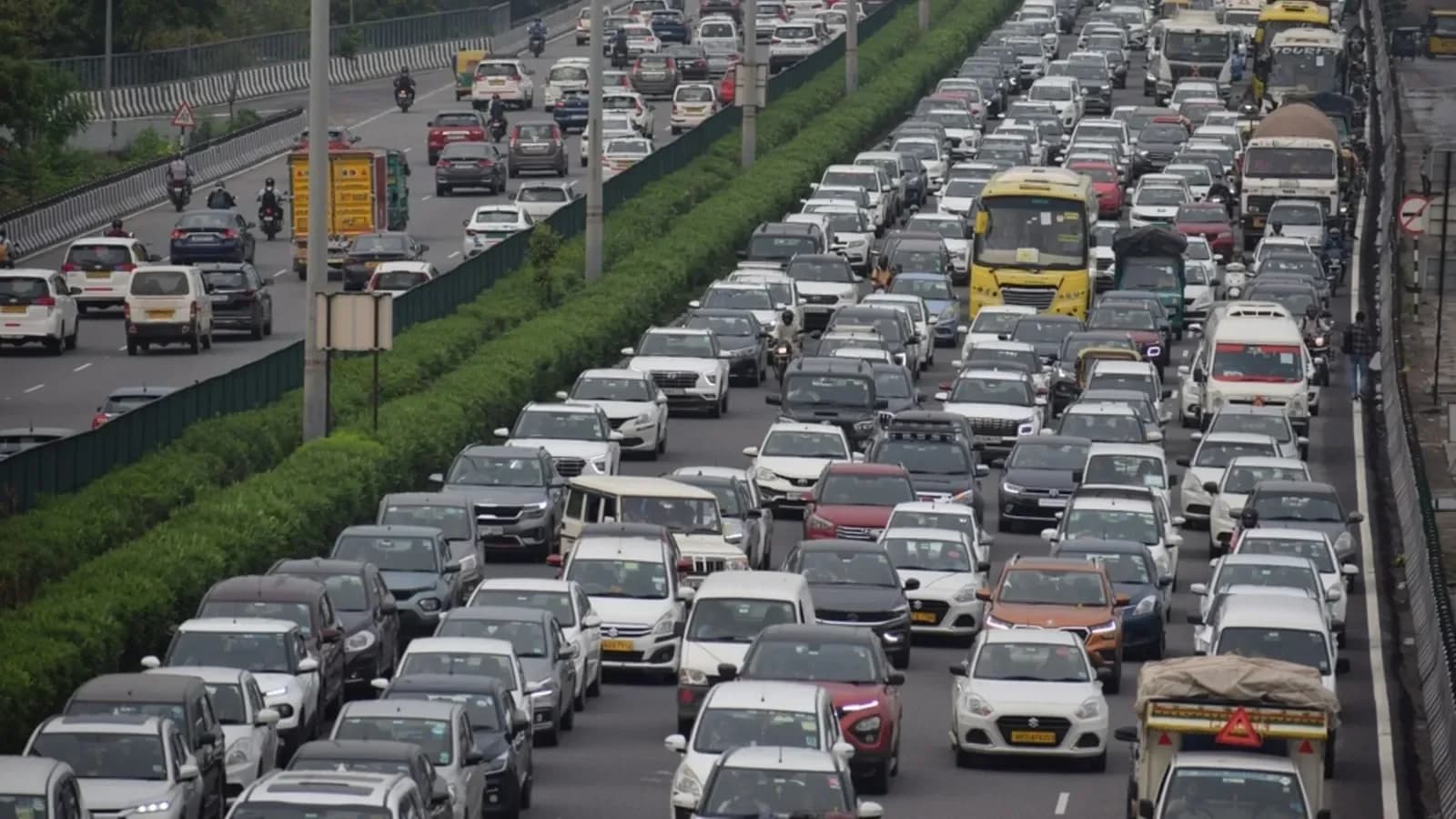
India's passenger vehicle industry delivered one of its strongest monthly performances on record in July 2026, with domestic dispatches jumping 33% year-on-year to nearly 4.7 lakh units. This wasn't just a good month—it was a statement about how policy reforms, strategic product positioning, and shifting consumer preferences are reshaping the automotive landscape. Let's break down what actually happened, who won big, and whether this momentum is built to last.
The Policy Trifecta: GST 2.0, Rate Cuts, and Tax Relief
Three macroeconomic tailwinds created the perfect storm for auto sales. First, GST 2.0 implementation fundamentally altered pricing dynamics. The reform reduced GST to 18% for small cars while standardizing other segments at 40%, eliminating the complex cess structure that had previously inflated prices.
The impact was most pronounced in entry-level small cars, where first-time buyer share jumped from 42% in H1 FY26 to 51% by Q4 FY26. Even in an SUV-dominated market, the Dzire sedan emerged as India's top-selling passenger vehicle in FY25-26, proving that tax relief can revive traditional segments. Transcripts +2
Second, repo rate cuts eased financing costs, making EMIs more manageable. Third, income tax relief for individuals earning up to Rs 12 lakh boosted disposable income, particularly benefiting entry-level customers.
The result? Industry volumes of 4.65-4.7 lakh units in July 2026 compared to roughly 3.5 lakh vehicles in July 2025.
The Winners: Who Captured the Growth?
Maruti Suzuki led the pack with record domestic sales of 1,96,203 units, up 43.4% year-on-year. The company witnessed all-round growth across segments—from entry-level small cars to SUVs—with CNG models growing 50% year-on-year in July alone. Approximately 190,000 customer orders remained unserved as of fiscal year-end, with nearly 130,000 in the small car segment falling in the 18% GST bracket. This wasn't just about tax benefits though—Maruti expanded its sales footprint to over 4,600 outlets and enhanced logistics through rail dispatches, which grew from 5.1% in 2016 to 26.5% in FY25-26. Transcripts +1
Hyundai Motor India Ltd achieved its best-ever domestic monthly sales of 54,210 units (+23.3% YoY). The company's strategy focused on SUV dominance, with SUVs accounting for 70% of domestic volume mix. Hyundai also achieved record export performance of 21,150 units (up 31.4% YoY)—its highest in more than 100 months—reinforcing its "Make-in-India, Made-for-the-World" strategy. The company systematically expanded its network from 1,363 outlets in FY24 to 1,519 in Q1 FY27, while achieving all-time high rural penetration. InvestorPresentations +3
The company's EV portfolio played a pivotal role—FY26 marked its best-ever EV performance with 92,000 units sold (43% YoY growth), giving it over 40% market share despite increased competition. The Sierra launch marked a highly successful comeback, while Nexon and Punch emerged as the number one and number three spots respectively among all industry models during H2 FY26. CNG volumes became 27% of the portfolio, with over 1.7 lakh CNG vehicles sold. Transcripts +2
Mahindra & Mahindra posted 20% growth in utility vehicle sales to 60,048 units, solidifying its position as the #1 SUV player by revenue market share at 25.0%. The company is aggressively expanding capacity—SUV ICE capacity increasing from 60k to 70k units per month by F27 H2, with BEV capacity expanding from 8k to 12k operational units. This reflects confidence in sustained SUV demand, which has grown from 34% to 60% of the total passenger vehicle industry. InvestorPresentations +2
Nissan Motor India more than tripled domestic wholesale volumes to 4,518 units from 1,420 units a year earlier. The key driver? The launch of the Nissan Tekton flagship SUV, which marked a strategic shift from a single-product strategy to a broader three-model portfolio including Magnite and Gravite. The company is also expanding its retail and service network across India.
The Competitive Landscape: Market Share Shifts
The July performance revealed significant market share dynamics. Maruti Suzuki maintained dominance with nearly 40% market share in H1 2026, though slightly down from 40.1% in H1 2025. The biggest shift came from Tata Motors, which emerged as the largest market share gainer, jumping from 12.3% to 14.6% (+2.3 percentage points). Mahindra maintained stable share around 13.8% while growing volumes, while Hyundai faced pressure with share declining from 13.1% to 11.8% despite volume growth.
Kia India achieved its best-ever July wholesale performance with 28,200 units (+27.4% YoY). The Seltos remained its highest-volume model, averaging more than 10,000 units monthly since the beginning of 2026, while Seltos and Sonet recorded year-to-date growth of 75.7% and 34.5% respectively. The company's retail network extends to 905 customer touchpoints across 412 cities, supported by 135 certified pre-owned outlets.
JSW MG Motor India recorded its highest-ever monthly wholesale volumes of 8,158 units (+22% YoY). The most significant highlight? Electric and hybrid vehicles accounted for more than 80% of total sales, suggesting over 6,500 vehicles were powered by new energy technologies. The company launched the MG ADAPT platform—India's first Multi New Energy Vehicle platform supporting EVs, HEVs, PHEVs, and REEVs—positioning it for the evolving market.
Can This Momentum Last?
The sustainability of these three tailwinds varies significantly. GST 2.0 represents a permanent structural change that creates a stable pricing environment by reducing volatility and improving affordability. This is the most durable driver. Repo rate cuts are moderately sustainable but subject to monetary policy cycles—inflationary pressures could prompt central bank tightening. Income tax relief is likely temporary fiscal stimulus that may not be sustained in future budgets.
Industry analysts expect FY27 to mark a phase of normalization rather than broad-based acceleration like FY26. ICRA expects industry volumes to expand by only 4-6% in FY27, significantly lower than the current 33% growth rate. The moderation considers the elevated base of FY2026 and weak monsoon outlook—the India Meteorological Department projected southwest monsoon rainfall at about 90% of the long-period average, posing risk to rural demand.
Rising fuel and commodity prices could also pressure affordability and input costs. Toyota Kirloskar Motor's modest 5% growth to 30,516 units contrasts sharply with industry leaders, potentially reflecting its premium segment positioning which may be less sensitive to entry-level focused tax benefits and more exposed to economic uncertainties affecting higher-income consumers.
The Long-Term Outlook: Small Cars vs SUVs
Despite GST 2.0 benefits for small cars, the long-term shift toward SUVs remains intact. The Indian passenger vehicle market is seeing a clear structural shift from entry-level cars like hatchbacks and sedans to premium options such as SUVs, with SUVs now making up over 50% of the market while demand in the entry segment is declining. Higher insurance, regulatory, and commodity costs are impacting affordability for entry buyers, while customers expect more features even in base models, pushing them toward premium variants.
For Maruti Suzuki, this presents a strategic challenge. The company must balance short-term small car opportunities with long-term SUV transition. Its strong CNG portfolio (75% market share) provides a bridge between entry-level affordability and running cost concerns, potentially extending the relevance of smaller platforms. Success with models like Fronx demonstrates the potential to capture entry-level demand with SUV-style vehicles, aligning with both consumer preferences and tax advantages. AnnualReports +1
The bottom line? July 2026's record performance reflects genuine demand supported by structural reforms, not just temporary factors. But as growth normalizes and macro risks emerge, the winners will be companies that can navigate the transition from policy-driven boosts to sustainable competitive advantages—particularly those positioned for the SUV boom and electric vehicle transition.