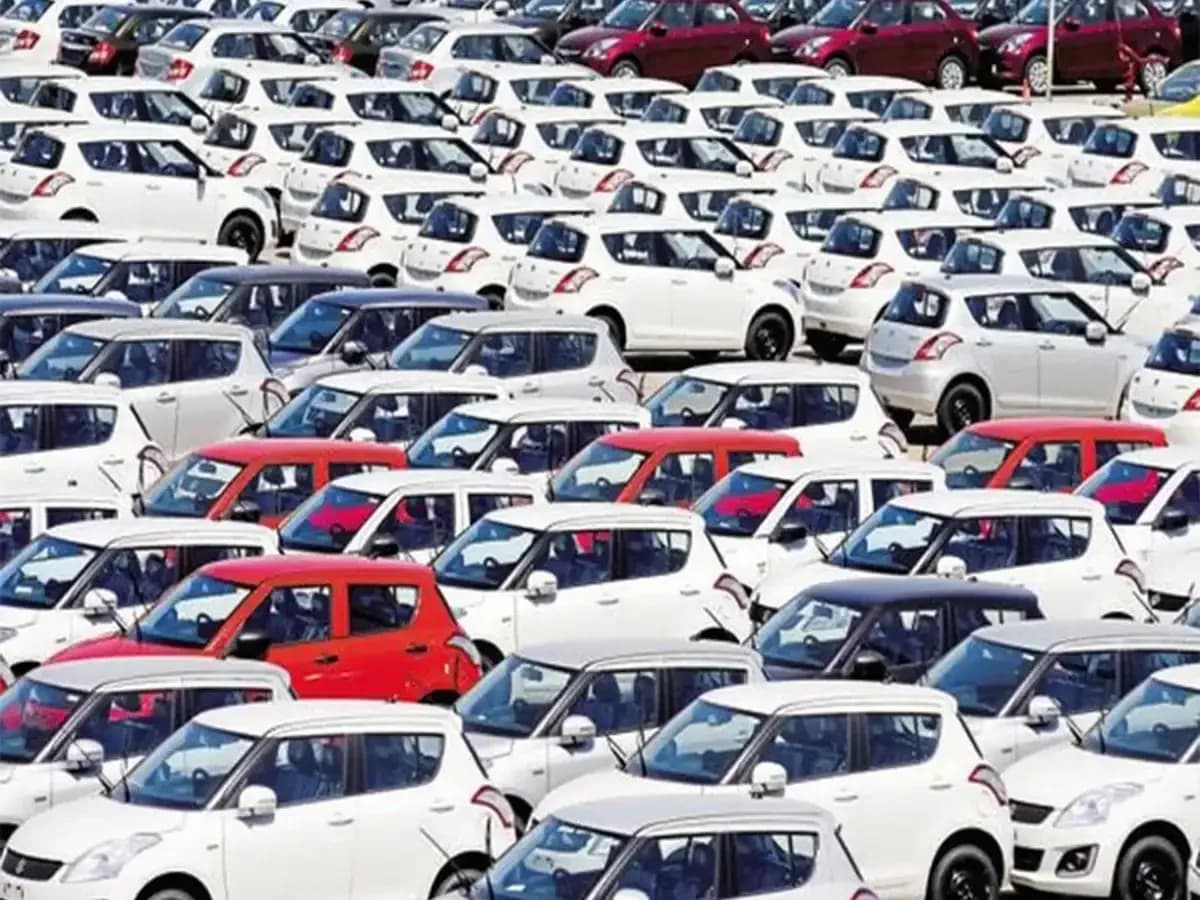
The small car segment is experiencing a significant revival following the GST rate cuts on small cars, marking a 3.2% year-on-year recovery in FY26 with sales reaching 13.2 lakh units. According to Society of Indian Automobile Manufacturers (SIAM), small car sales had declined from 16.4 lakh units in FY23 to 12.8 lakh units in FY25, representing an 11.7% drop. However, in the first five months of the current fiscal, small car volumes grew 27% to 5.9 lakh units, demonstrating the strong momentum from the GST rationalisation benefits. The potential of the small-car segment remains strong, with sales growing 58% this year, resulting in the share of first-time buyers rising from 44% to 54%, as noted by Partho Banerjee, senior executive officer, marketing & sales at Maruti Suzuki India.
Despite strong sales performance driven by GST cuts, only four out of 11 automakers have reported positive returns year-on-year since the GST rate cut implementation, highlighting the mixed impact on stock performance. TVS Motor has gained 18.3% to ₹4,171 from ₹3,525, followed by Bajaj Auto with a 26.1% surge to ₹11,414 from ₹9,055. Eicher Motors rose 8.2% to ₹7,516 from ₹6,946, while Ashok Leyland gained 17.3% to ₹163 from ₹139. However, major players like Hero MotoCorp declined 2.7% to ₹5,285, Maruti Suzuki fell 23.5% to ₹12,103, and Mahindra & Mahindra dropped 14.8% to ₹3,052. Tata Motors PV declined 28.0% to ₹303 from ₹421, while Hyundai Motor fell 18.9% to ₹2,208.

Net GST collections have shown signs of recovery from January 2026, after remaining subdued through the end of 2025, following the government's rationalisation of GST rates in September. According to Business Standard, the September rate rationalisation simplified the structure to two main slabs of 5% and 18%, with a special 40% rate for select goods. The rate rejig exercise withdrew compensation cess on most products, while retaining it on tobacco products until the outstanding compensation-cess loan and interest liabilities were discharged. Those remaining liabilities were treated as discharged with effect from February 1. Vivek Jalan, partner at Tax Connect Advisory Services, noted that "even after a drastic reduction in GST rates and slabs, net GST collections have remained resilient."
The GST rate cuts have enabled significant consumer upgrades across multiple categories, with small cars leading the upgrade trend as buyers move from two-wheelers to four-wheelers. Entry-level cars where buyers are upgrading from two-wheelers to four-wheelers, the priority is not a sunroof or other premium features, but simply owning a car, making the small-car market particularly sensitive to cost increases. Since GST 2.0 revision, starting prices of Maruti's key small-car models have remained unchanged, despite significant commodity and input-cost pressures, as noted by Partho Banerjee from Maruti Suzuki India. Several two-wheeler users moved to four-wheelers as price cuts improved affordability, with the Maruti Alto K10 STD (O) costing ₹4.2 lakh before the rate reduction, falling to ₹3.7 lakh after September 22, 2025 and remaining at that level. The rural dimension continues to prove particularly strong, with rural PV growth rate over three times its urban equivalent in the latest quarter.
The road ahead for automakers looks challenging as pricing pressure is clearly visible in car sales and passenger vehicle makers face headwinds. Two-wheeler and truck makers have already hiked prices, while a higher second-half base for tractors looms and could restrict growth after a breakthrough fiscal 2026. Most importantly, higher raw material costs could be a drag on margins, ultimately resulting in further pressure on stock prices. However, the GST decision came as a boost for customers, and companies should consider continuing with this momentum, making its models affordable, as noted by Sai Giridhar, president of FADA. FADA described January-August 2025 as relatively subdued and identified September as the turning-point when lower rates on small cars, two-wheelers up to 350cc, three-wheelers, and key commercial-vehicle categories improved affordability.