India's air conditioning industry is undergoing a dramatic geographical shift.
This movement is driven by a powerful combination of central government incentives, compelling logistics economics, and a fundamental climatic reality: South India simply doesn't have a real winter. The result is the emergence of a new industrial powerhouse—the Sriperumbudur-Chennai-Sri City corridor—which is rapidly redrawing the country's manufacturing map.
The PLI Catalyst
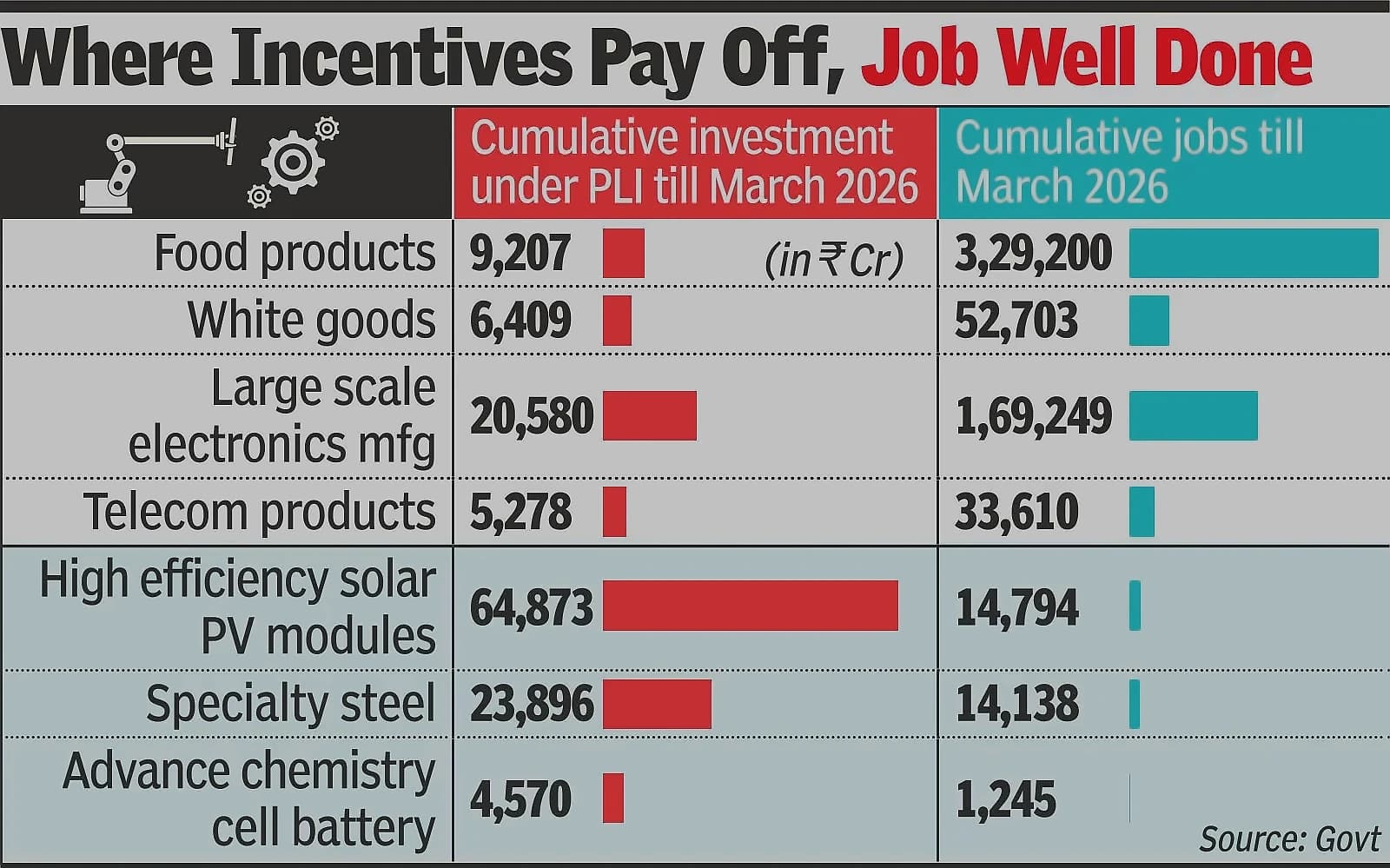
At the heart of this transformation lies the Centre's Production Linked Incentive (PLI) scheme for White Goods.
Its primary objective is to boost domestic value addition from the current 15-20% to 75-80%, reducing India's heavy dependence on imported components like compressors and control assemblies. The scheme has successfully attracted 85 companies across four rounds, committing a total investment of ₹11,198 crore. For major players like Daikin, Blue Star, LG, Carrier, and Havells Lloyd, the PLI framework provides the financial certainty needed to justify greenfield investments in new locations rather than merely expanding existing North India facilities.
Sri City: The Cooling City Emerges
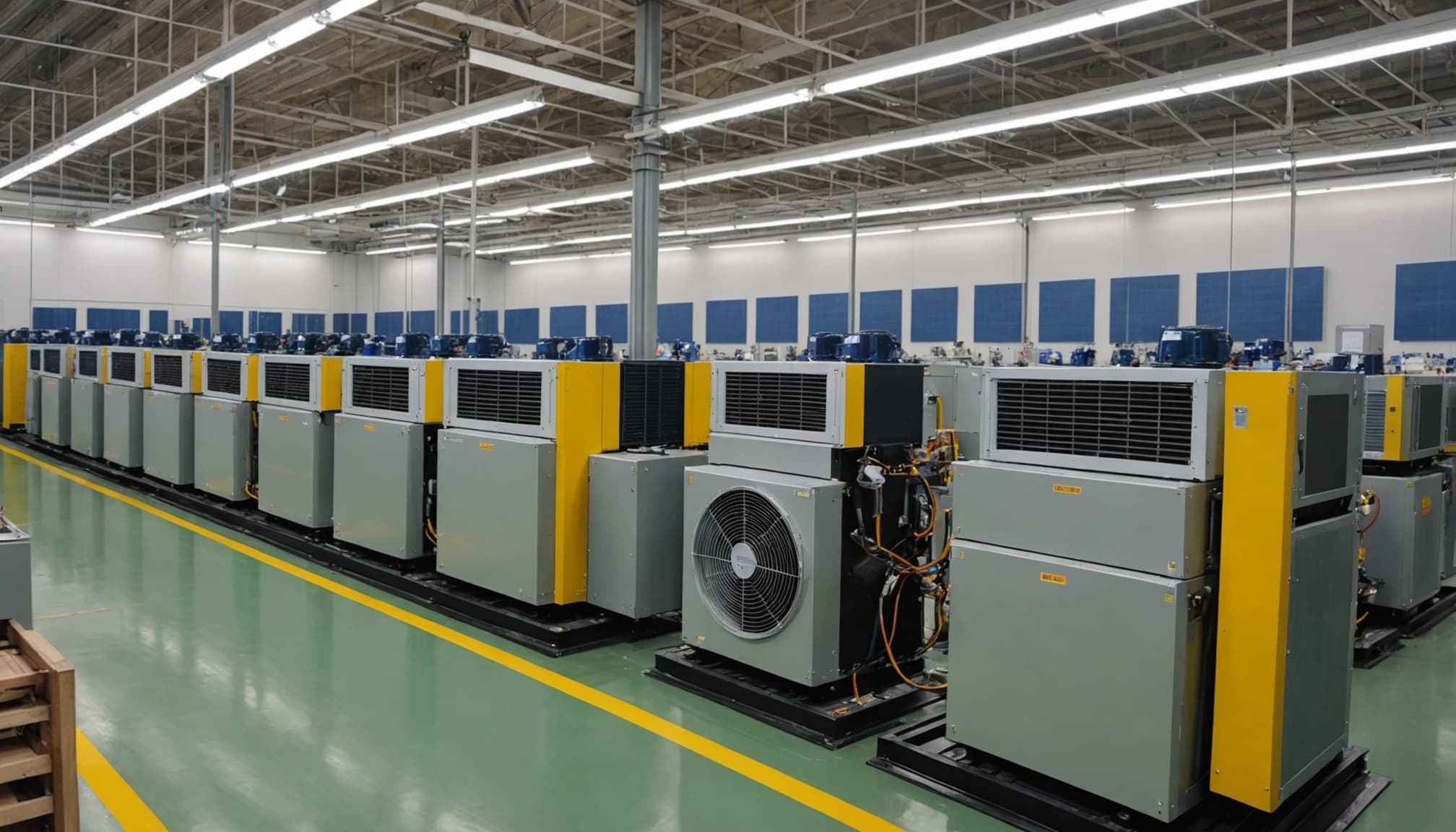
Sri City, an 8,500-acre private industrial city in Andhra Pradesh bordering Tamil Nadu, has become the epicenter of this migration. Over the past five years, it has attracted 10 major AC manufacturers and 34 component suppliers, collectively investing ₹16,600 crore and creating 38,000 jobs. The combined capacity of these facilities is expected to touch eight million units by 2027.
This concentration of capacity has earned it the nickname "Cooling City."
The Logistics Advantage
The economics of location are impossible to ignore. Sri City sits just 65 km from Chennai Port, a critical advantage for an industry where 50-60% of components are imported.
This figure breaks down into ₹765-950 in inbound savings from shorter port-to-factory transport and ₹225-300 in outbound savings from reduced distribution distances. For a manufacturer producing two million units annually, this translates to a staggering ₹2,400 crore in annual profit improvement. Furthermore, the proximity slashes order-to-delivery cycles for South Indian customers from 12 days to just 3 days, dramatically improving working capital efficiency and customer service.
The Year-Round Market
Beyond logistics, the climatic profile of South India offers a structural advantage that North India cannot match. In states like Tamil Nadu and Andhra Pradesh, there is hardly any real winter. Temperatures remain in the high 20s to low 30s Celsius year-round, creating an effective cooling season of 10-11 months compared to the 5-6 month window in the North.
The result is a stable, predictable demand curve with 75% less monthly revenue variance. For companies like Voltas and Mitsubishi Electric, which have established major facilities in Tamil Nadu, this means consistent revenue streams and optimized asset utilization rather than volatile seasonal peaks.
The Component Ecosystem
Perhaps the most significant development is the maturation of a localized component ecosystem. The 34 component suppliers in Sri City cover the entire bill of materials, from compressors and heat exchangers to copper tubes and control assemblies. This co-location generates massive savings. Sourcing components locally reduces inbound logistics costs by 83-90% compared to North India and cuts lead times from 5-7 days to 1.5-2 days. The impact on working capital is profound: inventory carrying periods drop from 50-72 days to 17-25 days, freeing up approximately ₹274 crore for every million units of annual production. The total landed cost per AC unit decreases by ₹585-905, providing a direct margin boost that is nearly impossible for competitors outside the ecosystem to replicate.
State Incentives and Competitive Dynamics
The central PLI benefits interact powerfully with aggressive state-level incentives. Andhra Pradesh's Industrial Development Policy 4.0 offers a 40% capital subsidy for PLI-aligned projects, among the highest in the country, coupled with land costs 40-50% lower than Tamil Nadu and power tariffs 25-35% cheaper. Tamil Nadu counters with a mature electronics ecosystem, featuring 200+ Tier 1 suppliers and superior port access for exports. This competitive federalism has created a corridor where global players like Daikin, LG, Carrier, and Mitsubishi Electric compete alongside domestic leaders like Blue Star, Voltas, and Havells Lloyd. The market share dynamics are shifting accordingly, with global players expected to strengthen their position in South India from 55-60% to 60-65% by 2027.
The New Competitive Landscape
The implications for North India-based manufacturers are serious. Without a southern manufacturing presence, they face a permanent cost disadvantage of ₹1,200 per unit when serving southern markets, longer delivery cycles, and lower capacity utilization. The southward migration represents not just a geographical shift but a fundamental restructuring of the industry's competitive economics. As Sri City's production capacity scales toward eight million units, the logistics, climatic, and ecosystem advantages will create a widening gap between manufacturers in the southern corridor and those relying on legacy northern facilities.
The transformation of the Sriperumbudur-Chennai-Sri City corridor into India's dominant AC manufacturing hub is a testament to the power of aligned policy incentives, infrastructure development, and market realities. For the companies that have made the move south, the rewards are already flowing through improved margins, optimized working capital, and stronger market positions. For the industry as a whole, this shift marks the emergence of a globally competitive manufacturing ecosystem capable of serving both domestic demand and export markets with unprecedented efficiency.