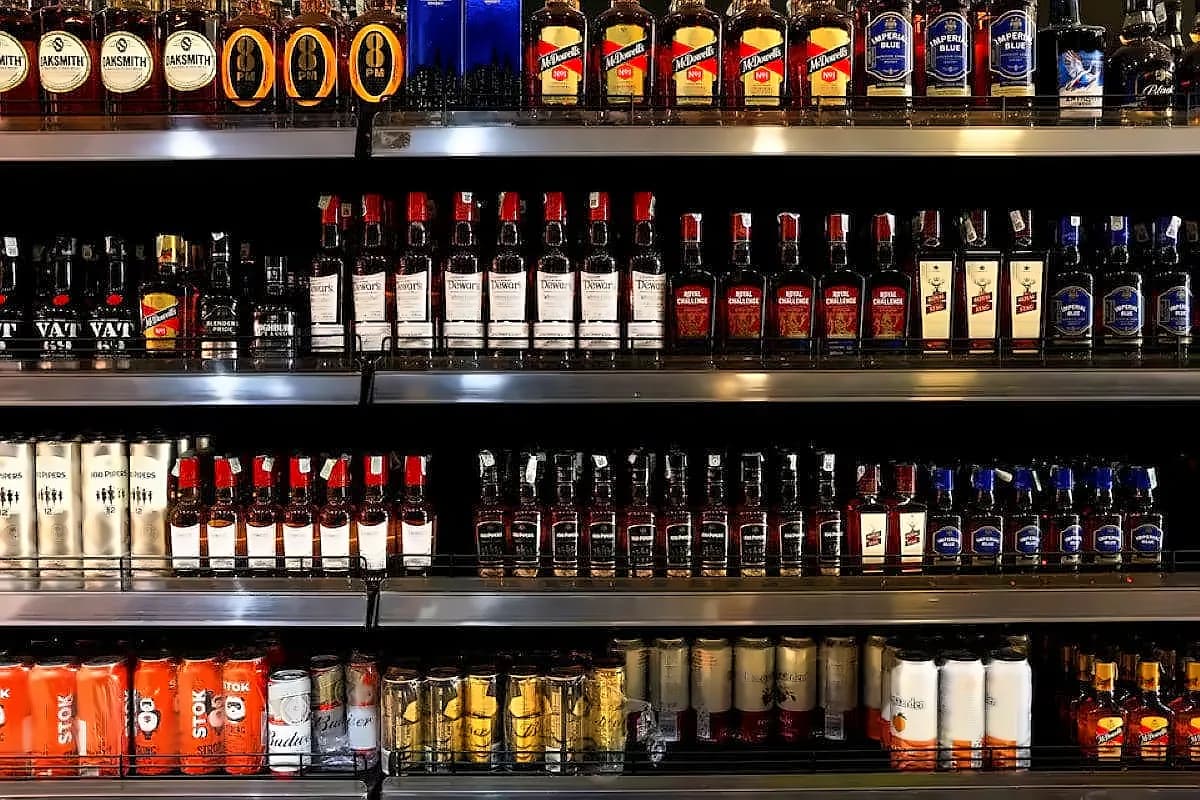
Tariffs on Scotch whisky were slashed from 150% to 75%, with promises of further reductions to 40% over a decade. Companies like Pernod Ricard and Diageo, which dominate India's roughly $65 billion alcohol market, celebrated. They even cut prices on premium brands like Johnnie Walker Black Label and Chivas Regal by 10-15% in states such as Maharashtra and Rajasthan, passing the savings to consumers.
But here's the twist:
This new category, introduced in May, attracts a 150% tariff. Add a consumption tax on top, and the effective duty jumps to 162.5%—higher than the 150% rate that existed before the trade deal.
The result? Over 80 shipping containers carrying thousands of litres of bulk Scotch are stuck at Indian ports. Companies must pay 75% of the goods' value upfront and provide bank guarantees for the rest just to get their shipments released provisionally. It's a mess that threatens to unravel the very benefits the trade pact was supposed to deliver.
Why Classification Matters
At the heart of this dispute is a technical but crucial question: what exactly is bulk Scotch? Importers say it's whisky, plain and simple, and should qualify for the 75% concessional rate under the trade agreement. They've classified it under HSN code 2208, the standard tariff line for spirits and whisky, for years. Transcript
Customs investigators see it differently. They argue that bulk Scotch is a concentrate—a raw material used to make blended whiskies, not a finished product ready for consumers. By placing it under the "compound alcoholic preparations" category, they effectively exclude it from the tariff concessions negotiated in the trade deal.
This isn't just semantics. Trade agreements attach tariff cuts to specific tariff lines. If a product doesn't fall under the right line, the concession doesn't apply. That's why a classification disagreement can completely undo a headline tariff cut. The alcohol content differential you mentioned—bulk Scotch typically has higher alcohol by volume than bottled whisky—fits the "raw material" argument, but I found no evidence that customs is using specific ABV thresholds as the legal test. Their stated basis is end-use and the nature of the goods.
The Margin Squeeze
For liquor companies, this dispute hits where it hurts: margins. Many had already cut prices in anticipation of the duty relief. Now they're staring at higher import costs just as those price cuts take effect. An industry source put it bluntly: "Industry has already reduced prices of Scotch products in the market when the India-UK pact kicked in, and now they are faced with higher duties again".
Take Allied Blenders and Distillers, for example. The company had estimated the FTA would add about 70 basis points to its margins this year. Instead, its H1 FY27 EBITDA margin slipped to 12.3% from 12.9% a year earlier, and net profit margin fell to 5.38% from 6.21%. The company attributes this to supply-chain disruptions costing ₹53 crore in the first half, not price cuts. But the looming duty uncertainty casts a shadow over its margin recovery plans. Transcript +2
The problem is compounded by state excise regulations. Liquor pricing in India isn't free; companies need state approvals to change prices. If import costs rise but states don't approve price hikes, companies have to absorb the hit. Management at Allied Blenders has been lobbying for price increases in several states, with Telangana being the most advanced, but it's a slow process. Transcript
Working Capital Under Strain
The provisional release mechanism is tying up cash at a time when companies can least afford it. To get shipments released, importers must pay 75% of the goods' value upfront and secure bank guarantees for the remaining amount. That's cash that can't be used elsewhere, and bank guarantees consume credit limits that might otherwise fund growth.
For smaller players, the burden is heavier. Banks often require collateral for guarantees, and these must be reported as contingent liabilities on the balance sheet. Companies with thinner balance sheets or lower ratings face higher financing costs or struggle to secure guarantees at all. Larger players like Diageo and Pernod can tap parent-group support and deep banking relationships, giving them a competitive edge in weathering the storm.
Allied Blenders' balance sheet shows the strain. Net debt rose ₹292 crore to ₹1,273 crore in H1 FY27, mainly due to capex. Net debt to EBITDA stands at 2.2x, slightly above its 2.0x target. While operating cash flow improved to ₹269 crore from ₹147 crore a year ago, thanks to working capital discipline, the customs dispute threatens to reverse those gains. Transcript +1
The Provisioning Dilemma
Companies also face an accounting headache. Should they provision for the potential 162.5% duty liability? The gap between what they've paid (75%) and what customs might demand (162.5%) is 87.5 percentage points of goods value, not counting penalties or interest. If an outflow becomes probable and measurable, accounting rules require a provision that hits profit directly. If it's only possible, companies disclose it in notes without taking a profit hit.
Most companies, backed by industry bodies, argue their position is legally sound and the 75% rate should apply. If they believe they're more likely than not to prevail, they'd disclose rather than provision. But this is a judgment call, and the uncertainty itself can spook investors. Radico Khaitan has said it expects no impact and reaffirmed its 20% EBITDA margin guidance. Tilaknagar Industries has disclosed the matter to exchanges but hasn't quantified the hit. Transcript +1
The Make in India Paradox
There's a broader policy paradox here. Bulk imports support local blending, bottling, and jobs—the very essence of the Make in India initiative. About 80% of Scotch imports by volume arrive in bulk, most of it used to make Indian-Made Foreign Liquor (IMFL) by blending small quantities of Scotch with other spirits. These mass-market products are far cheaper than fully imported brands like Chivas Regal or Johnnie Walker.
If bulk imports face 162.5% duty while bottled Scotch gets 75%, the economics could shift toward importing finished bottles. That would undermine local manufacturing and shift value addition abroad. It's hard to square this with the government's stated goal of promoting domestic industry. Yet customs officials maintain they're only enforcing existing law.
Allied Blenders is investing in local capacity, including a bottling unit in Uttar Pradesh that began operations in October and a malt distillery that's now running. A tariff structure that favors imports over bulk would weaken the case for such investments. Transcript +1
Market Reaction: A Shrug, Not a Panic
Investors have noticed, but they haven't hit the panic button.
By around 11:51 am, Tilaknagar was up 0.62%, Allied Blenders up 1%, and United Spirits up 0.58%.
Over the past week and month, all four stocks are actually up or flat. Allied Blenders has gained 4.83% in a week and 7.35% in a month. United Spirits is up 3.5% and 7.51% over the same periods. Radico and Tilaknagar show similar resilience. This suggests investors see the dispute as temporary and resolvable, consistent with management expectations of a resolution within about a month. Transcript
Valuations remain rich—Allied Blenders trades at a PE of about 105x, Radico at 78x—leaving little room for earnings disappointment. But the modest market reaction indicates confidence that the government will honor the trade deal's spirit, if not its current letter.
What Lies Ahead
This inter-agency divergence creates uncertainty, but the commercial stakes are high. The Scotch Whisky Association estimates the trade deal could boost exports to India by $1.34 billion over five years.
For liquor companies, the immediate priority is securing supply. Allied Blenders says its stock will last until early December, and it expects resolution within a month. Others are arranging bank guarantees to keep shipments moving. If the dispute drags on, the real pain will show up in Q3 and Q4 results—higher costs, strained working capital, and potential margin pressure. Transcript
The bigger question is what this means for India's investment climate. Tariff disputes have long been a sore point for foreign investors, embroiling companies like Samsung and Volkswagen in the past. The Scotch dispute is the first major test of the India-UK trade pact. How it's resolved will signal whether India can deliver on its trade promises or whether regulatory surprises will continue to undermine investor confidence.
For now, the industry is in a holding pattern—paying provisional duties, arranging guarantees, and hoping for clarity. The 75% tariff concession was supposed to be a win-win. Instead, it's become a cautionary tale about how technical classifications can derail even the best-laid trade plans.