Here's the thing about trade deals: the ink dries, the champagne corks pop, and then someone reads the fine print. That's exactly what's happening in India right now with Scotch whisky.
The headline was simple enough: India agreed to slash import duties on certain Scotch whisky from a staggering 150% to 75%, with a planned reduction to 40% over the next decade. For an industry that had been lobbying for years, this looked like victory.
But barely three months later, tax inspectors from the Directorate of Revenue Intelligence (DRI) showed up at the offices of Pernod Ricard and United Spirits, Diageo's Indian subsidiary. They weren't there for tea. They were investigating whether these companies had misclassified bulk Scotch imports to qualify for that sweet 75% rate when, in the government's view, they should have been paying the full 150%.
This isn't some minor paperwork squabble. We're talking about India's $65 billion alcohol market, where two foreign giants dominate and bulk Scotch makes up roughly 80% of all Scotch shipments by volume.
The Classification Conundrum: What Exactly Is the Fight About?
At the heart of this dispute is a deceptively simple question: what counts as "Scotch whisky" under the new trade agreement?
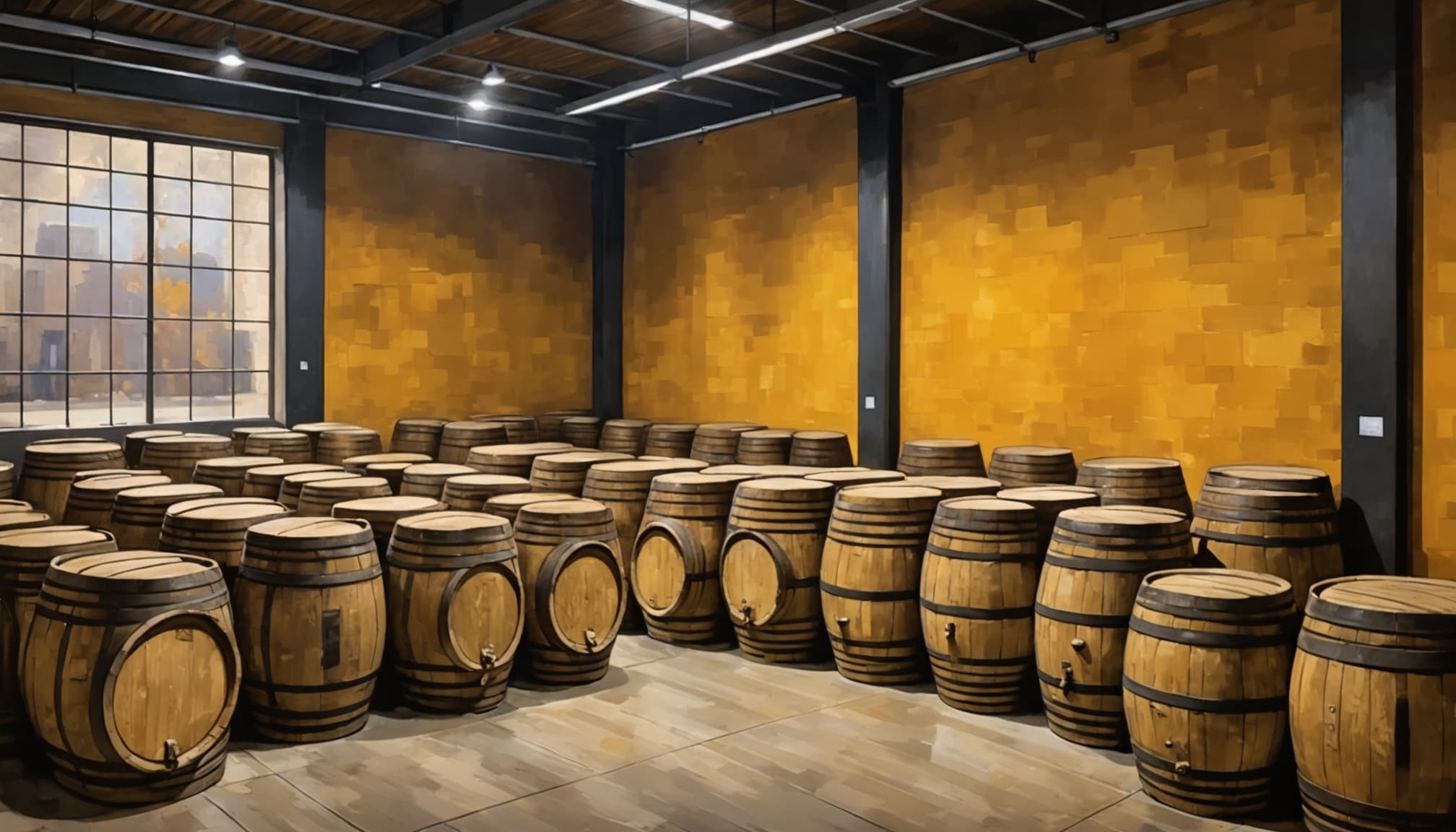
Indian customs officials argue that the tariff concession applies only to finished, bottled-at-origin brands like Johnnie Walker or Ballantine's. Bulk concentrates—those shipped in containers and later blended with other ingredients to create popular Indian brands like Royal Stag, Blenders Pride, and McDowell's—should attract the old 150% rate, they say.
The companies see it differently. They believe that under the agreement's wording, whisky is whisky, regardless of whether it arrives in fancy glass bottles or industrial bulk containers. The International Spirits and Wines Association of India (ISWAI), which represents both companies, has written to the Commerce Minister warning that excluding bulk concentrates "risks undermining, in practice, an important market-access benefit" negotiated between the two nations.
Here's where it gets technical. Whisky imports fall under different Harmonised System (HS) codes: blended Scotch under 2 litres (22083041), Scotch over 2 litres and malts (22083092), and bulk blended malts (22083099). The dispute centers on whether the preferential rate applies across these categories or only to specific ones.
The Valuation Question: It's Not Just About Classification
Your question about valuation methods is sharp, but here's the reality: the current probe is primarily about classification, not valuation. Public reports don't indicate that customs officials are challenging the declared values of these shipments—they're challenging which tariff bucket those values fall into.
That said, both companies have separate valuation headaches. Pernod is already contesting a $314 million back-tax demand over allegations it undervalued some imports (the company denies wrongdoing). United Spirits, meanwhile, disclosed a ₹113 crore additional customs duty liability in FY26 after a fellow Diageo subsidiary made costing and invoicing errors that left bulk spirit prices too low from October 2019 to July 2025. Diageo Scotland Limited has agreed to reimburse that amount, so there's no net financial hit. Annual Report +1
These valuation matters are distinct from the current classification dispute, but they add to a growing sense that India's customs regime is becoming increasingly exacting.
Why Investigators Want the Higher Rate
You might wonder: why would Indian officials push back on a deal their own government signed? Two reasons.
First, revenue protection. A 75 percentage point difference in duty rates is enormous. If bulk imports—which account for the vast majority of Scotch volume—were to qualify for the lower rate, that's a significant chunk of potential customs revenue walking out the door.
Second, domestic manufacturing priorities. The Confederation of Indian Alcoholic Beverage Companies (CIABC) has argued that excluding bulk from the tariff cut could encourage imports of finished whisky over local production, running counter to India's "Make in India" push. Ironically, this means domestic producers are actually aligned with the multinationals on this issue—they all want bulk to qualify for the lower rate because they blend it locally.
The Inventory and Working Capital Squeeze
Let's talk about what happens when shipments get stuck at customs.
United Spirits disclosed that DRI issued seizure memos under Section 110 of the Customs Act, 1962, for goods valued at about ₹6.45 crore following an intimation dated October 17, 2026. The company describes this as an industry-wide matter and says there's no material impact on business so far. Other +1
In isolation, ₹6.45 crore isn't huge against United Spirits' FY26 inventory of roughly ₹2,668 crore (about 146 days of inventory) [stock data]. But if this drags on, the working capital costs add up. Goods held at customs can't be sold. Duty deposited under protest ties up cash. And the uncertainty makes inventory planning a nightmare.
The broader risk isn't one shipment—it's the prospect that every bulk import could face similar scrutiny. That would force companies to hold larger buffer stocks, increase bank guarantees (some liquor companies have reportedly sought guarantees covering 75% of customs duty from distributors), and generally make the business more capital-intensive.
The Margin Impact: What If 150% Sticks?
Here's where the math gets uncomfortable. If authorities decide that bulk concentrates don't qualify for the 75% rate and must pay 150% instead, that's effectively doubling the duty on those imports.
The actual margin hit depends on several variables neither company discloses: what percentage of their raw material cost is bulk Scotch, how much of that cost can be passed on to consumers, and which specific brands use Scotch components. United Spirits' FY26 gross margin was about 46.5%, and an analyst on the Q1 FY27 call estimated raw material costs at roughly 54.5% of sales[stock data]. Transcript
A 75 percentage point increase in duty on the Scotch portion of that cost structure would squeeze margins, no question. But here's the thing: both companies have pricing power in the premium segments. They could raise prices, though that risks losing price-sensitive consumers to domestic brands that don't use imported Scotch.
The Competitive Landscape: Desi Whisky Isn't Sitting Still
This brings us to your question about competition with "desi" whisky brands. Here's a crucial insight: Pernod and Diageo's Indian brands—Royal Stag, Blenders Pride, McDowell's—are themselves Indian-made whisky. They're not competing against desi brands; they ARE desi brands that happen to use imported Scotch as a component.
Domestic players like Radico Khaitan and Allied Blenders and Distillers also import bulk Scotch. Reuters reports that Indian officials are arguing with these companies too, not just the multinationals. So a higher tariff on bulk Scotch would hurt most of the industry, not just the foreign giants.
Radico's management has said the DRI issue is unlikely to affect its business and maintained its 20% EBITDA margin guidance for FY27. Allied Blenders, which describes itself as "one of the largest bulk Scotch importers," sees the trade pact as positive for margins and sourcing flexibility, though it acknowledges uncertainty could delay benefits. Transcript +1
The real competitive threat comes from bottled Scotch. With the duty cut, bottled-in-origin Scotch is now about 8-10% cheaper. That puts pressure on premium Indian brands. Radico says its single malts (Rampur and Virasat) are already priced above imported Scotch, so it's not worried, but its mass-market brands (After Dark, Magic Moments) are priced well below and insulated from this competition. Transcript
The Industry Pushback: Everyone Wants Clarity
What's fascinating about this dispute is how it's united the industry. ISWAI and CIABC are both lobbying for urgent clarification. The Scotch Whisky Association in the UK has weighed in, saying bulk imports are "key to whisky's overall success in India". Even the British government is engaging with Indian authorities to ensure exporters get the agreed tariffs.
And there's hope. Commerce ministry officials have reportedly assured industry leaders that New Delhi intends to honour the 75% tariff for bulk imports, despite tax officials' protests. This is a reported assurance, not a formal notification, but it suggests cooler heads may prevail.
What Happens Next?
The resolution of this dispute matters beyond just Pernod and Diageo. It will set a precedent for how India implements trade agreements—whether concessions are interpreted broadly or narrowly through customs classification. Other trading partners and exporters will be watching closely.
For now, United Spirits reports no material impact, and both companies say they're cooperating with authorities. The industry association met the Ministry of Commerce on November 2, 2026, and was assured of an early resolution. Other
But until there's a formal circular or notification clarifying the treatment of bulk Scotch, uncertainty hangs over the market. And in a business where inventory cycles are long and working capital is precious, uncertainty is expensive.
The bigger picture? India remains the world's largest whisky market by volume, and Scotch still has only about 3% market share. The trade pact was supposed to change that. Whether it does depends on whether the fine print gets interpreted in a way that lets bulk Scotch flow—or creates a new bottleneck in one of the world's most important spirits markets.