The Ecosystem Advantage
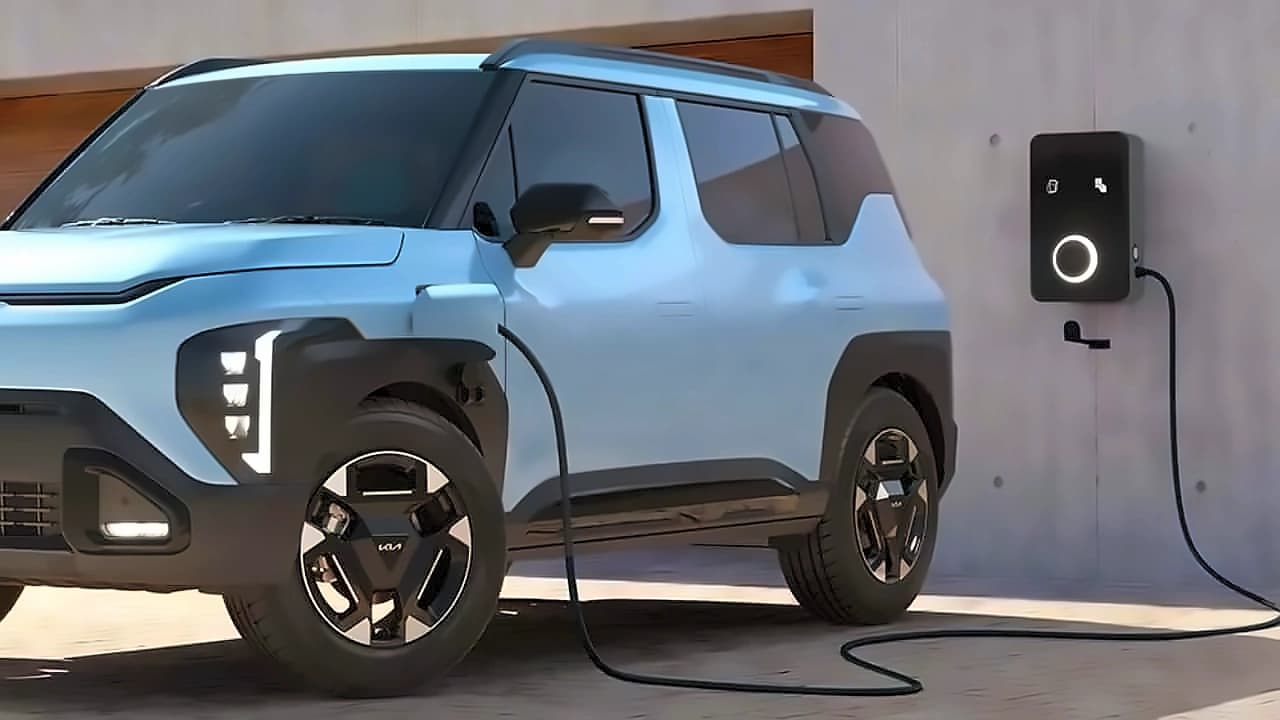
Hyundai Motor India has crossed a significant milestone by integrating over 30,000 EV charging points into its myHyundai app, creating one of India's largest unified charging networks accessible through a single platform. This isn't just about plugging in cars—it's a strategic ecosystem play that addresses the fundamental barriers to EV adoption while building sustainable competitive advantages. The network, developed through partnerships with multiple Charge Point Operators (CPOs), offers charging facilities within an average radius of 25 km across India, covering major highway corridors including Delhi-Gurgaon-Jaipur, Mumbai-Pune-Bengaluru, and Chennai-Vellore-Bengaluru.
The scale is impressive. Over 3 lakh EV users have already accessed HMIL-owned charging services through the app between January 2023 and June 2026, with the network delivering more than 50 lakh kWh of energy and helping avoid an estimated 3.5 million kg of CO₂ emissions. Hyundai is simultaneously expanding its proprietary DC fast charging network from 183 stations currently to 600 stations by 2030, bringing India's charging infrastructure closer to global benchmarks. This dual approach—partnership aggregation for immediate scale plus proprietary infrastructure for long-term control—provides both reach and asset ownership.
Competitive Differentiation in a Crowded Market
The Indian EV charging landscape is fragmented, with Tata Motors targeting 400,000 charging points by 2027, MG Motor offering 22,500+ points through its e-Hub app, and Mahindra planning 1,000 ultra-fast charging stations by 2027. Hyundai's current leadership with 30,000+ integrated points provides immediate scale advantages, but the real differentiation lies in execution. The myHyundai app eliminates app fragmentation—a primary pain point for EV owners—by providing location discovery, navigation, advance booking, and digital payments through a single interface. This unified experience is open to EV owners across all brands, expanding Hyundai's total addressable market beyond just Hyundai vehicle owners.
The competitive impact is already visible. Hyundai's EV sales grew 637% year-over-year in 2025 to 6,726 units, significantly outperforming the overall EV market growth of 77%. While Tata Motors remains the market leader with 70,004 units, Hyundai's growth rate suggests its ecosystem strategy is effectively supporting market share gains. The company is targeting over 14% market share in the EV segment in the medium to long term, backed by this infrastructure foundation.
Financial Economics: Capex, Returns, and Margins
Hyundai hasn't publicly disclosed specific capital expenditure for the charging ecosystem, but industry benchmarks provide context. Setting up a small station (2-4 chargers) costs INR 15-30 lakh, while large charging hubs (8-16+ DC fast chargers) require INR 1-3 crore or more. Hyundai's partnership-heavy approach significantly reduces capital requirements compared to building proprietary infrastructure. Estimated total investment for the ecosystem ranges from INR 345-997 crore, representing approximately 5-14% of Hyundai India's FY 2025-26 capex of INR 70 billion.
The return on investment profile differs from traditional manufacturing. While vehicle manufacturing offers stable 8-12% operating margins with 5-7 year payback periods, charging networks provide 15-35% potential ROI at optimal utilization, though with higher risk profiles and longer payback at conservative utilization levels. Operational costs include land lease, software licenses, maintenance, and electricity, totaling an estimated INR 33-55 crore annually—less than 0.15% of Hyundai India's revenue. The charging ecosystem adds minimal direct cost impact while creating strategic value through customer acquisition cost reduction and lifetime value enhancement.
The Launch Catalyst: Timing the Mass-Market Push
The readiness of this charging ecosystem fundamentally influences Hyundai's mass-market EV launch strategy. The company plans to enter the mass-market segment with a sub-4m electric SUV (codenamed HE1i) during the current financial year, positioned below the Creta Electric and competing with the Tata Punch EV in the Rs 10-15 lakh range. This launch timing coincides with peak ecosystem readiness—a deliberate strategy that addresses the infrastructure chicken-and-egg problem that has constrained EV adoption in India.
Historical precedent supports this approach. When Hyundai launched the Creta Electric in January 2025, Tarun Garg, COO of Hyundai India, explicitly called out "charging infrastructure" as one of the key triggers for customer adoption. The Creta Electric helped propel brand CRETA to its highest-ever domestic monthly sales of 18,522 units in January 2025. For the mass-market launch, Hyundai benefits from 3x charging network growth (from 10,000+ points at Creta Electric launch to 30,000+ points now), 18 months of additional ecosystem development, and enhanced app features based on learnings.
The myHyundai app's 2.6 million registered users, with 339,000 average monthly active users and 23 million monthly interactions, represents a qualified prospective customer pool for the upcoming mass-market EV. These users are already familiar with Hyundai's charging ecosystem, reducing the learning curve for EV ownership and building brand affinity before vehicle purchase consideration.
Customer Experience: Satisfaction, Anxiety Reduction, and Loyalty
The charging ecosystem delivers substantial positive impacts across customer satisfaction, range anxiety reduction, and brand loyalty. Industry research shows that "charging anxiety" has replaced range anxiety as the primary concern, with 88% of EV owners citing difficulties in finding accessible, safe, working charging stations. Hyundai's integrated ecosystem directly addresses this barrier through real-time availability information, advance booking capabilities, and 97% uptime on proprietary stations.
The unified platform experience eliminates fragmentation—a major source of EV owner dissatisfaction. While specific customer satisfaction scores for Hyundai EV owners aren't publicly disclosed, the high engagement metrics (23 million monthly interactions) indicate strong user satisfaction. The ecosystem also enhances brand perception by positioning Hyundai as an infrastructure leader and customer-centric innovator addressing real adoption barriers.
For customer loyalty, the ecosystem creates high switching costs through integrated app experience, consistent charging across 30,000+ points, and comprehensive service integration. With 3 lakh+ EV users accessing Hyundai charging services, including non-Hyundai EV owners, the ecosystem represents a significant prospective customer pool for future vehicle purchases. Hyundai Motor America has been ranked first in customer loyalty in the automotive industry for 15 consecutive years, and this ecosystem-first approach suggests similar capability in building loyalty in the Indian market.
The Road Ahead
Hyundai's charging ecosystem represents more than infrastructure—it's a strategic bet on ecosystem leadership in India's EV transition. The success of this approach could redefine competitive dynamics, forcing competitors to accelerate their ecosystem investments or risk losing market share to brands offering superior integrated customer experiences. As Hyundai prepares for its mass-market EV launch, the 30,000+ charging point network provides the foundation for capturing disproportionate market share in the critical affordable segment.
The next few years will test whether this ecosystem-first approach can deliver sustainable competitive advantages as competitors scale their own charging networks. However, Hyundai's early mover advantage, combined with its proven execution capability and substantial user base, positions it strongly to benefit from India's EV growth trajectory. The company isn't just selling electric vehicles—it's selling the confidence that comes with knowing charging is never far away.