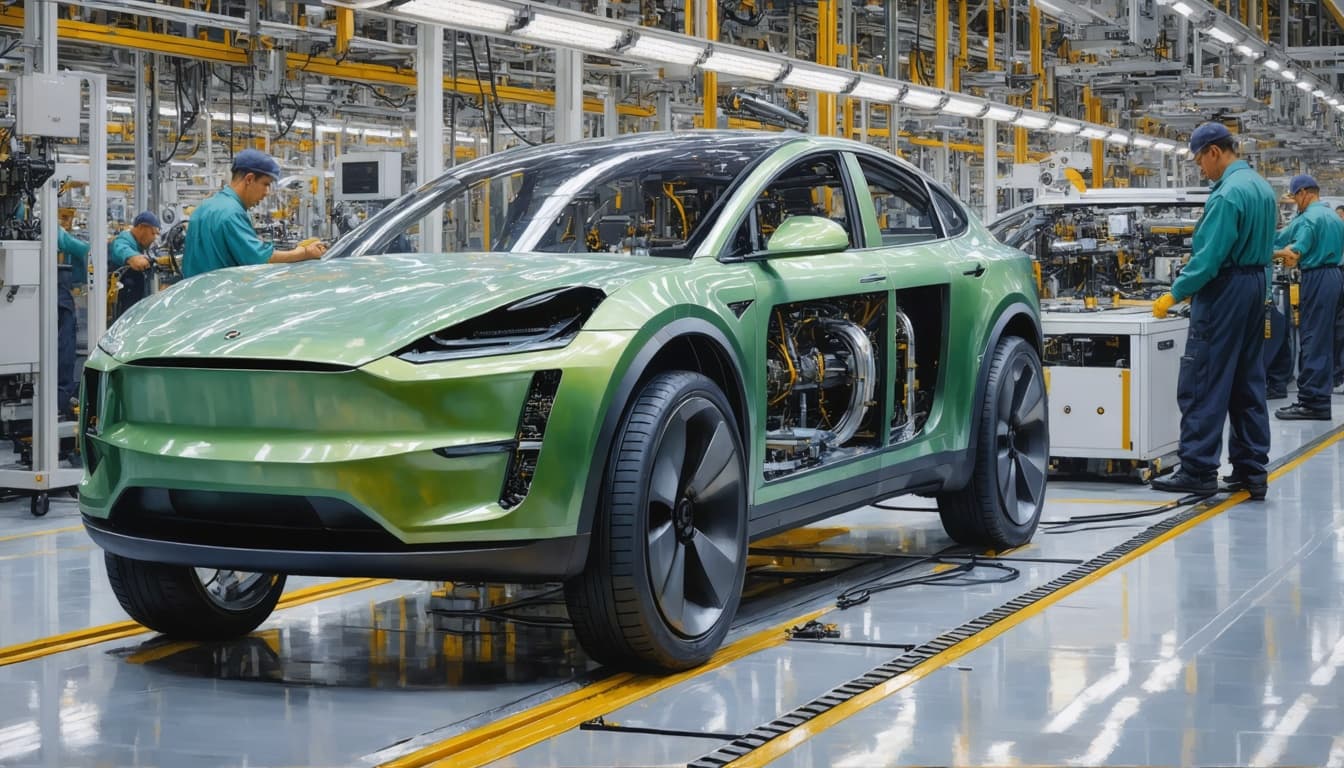
Hyundai Motor India Ltd. has made a strategic bet that could redefine its future in the country’s rapidly evolving electric vehicle (EV) market. By designating Tamil Nadu as its flagship EV hub, the company is leveraging a massive Rs 26,000 crore investment commitment (2023-2032) to transform its Sriperumbudur facility into a manufacturing powerhouse. This move isn’t just about domestic dominance—it’s about positioning India as a global production hub for the upcoming HE1i electric SUV, a model destined for markets in over 150 countries.
The Cost Advantage of a Flagship Hub
Establishing Tamil Nadu as the epicenter of EV operations delivers immediate cost benefits. The company has already set up the state’s first battery sub-assembly plant for EV powertrains and is actively localizing power electronics and other critical components. This vertical integration slashes import dependency and logistics costs. The math is compelling: the company has achieved up to 92% localization in manufacturing, with forex savings exceeding $672 million (approximately ₹5,678 crore) since 2019. As localization levels climb from the current 82% to a targeted 90% over the next five to six years, gross margins are expected to improve significantly. Reduced customs duties, lower transportation expenses, and economies of scale from bulk procurement of local components create a formidable cost structure that rivals will find hard to match.
Capacity Expansion and Economies of Scale
The Rs 26,000 crore investment is the engine driving this expansion. The Sriperumbudur facility is undergoing a significant capacity boost, with total annual output set to rise from 775,000 to 850,000 units. This isn’t just about volume—it’s about achieving economies of scale that make the HE1i profitable at competitive price points. The company plans to source an additional Rs 4,000 crore worth of components from Tamil Nadu-based suppliers, a move expected to create around 2,000 new jobs. This deepens the local supply chain, reduces lead times, and enhances resilience against global disruptions. For exports, this scale is crucial. India serves as a production hub for emerging markets across the Middle East, Africa, Asia, and Latin America. The HE1i, manufactured at Sriperumbudur, will be exported to these regions, leveraging India’s cost-competitive manufacturing base to win in price-sensitive international markets. Transcripts
The Global Platform vs. Local Dilemma
A critical strategic decision for the HE1i was the choice of platform. Instead of developing a dedicated India-specific platform, Hyundai opted for the E-GMP (K) architecture—the same global platform that underpins the Hyundai Inster. This choice offers significant advantages. The E-GMP’s modular design allows for flexible part interchange, accelerating development and cutting costs. The platform need not be completely redesigned for each vehicle; tailoring variable spaces is sufficient to set development in motion. This efficiency significantly reduces development expenses, with savings passed on to consumers through competitive pricing. The trade-off is less India-specific optimization compared to a bespoke platform, but the benefits in terms of faster time-to-market and access to proven global technology are substantial.
Battery Strategy and Competitive Pricing
The HE1i will offer two battery pack options: a 42 kWh standard range and a 49 kWh long-range variant, with estimated ranges of 300 km and 355 km (WLTP), respectively. This dual strategy addresses different consumer segments. The standard range variant, with an estimated price point starting around ₹12 lakh (ex-showroom), is designed to drive volume and compete aggressively with the Tata Nexon EV (priced from ₹12.49 lakh) and the Mahindra XUV 3XO EV (starting at ₹13.89 lakh). The long-range variant, expected to be priced up to ₹16 lakh, targets buyers seeking greater range and is likely to follow the pattern seen with the Creta Electric, where ~80% of customers prefer the long-range option. The company’s partnership with Exide Energy Solutions for localized LFP battery production is a key differentiator. Localized battery packs reduce import costs and enhance supply chain resilience, directly impacting pricing competitiveness. While specific profit margins for the HE1i aren’t disclosed, the company’s overall EBITDA margin stood at a healthy 12.8% for the nine months ending FY26, suggesting confidence in maintaining profitability even with aggressive pricing. InvestorPresentations
Sub-4 Metre Positioning and Market Share Battle
The HE1i’s sub-4 metre dimensions (3,825 mm length) place it in a highly competitive segment. This positioning offers tax advantages and urban agility, which are significant selling points in Indian cities. However, capturing market share from established leaders like Tata and Mahindra is a formidable challenge. Tata’s Nexon EV boasts a 489 km ARAI range for its long-range variant, while Mahindra’s XUV 3XO EV offers a strong value proposition. Hyundai’s counter-strategy focuses on feature leadership and brand strength. The HE1i is expected to come equipped with Level 2 ADAS, dual 10.25-inch displays, a 360-degree camera, and a super-strong body structure meeting global crash test standards—premium touches that aim to justify its price tag and differentiate it from rivals. Success will depend on whether these features, combined with Hyundai’s reputation for refined interiors and after-sales support, can sway buyers in a price-sensitive market.
Charging Infrastructure and Consumer Adoption
A robust charging network is the linchpin of EV adoption. Hyundai has established a DC fast-charging ecosystem in Tamil Nadu with 39 stations and 78 charging points, with plans to expand this to 100 stations. This network directly addresses range anxiety, the primary barrier to EV adoption. The company’s national charging network is even more extensive, with 119 public fast-charging stations as of August 2025 and access to over 20,000 charging points through partner networks. The causal link is clear: more chargers lead to higher consumer confidence, which drives sales. The company’s EV sales reached 3,668 units in Q4 FY25, accounting for 2% of its fuel mix—a figure expected to grow as the charging infrastructure matures. InvestorPresentations +1
Building an EV Ecosystem and Skilled Workforce
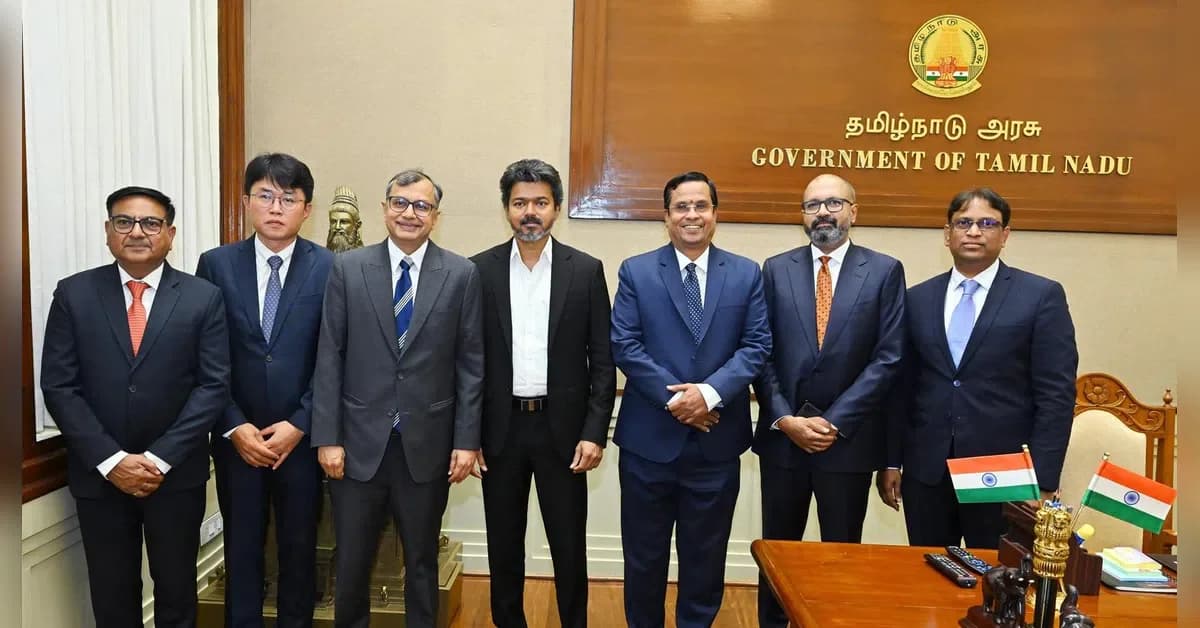
The establishment of Tamil Nadu’s first battery sub-assembly plant is more than just a manufacturing milestone; it’s a catalyst for the state’s emergence as a leading EV manufacturing hub. This plant attracts complementary suppliers, fosters technology transfer, and creates specialized technical capabilities. Supporting this is a strategic skill development partnership with the Government of Tamil Nadu. Set to commence operations in December 2027, this initiative will train youth in next-generation technologies like EVs, hydrogen mobility, robotics, and AI-enabled manufacturing. The government will facilitate partnerships with ITIs, polytechnics, and engineering colleges across the state. This investment in human capital is crucial for operational excellence. The company already operates 8 Regional Learning Centers and 14 Hyundai Technical Training Academies, having trained over 2,600 apprentices annually. A skilled workforce directly enhances labor productivity and operational efficiency at the Sriperumbudur facility, ensuring high-quality manufacturing and faster production ramp-ups. AnnualReports
Incentives, Regulations, and the Road Ahead
Hyundai’s proactive collaboration with the Tamil Nadu government aligns perfectly with the state’s EV policy, which offers incentives like a 20% capital subsidy and an up-skilling allowance for up to 10% of the workforce on the EV production line. This partnership not only enhances eligibility for these incentives but also strengthens the company’s relationship with the state, facilitating smoother regulatory approvals. The state’s single-window clearance system for EV manufacturing further accelerates project timelines. This supportive regulatory environment is instrumental in keeping the HE1i on track for its launch in the second half of 2026 and enables the broader expansion of Hyundai’s EV portfolio through 2027 and beyond.
Conclusion
Hyundai Motor India’s Tamil Nadu strategy is a masterclass in integrated ecosystem development. By combining massive capital investment, deep localization, a global platform, strategic partnerships, and a focus on workforce development, the company is building a sustainable competitive advantage. The HE1i is the first major test of this strategy. Its success will depend on execution—particularly on achieving the right balance between pricing and features, and on delivering a reliable charging experience. If successful, this approach will not only secure Hyundai’s leadership in India’s EV market but also establish the country as a critical node in the company’s global EV manufacturing network. The Rs 26,000 crore bet is placed, and the next few years will reveal if it pays off.