Hyundai Motor India Ltd (HMIL) officially designated its Sriperumbudur facility near Chennai as its flagship EV manufacturing base for India on June 4, 2026. This announcement formalizes what has been a deliberate strategy built over years of investments and partnerships. The foundation was laid in May 2023 when Hyundai signed an MoU with the Tamil Nadu government, committing ₹20,000 crore over 10 years specifically for EV production and its ecosystem. This was followed by an additional ₹6,180 crore investment announced at the Tamil Nadu Global Investors Meet 2024, bringing the total commitment to over ₹26,000 crore between 2023 and 2032. The Sriperumbudur plant has already shipped over 3.9 million vehicles to more than 150 countries as of 2025, providing the existing infrastructure and supplier network that makes this transition natural. As per Hyundai Motor India Limited, this move strengthens Tamil Nadu's position as one of India's most important automotive manufacturing centres and signals Hyundai's deeper commitment to future mobility from its Chennai base.
Hyundai has reiterated its commitment to strengthening localisation across both EV and internal combustion engine manufacturing. The company plans to increase localisation levels from the current 82% to 90% over the next five to six years, supporting local suppliers, deepening the automotive supply chain and giving Tamil Nadu's industrial ecosystem a further boost. According to HMIL MD & CEO Tarun Garg, the company will launch two new models from its Chennai plant this year, including its first mass-market dedicated EV. This enhanced localisation strategy includes plans to increase sourcing from Tamil Nadu-based suppliers by around ₹4,000 crore over the next five to six years, creating approximately 2,000 additional jobs while reducing import dependence. The company has already established Tamil Nadu's first battery sub-assembly plant for EV powertrains and is actively localising power electronics and other key components, supporting the state's ambition of becoming a leading EV manufacturing hub. As per Hyundai Motor India Limited, HMIL's initiatives will strengthen Tamil Nadu's leadership in sustainable mobility and automotive excellence, while also accelerating skill development to foster a future-ready workforce.
The centrepiece of Hyundai's Tamil Nadu EV hub strategy is the HE1i compact electric SUV, internally codenamed HE1i, which will launch in late 2026 or early 2027. According to HMIL MD & CEO Tarun Garg, this mass-market EV will be produced at Sriperumbudur, Tamil Nadu, with locally sourced batteries from Exide Energy Solutions. The HE1i runs on Hyundai-Kia's E-GMP (K) architecture, the same scalable platform that underpins the Inster EV sold in international markets. It will offer 42 kWh and 49 kWh battery options, deliver over 300 km of range, and is expected to be priced competitively around the Tata Punch EV's starting price of ₹10.99 lakh. The HE1i will be positioned in the sub-4 metre space, directly competing against the Tata Nexon EV, Tata Punch EV, Mahindra XUV 3XO EV, and the Citroën eC3, targeting the segment where Tata Motors has dominated with over 75% EV market share. As per Hyundai Motor India Limited, the company will roll out two new models from the Chennai facility, including its first mass-market dedicated EV within this year, marking a significant step towards accelerating EV adoption and building a strong EV ecosystem.
Hyundai Mobis India inaugurated its Electric Vehicle Battery System Assembly (BSA) Plant in Sriperumbudur in May 2025, spread over 8.15 acres and located right next to the main vehicle manufacturing facility. This plant is already supporting battery assembly for the Hyundai Creta Electric and is actively localising power electronics at the same site. Battery packs for the HE1i will be sourced from Exide Energy Solutions, a subsidiary of Exide Industries, which is building India's first giga battery cell plant in Bengaluru with a 12 GWh annual capacity. This tight supply chain keeps costs controlled and ensures the 'Made in India' claim is genuinely credible. The company has also established Tamil Nadu's first battery sub-assembly plant for EV powertrains and is actively localising power electronics and other key components. As per Hyundai Motor India Limited, the company has already established Tamil Nadu's first battery sub-assembly plant for EV powertrains and is actively localising power electronics and other key components, supporting the state's ambition of becoming a leading EV manufacturing hub.
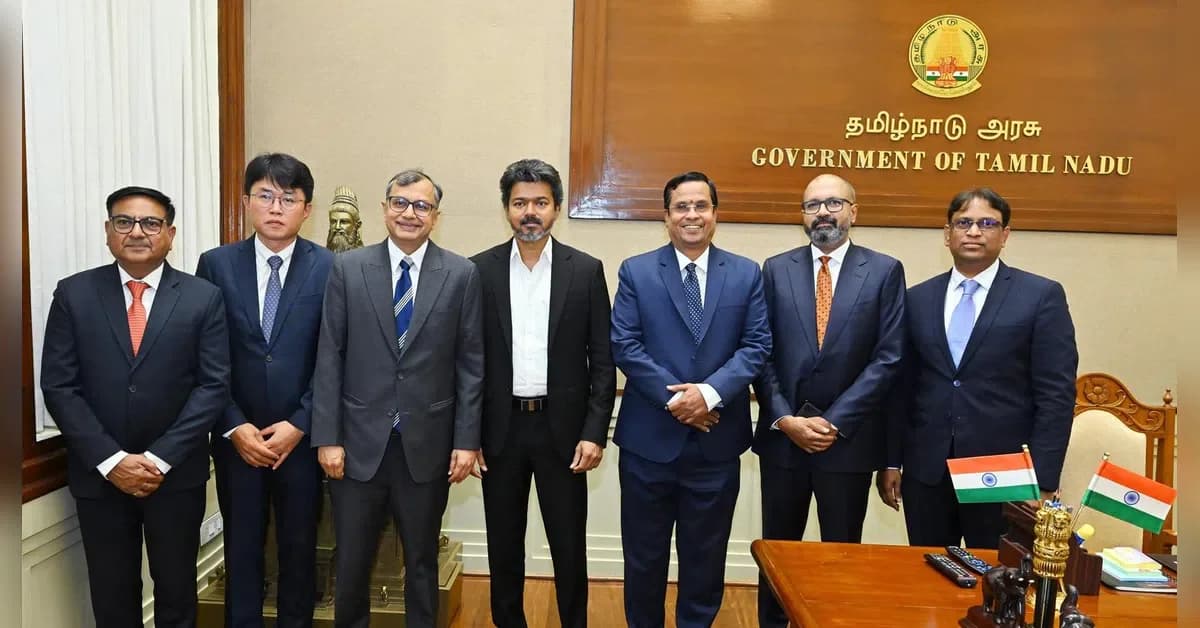
HMIL announced a strategic enhancement of its collaboration with the Government of Tamil Nadu (GoTN) to improve the global employability of the state's youth. This initiative will commence operations in December 2027 and aims to create employment opportunities not only within the state but also across India and global markets. The collaboration will prepare the state's workforce for EV-specific roles covering battery systems, power electronics, and EV assembly, with a vision to position Tamil Nadu as a leading source of skilled manufacturing talent. The HMIL-GoTN collaboration will expose youth to next-generation skills such as advanced training in EVs, hydrogen mobility, robotics, automation, AI-enabled manufacturing and smart manufacturing technologies. The Tamil Nadu Government will support the initiative by facilitating partnerships with ITIs, polytechnics, engineering colleges and skill development institutions across the state, with the collaboration also including workplace communication and language training. As per Hyundai Motor India Limited, this initiative recognizes that Tamil Nadu's greatest strength is its talented youth and HMIL aims to harness this talent pool in partnership with the GoTN, with the company remaining committed to expanding its presence in the state and supporting long-term industrial growth.
Hyundai currently operates 39 DC fast-charging stations and 78 charging points across Tamil Nadu and has committed to expanding this to 100 stations along major highway corridors by the end of 2026. Notably, these stations are open to all four-wheeler EV users, not just Hyundai owners, which goes a long way in building genuine ecosystem credibility. The HE1i will serve both the domestic market and multiple international markets, with an annual production target of approximately 65,000 units including exports. The Sriperumbudur plant has historically been one of Hyundai's key export hubs, and this role continues with EVs, making the facility a global export platform for affordable EVs. As per Hyundai Motor India Limited, the company plans to further expand charging coverage across major cities and highways in the state over the next two to three years, especially as it prepares to introduce more affordable EV offerings in India, with the company remaining committed to expanding its presence in the state and supporting long-term industrial growth.