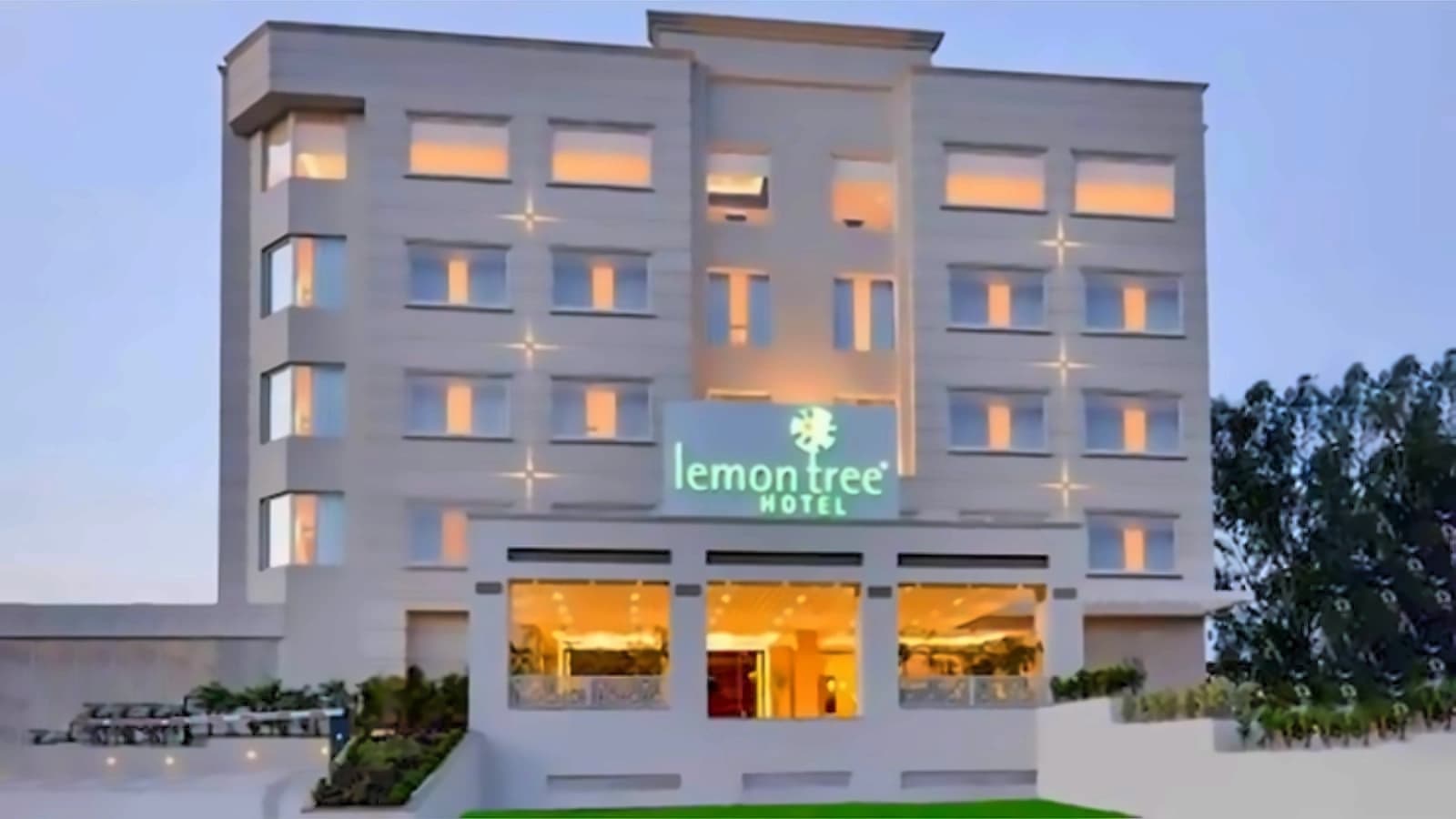
Strategic Rationale Behind Mumbai's ₹120 Crore Land Acquisition
Lemon Tree Hotels allocated ₹120 crore for land acquisition in Bandra (East), Mumbai through its material subsidiary Fleur Hotels Ltd, driven by a cluster-level market density strategy. Mumbai represents the company's largest revenue generator, contributing 34% of total EBITDA, and this acquisition marks its seventh property in India's commercial capital. The 989.30 square meter land parcel, costing approximately ₹12.13 lakhs per square meter or ₹1.13 lakhs per square foot, positions within Tier 1 market ranges of ₹50,000 to ₹2,00,000 per square foot for prime commercial land. This pricing reflects a deliberate strategy to secure high-impact urban sites in high-yield micro-markets with substantial barriers to entry. InvestorPresentations +1
Fleur operates as a dedicated asset ownership and development platform with a separate capital structure, allowing it to carry higher leverage while Lemon Tree maintains an asset-light profile. This separation enables Fleur to target a Debt-to-EBITDA ratio of around 2x for productive capital deployment, while Lemon Tree emerges as a debt-free, high-margin company post-demerger. The ₹120 crore investment, funded through Fleur's equity structure including Warburg Pincus' ₹960 crore primary infusion, creates optimal capital allocation alignment for asset ownership. Transcripts +4
Revenue Mix Impact and Cluster Density Strategy
The introduction of the 172-room Lemon Tree Premier brand in Bandra will significantly shift Lemon Tree's revenue mix toward upscale full-service hotels. Currently, upscale properties (Aurika and Lemon Tree Premier) contribute 58% of EBITDA despite having fewer rooms than mid-market properties. Lemon Tree Premier properties command a 32% RevPAR premium and 22% ARR premium over mid-market brands, with 84% occupancy compared to 78% for Lemon Tree Hotels. The Bandra property will create a 1,141-room upscale cluster in Mumbai when combined with existing Lemon Tree Premier Andheri East (300 rooms) and Aurika Mumbai Skycity (669 rooms). InvestorPresentations +1
The cluster-level market density strategy with seven Mumbai properties drives performance through integrated portfolio management. Management treats Mumbai properties as a combined inventory for strategic booking management, enabling demand distribution optimization, rate management flexibility, and cross-selling opportunities between different brand segments. Mumbai's "deep micro market" characteristics support premium pricing—Lemon Tree Premier achieves 90% occupancy at ₹9,000 ARR despite subdued market conditions. The BKC corridor positioning specifically targets business travelers and MICE segments, with the location bridging crucial business corridors like BKC and the vibrant social hub of Bandra, providing access to both commercial and social destinations. Transcripts +3
Asset-Heavy vs Asset-Light: Capital Allocation Trade-offs
The contrasting approaches—direct land acquisition in Mumbai versus licensing agreement for Patancheru—demonstrate sophisticated capital allocation based on market characteristics. In Mumbai, the asset-heavy model is justified by deep-demand characteristics, high barriers to entry, and significant asset appreciation potential. Owned hotels deliver high returns driven by estimated 8% annual increase in replacement costs, with full capture of 100% of EBITDA. However, this model requires substantial capital deployment of approximately ₹1.2 crore per room and shows slower revenue growth of 6% year-over-year. AnnualReports +1
Conversely, the Patancheru property in Telangana follows an asset-light licensing model managed by Carnation Hotels Private Ltd, a wholly owned subsidiary. This approach requires minimal capital deployment while enabling rapid scaling—the managed/franchised segment grew 29% year-over-year compared to 6% for owned hotels and represents 94% of the development pipeline. The asset-light model generates fee income with 70%+ steady state EBITDA margins and immediate high ROCE from inception, compared to owned properties that require 3+ years for optimal ROCE achievement. InvestorPresentations +3
The trade-offs are clear: asset-heavy in prime markets captures full upside and appreciation potential but with capital constraints and slower expansion. Asset-light in industrial hubs enables rapid scalability with minimal capital but limited control over property standards and lower capture of appreciation benefits. This dual approach allows Lemon Tree to optimize both growth and capital efficiency.
Telangana's Industrial Hub Strategy
Patancheru's characteristics as an established industrial and manufacturing hub drive specific demand patterns for the 90-room Lemon Tree Hotel. The area is particularly known for pharmaceutical and chemical industries, with major companies including Aurobindo Pharma and SMS Lifesciences India. This industrial concentration creates sustained business travel demand from regulatory audits, vendor visits, and training programs. The revenue mix is expected to be 70-80% corporate negotiated rates, 15-20% transient business, and 5-10% weekend leisure, with weekday occupancy reaching full levels on Tuesday through Thursday but dropping to 50-60% on weekends. Transcripts +1
Telangana's expansion to eight properties (four operational and four pipeline) is validated by Hyderabad's exceptional market performance—the city demonstrated the highest RevPAR growth across the portfolio with successful 25% rate increases and 80% occupancy. The strategy differs from Mumbai's approach, focusing on asset-light expansion across IT corridors (HITEC City, Gachibowli), city centers (Banjara Hills), and industrial hubs (Patancheru) rather than premium asset ownership. Transcripts
The selection of Patancheru despite being 55 km from Rajiv Gandhi International Airport demonstrates sophisticated catchment area analysis. Management prioritizes structurally deep demand from pharmaceutical industry presence over airport proximity, recognizing that corporate travel originates from industrial locations rather than airport arrivals. The location along NH 65 provides highway connectivity, and the 55 km distance is well within the 2-hour drive radius established for strategic locations. Transcripts
Subsidiary Structure and Operational Implications
The operational structure using different subsidiaries—Fleur Hotels for ownership and Carnation Hotels for management—creates distinct cost and control implications. Fleur Hotels operates with independent governance and a "Chinese firewall" from Lemon Tree, controlling asset development and capital deployment decisions. Carnation Hotels, as a wholly owned subsidiary, provides integrated quality control with access to Lemon Tree's centralized SOP development, technology systems, and training programs. Transcripts +2
The subsidiary-level management structure maintains service quality standardization through contractual brand standards enforcement, quarterly self-audits, and rigorous NPS tracking across all properties. However, the proposed merger of Carnation Hotels into Lemon Tree will streamline operations and enhance direct control, eliminating intermediate subsidiary layers while improving operational efficiency. Transcripts +2
Investor Sentiment and Market Reaction
Lemon Tree Hotels' shares declined by 0.97% on the BSE following the expansion announcements, reflecting investor caution about capital allocation strategy amid broader concerns. The stock has underperformed significantly, declining 38.21% over the past year and currently trading 39.06% below its 52-week high of ₹174.20. Investors appear concerned about near-term capital outflows of ₹120 crore versus long-term growth potential, particularly given the company's current debt-to-equity ratio of 1.62 and total debt of ₹2,003.65 crores.
Current valuation metrics show EV/EBITDA of 14.9x, P/E ratio of 28.4x, and price-to-book of 6.08x, representing compression from historical levels. Analysts maintain a consensus target of ₹143.33 (35% upside), but expect revenue growth to slow to 11% annually through 2027 compared to historical growth of 27%. The market appears to be adopting a "show me" approach, requiring clearer evidence that the Mumbai acquisition will generate returns superior to alternative capital deployment options in the faster-growing asset-light segment.
The contrasting expansion strategies ultimately reflect Lemon Tree's sophisticated approach to different market opportunities—asset-heavy premium positioning in Mumbai's high-barrier markets versus rapid asset-light scaling in Telangana's industrial corridors. Success will depend on execution in both segments while managing investor expectations about capital efficiency and return generation.