Hindustan Aeronautics Limited delivered a tale of two quarters in Q4 FY26. Net profit climbed 5.5% year-on-year to ₹4,196.04 crore, yet the operational story told a different tale. EBITDA margins contracted sharply from 38.63% to 36.28%, with operating profit slipping 4.4% to ₹5,058 crore. This divergence between a healthier bottom line and weakening operational metrics raises questions about the quality of earnings and the sustainability of HAL's performance trajectory.
The Margin Squeeze: What's Eating HAL's Profitability?
The 235-basis point EBITDA margin contraction occurred despite revenue inching up 1.8% to ₹13,942.40 crore. The primary culprit appears to be supply chain disruptions and an unfavorable shift in product mix.
When HAL can't deliver high-value aircraft on schedule, it falls back on lower-margin manufacturing work, dragging down overall profitability.
Input costs remain a structural burden. Cost of materials consumed consumed 86.9% of revenue in Q4 FY26, leaving little room for error. Any inflation in specialized aerospace alloys, avionics, or propulsion systems hits HAL directly. The company also faces rising employee costs, with expenses jumping to ₹1,724.54 crore during the quarter. These operational pressures squeezed margins even as revenue held steady. AnnualReports
The Other Income Cushion
Here's where the plot thickens. While EBITDA declined, net profit grew. How? A massive 76.6% surge in other income to ₹1,150.57 crore plugged the gap. This non-operating income primarily comprises interest earned on customer advances and surplus funds. In Q3 FY26, other income represented 36.75% of profit before tax, indicating this isn't a one-off event but a structural feature of HAL's profitability. AnnualReports
This creates an earnings quality concern. HAL's core business profitability (excluding other income) stood at 24.30% in Q3 FY26, significantly below reported margins. Investors are essentially betting on HAL's treasury operations as much as its manufacturing prowess. While this other income stream is sustainable given the company's robust order book and customer advances, it masks underlying operational inefficiencies that need addressing.
Order Book Expansion: The Growth Engine
Despite near-term challenges, HAL's long-term story remains compelling.
This provides 7-8 years of revenue visibility, a luxury few companies enjoy.
The order book composition offers a balanced margin profile. Approximately 60-65% comes from new manufacturing, 25-30% from Repair and Overhaul (ROH), and 10-15% from spares. ROH typically commands higher margins (30-35% EBITDA) compared to new manufacturing (26-28%), providing a natural hedge against margin pressure. Management has guided for a long-term 50:50 split between manufacturing and ROH, which would stabilize profitability as manufacturing orders ramp up.
The Working Capital Trap
Executing a ₹2.54 lakh crore order book requires massive working capital, and HAL is feeling the strain. Working capital days ballooned from 121 in FY25 to 279 in FY26, with inventory days reaching 780. This capital gets tied up long before milestone payments arrive, creating a classic defence manufacturing squeeze.
The company's balance sheet, however, remains stronger than often perceived. Net worth stands at ₹41,044 crore, with current assets exceeding current liabilities by ₹45,990 crore. HAL maintains a net cash position with debt-to-equity at 0.00x, providing significant financial flexibility. The working capital pressure is real, but it's a growth problem, not a solvency crisis.
Execution Risks: The GE Engine Albatross
The elephant in the room is General Electric. HAL has imposed contractual penalties on GE for delayed deliveries of F404 engines needed for the LCA Mk1A program.
This bottleneck explains much of the mismatch between HAL's surging order book and sluggish revenue growth.
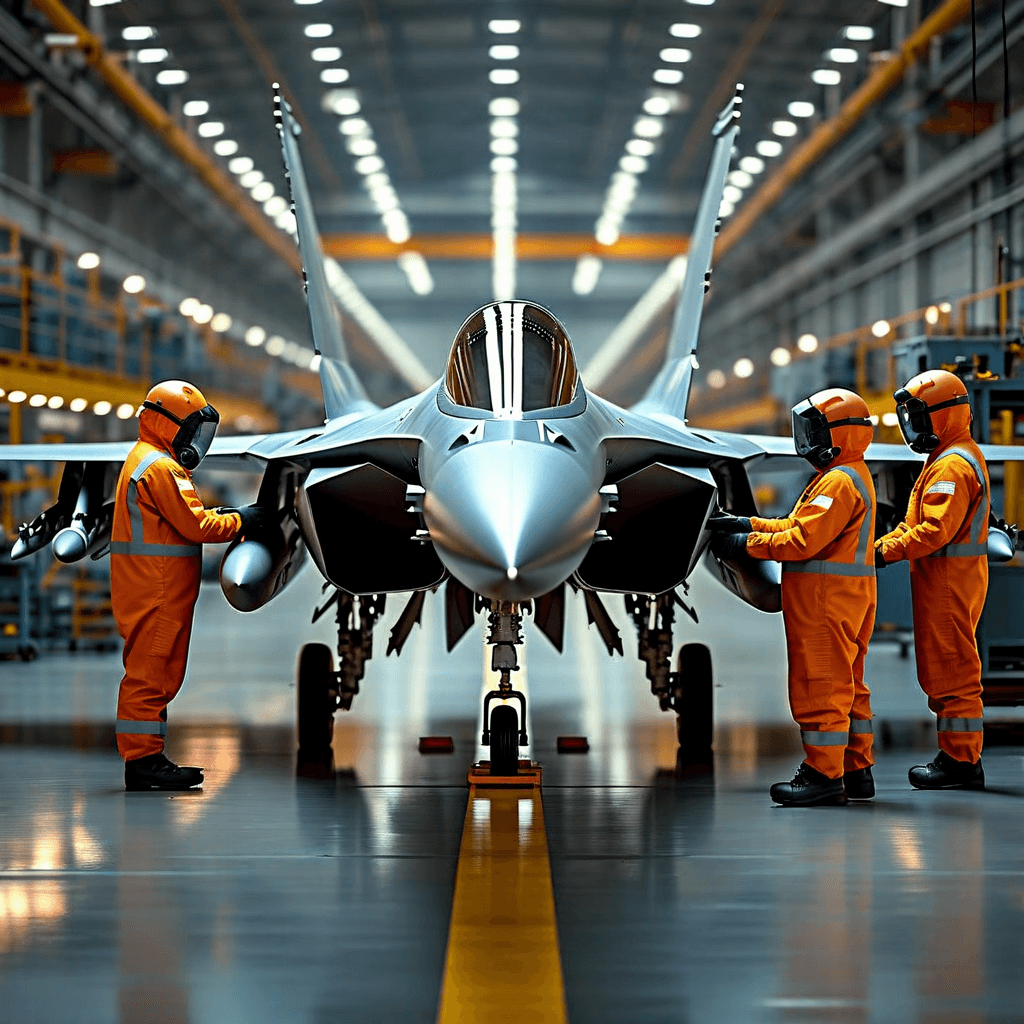
The 97 LCA Mk1A aircraft order worth ₹62,370 crore won't contribute meaningful revenue until deliveries commence in 2027-28. HAL hopes to deliver only eleven aircraft by March 2026, far below initial promises. At the current production rate of 12 aircraft annually, completing 180 Tejas Mk1A orders could take 15 years. These execution risks are real and could derail the growth narrative if not resolved quickly.
Investor Sentiment: Pricing in Perfection
The market capitalisation stands at approximately ₹3.08 lakh crore, with the stock trading at a rich 44.7x P/E multiple. This valuation premium reflects investor confidence in India's defence indigenization push and HAL's near-monopoly position in aerospace manufacturing.
Investors are pricing in several optimistic assumptions: successful resolution of GE engine supply issues, production ramp-up to 16+ aircraft annually, and sustained revenue growth of 16-21% CAGR through FY28. They're also betting on HAL's diversification beyond defence into civil aviation and space, though these initiatives have long gestation periods.
The Path Forward
HAL stands at a critical juncture. The company has the order book, the strategic importance, and the balance sheet strength to become a defence manufacturing powerhouse. But execution is everything. The May 15, 2026 earnings call will be crucial for management to provide concrete timelines on GE engine deliveries, production ramp-up plans, and margin trajectory.
The working capital efficiency needs improvement. Reducing inventory days from 780 to a more manageable 500-600 would free up significant cash and improve return metrics. The company's partnership with MIDHANI for a Strategic Metal Bank could help address supply chain vulnerabilities.
For investors, the risk-reward equation is finely balanced. The upside potential from successful order book conversion is enormous, but the execution risks are equally significant. HAL's Q4 FY26 performance revealed cracks in the operational foundation even as the financial facade remained intact. The coming quarters will determine whether this is a temporary stumble or a sign of deeper structural challenges.